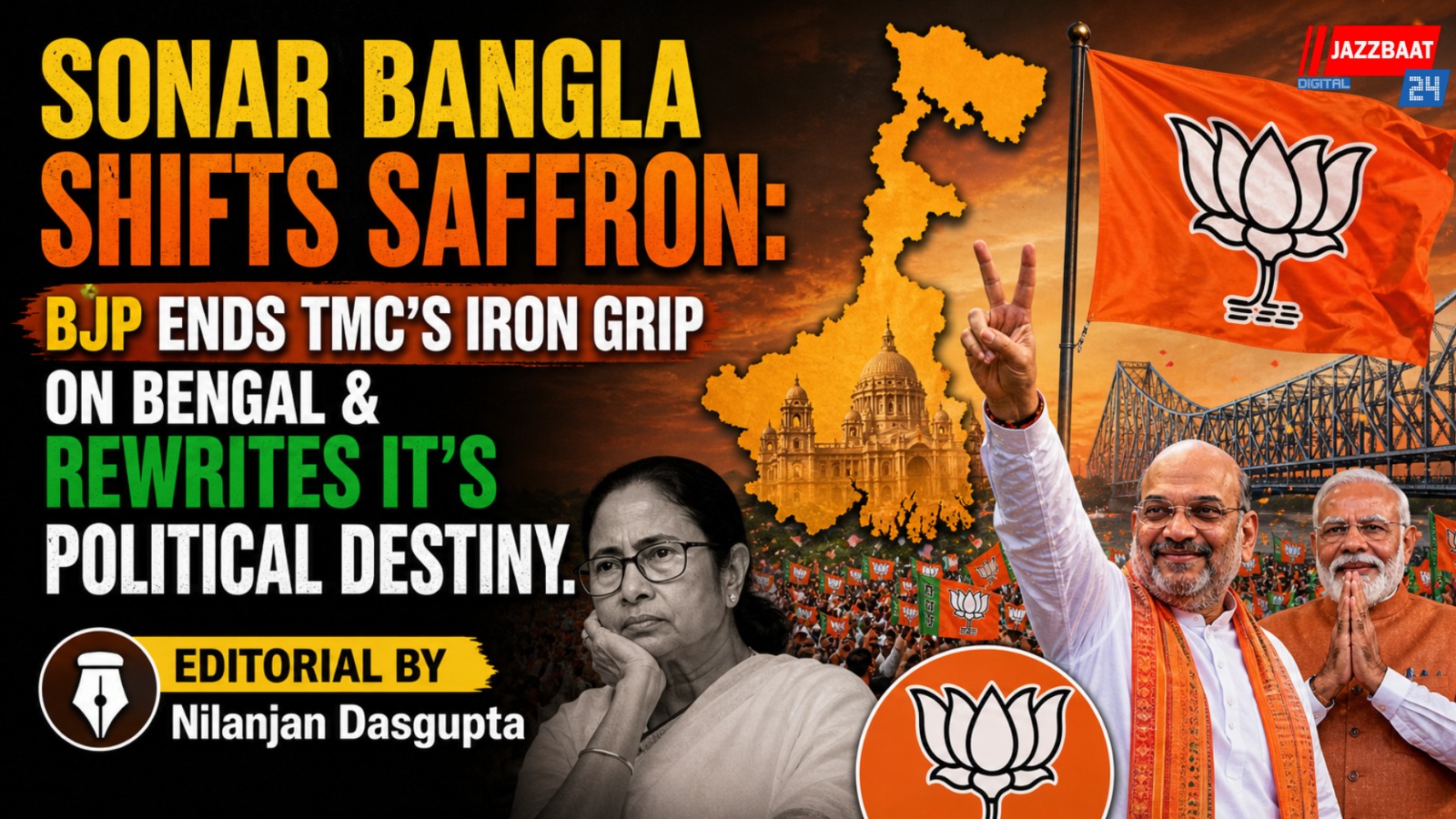
The political landscape of West Bengal has undergone a profound transformation. In a result that few would have predicted a decade ago, the Bharatiya Janata Party (BJP) has dismantled the long-standing dominance of the All India Trinamool Congress (TMC), signaling what could be a defining shift in the state’s political trajectory. This verdict is not merely a change in government, it represents a deeper churn in voter sentiment, identity, and expectations.
For years, the TMC under Mamata Banerjee maintained an iron grip on Bengal’s politics, blending welfare-driven governance with a strong regional narrative. Its electoral machinery was formidable, its grassroots network deeply entrenched. Yet, this election result suggests that even the most dominant political structures are not immune to erosion when confronted with sustained opposition strategy and evolving public aspirations.
The BJP’s rise in Bengal has been gradual but deliberate. From being a marginal player in the state, it has steadily expanded its organizational base, mobilized cadre strength, and crafted a narrative that resonated across sections of voters. By focusing on themes of development, governance, and national integration, while also tapping into local discontent, the party managed to convert incremental gains into a sweeping mandate.
At the heart of this shift lies a complex interplay of factors. There appears to have been a section of the electorate seeking change after years of one-party dominance. Allegations around corruption, governance fatigue, and local-level dissatisfaction likely contributed to an undercurrent of anti-incumbency. The BJP capitalized on this mood, positioning itself as both an alternative and an agent of transformation.
Equally significant is the way this verdict challenges long-held assumptions about Bengal’s political identity. Historically resistant to national parties in favor of strong regional forces, the state has now opened its doors to a different kind of political alignment. This does not necessarily indicate a complete ideological shift, but it does point to a willingness among voters to experiment and reassess their choices.
For the TMC, the loss is both symbolic and strategic. It raises critical questions about leadership style, organizational adaptability, and the ability to counter a rapidly expanding opponent. The party’s future will likely depend on how effectively it can introspect, reorganize, and reconnect with its base.
Meanwhile, the BJP faces a different kind of test—governance. Electoral success, especially of this magnitude, brings with it heightened expectations. The promise of “Sonar Bangla” has been a central pillar of its campaign, and delivering on that vision will require careful balancing of development priorities, social cohesion, and administrative efficiency. Bengal’s socio-political fabric is nuanced, and navigating it will demand both sensitivity and strategic clarity.
This transition also carries implications beyond the state. Bengal has long been a politically influential region, and such a decisive shift is bound to echo in national discourse. It reinforces the BJP’s expanding footprint while signaling to opposition parties the importance of adaptability in a changing electoral landscape.
Yet, amid all the analysis, one truth stands out: the voter remains the ultimate arbiter. This verdict underscores the dynamic nature of democracy, where no mandate is permanent and no dominance unchallengeable. Bengal has, once again, demonstrated its capacity to surprise, to shift, and to redefine its own political destiny.
The road ahead will determine whether this moment becomes a lasting realignment or a cyclical phase in the state’s vibrant political history. For now, the message is clear, change has arrived, and with it, a new chapter for Bengal begins.