
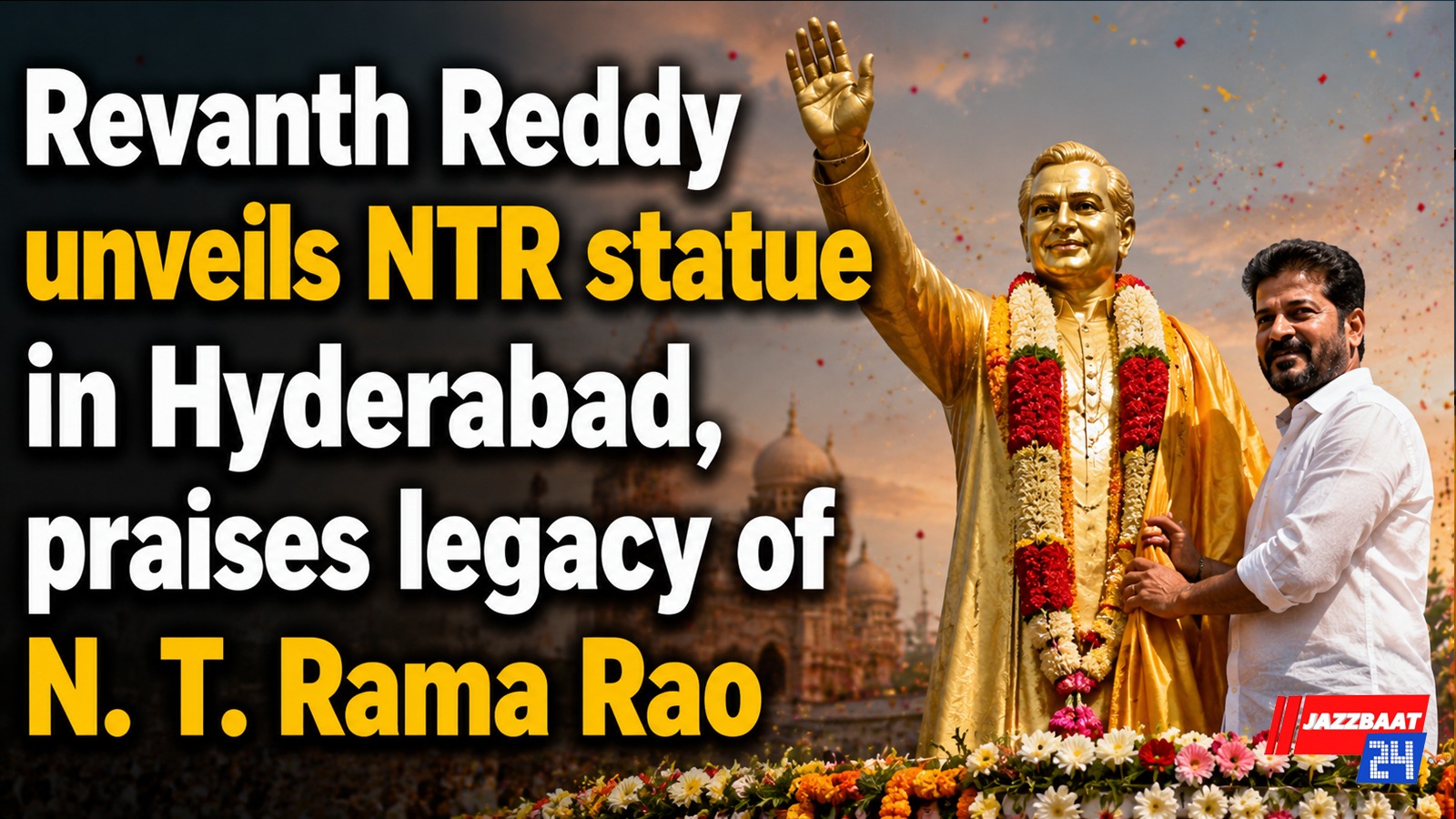
Telangana Chief Minister A. Revanth Reddy on Thursday unveiled a statue of former Andhra Pradesh Chief Minister and Telugu cinema icon N. T. Rama Rao in Hyderabad, paying tribute to his political and cultural legacy.
A. Revanth Reddy attended the unveiling ceremony, where he highlighted the contributions of N. T. Rama Rao, describing him as a leader who reshaped the political landscape of the Telugu-speaking states and inspired generations through both cinema and public life.
Speaking at the event, Revanth Reddy said NTR’s journey from a legendary film actor to a mass political leader remains a unique chapter in Indian political history. He noted that NTR’s leadership was rooted in welfare-oriented governance and a strong connection with the common people, particularly rural communities.
The Chief Minister also said that the unveiling of the statue was not just a tribute to an individual but a recognition of a broader legacy that continues to influence Telugu culture and politics. He added that leaders like NTR played a key role in strengthening regional identity while contributing to national development.
The event was attended by several political leaders, film personalities, and supporters, who gathered to pay homage to the late leader. The statue unveiling was accompanied by floral tributes and cultural programs celebrating NTR’s contributions to cinema and public service.
N. T. Rama Rao, popularly known as NTR, founded the Telugu Desam Party (TDP) and served as the Chief Minister of undivided Andhra Pradesh. He is widely remembered for his populist welfare schemes and efforts to bring governance closer to the people.
Officials said the installation of the statue in Hyderabad reflects continued respect for his legacy across both Telangana and Andhra Pradesh, despite political differences between the states in recent years.
The ceremony concluded with calls to uphold the values of public service and leadership that NTR symbolized, with speakers emphasizing the importance of remembering historical figures who shaped regional identity and democratic participation.