
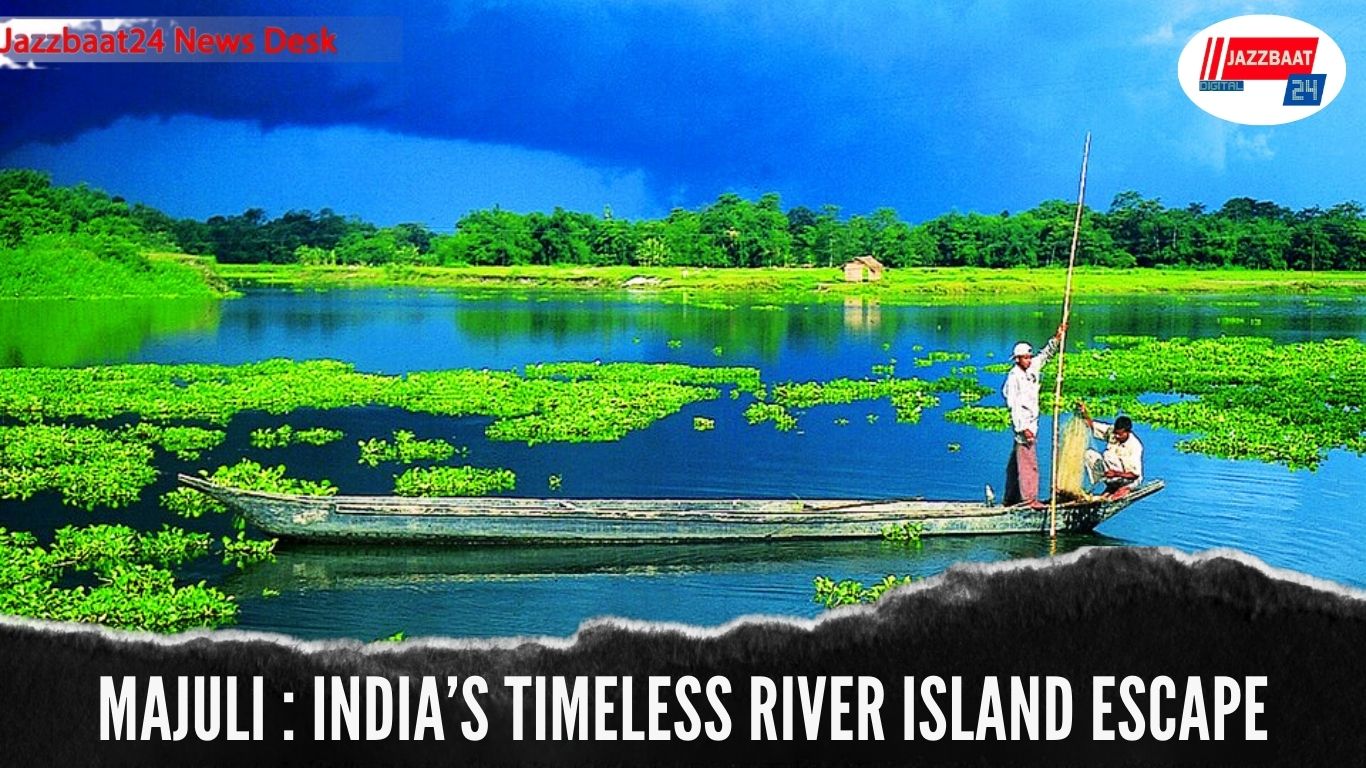
Majuli, the world’s largest river island, stands as one of India’s most unique and soulful travel destinations, quietly floating on the mighty Brahmaputra River in Assam. Spread across a constantly changing landscape shaped by centuries of river currents, Majuli is not just a geographical wonder but also a living cultural museum that continues to draw travellers, researchers and spiritual seekers from across the globe.
Officially recognised in 2016 as the world’s largest river island and India’s first island district, Majuli once covered nearly 880 square kilometres. Due to continuous river erosion, its present area has reduced significantly, yet its charm remains undiminished. Surrounded by the Brahmaputra to the south, the Subansiri River to the north, and the Kherkutia Xuti an anabranch of the Brahmaputra Majuli’s natural boundaries give it a distinctive shape and identity.
Located about 40 kilometres from Jorhat, the nearest major city, Majuli is accessible via a scenic ferry ride from Neemati Ghat. The journey itself offers travellers sweeping views of the river, boats gliding across calm waters, and glimpses of rural Assam at its most authentic. Jorhat is well-connected by air and road, making Majuli an achievable yet offbeat destination for those seeking slow, meaningful travel.
What truly sets Majuli apart is its deep-rooted cultural and spiritual heritage. The island is home to 21 Satras Vaishnavite monasteries founded by the saint-reformer Srimanta Sankardeva in the 15th century. These Satras are vibrant centres of classical dance, music, drama, mask-making and manuscript preservation. Traditional performances and rituals practiced here continue unchanged, offering visitors a rare window into Assam’s living traditions.
Majuli’s villages are inhabited mainly by the Mising, Deori and Assamese communities, whose lifestyles revolve around farming, fishing and weaving. Paddy fields, bamboo houses and wetlands dominate the landscape, creating a peaceful rhythm of life. During the monsoon, large parts of the island are submerged, enriching the soil and sustaining agriculture, though travel is best avoided during this season due to flooding.
Nature lovers will find Majuli especially rewarding. Its wetlands and riverine forests attract a wide variety of migratory and native birds, including several endangered species, making it a paradise for birdwatchers and photographers. Early morning boat rides along the river offer serene views and close encounters with local wildlife.
The best time to visit Majuli is between October and March, with the highlight being the Raas Leela festival in November, celebrated with grand devotion and cultural performances. As tourism grows, Majuli continues to balance preservation with progress, offering travellers an experience that is peaceful, profound and deeply connected to India’s cultural soul.