
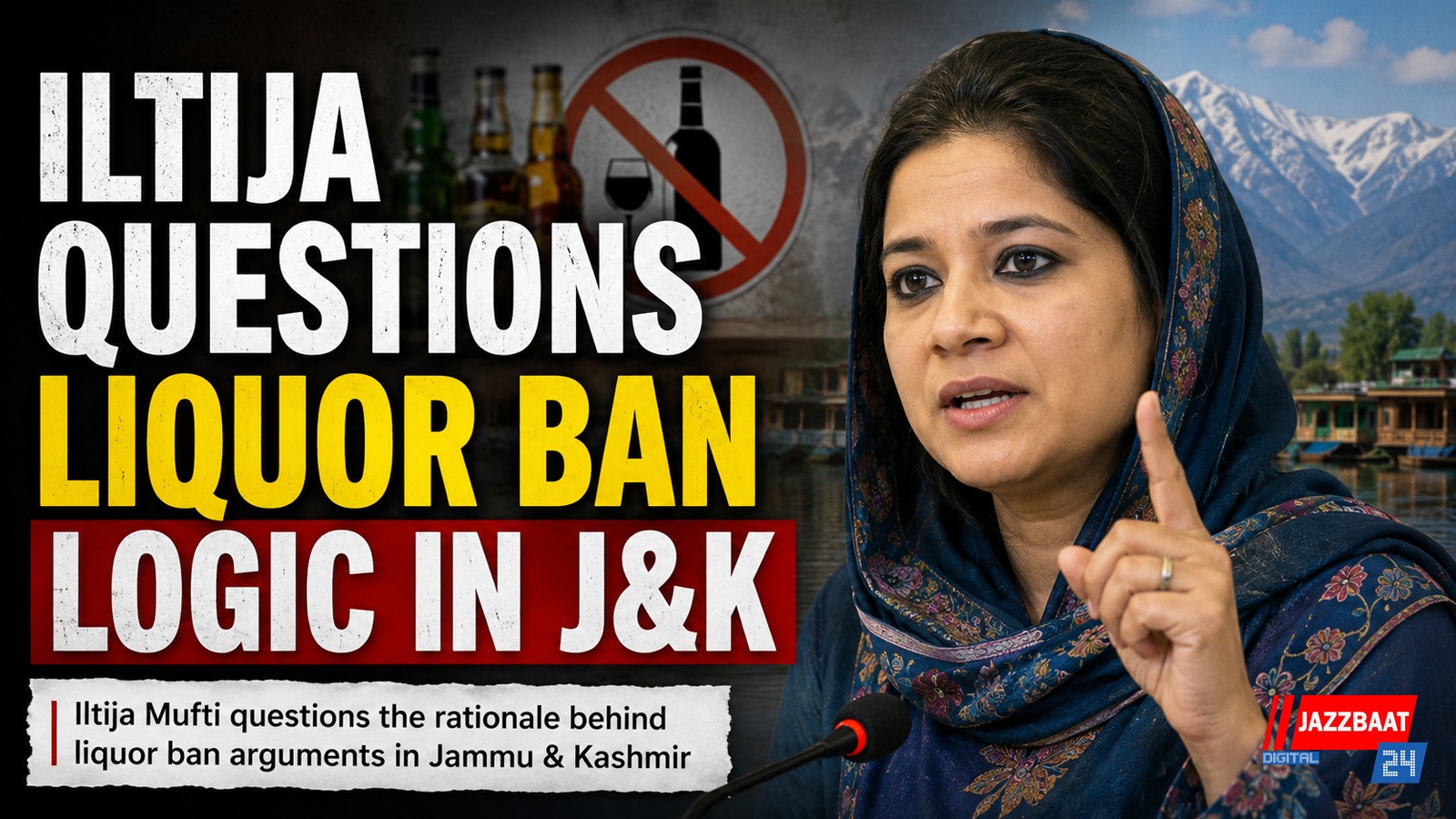
Iltija Mufti on Sunday questioned the rationale behind arguments against a proposed liquor ban in Jammu and Kashmir, asking how states like Gujarat and Bihar have successfully implemented prohibition policies.
Her remarks were directed at Omar Abdullah amid an ongoing debate over restricting alcohol consumption in the Union Territory. Iltija said that if imposing a liquor ban is being portrayed as an infringement on the rights of Hindus, then similar concerns should have been raised in Gujarat and Bihar, where prohibition has been in force for years.
The statement comes at a time when discussions around alcohol regulation in Jammu and Kashmir have intensified, with different political and social groups expressing contrasting views. Some have advocated for a ban citing cultural and social reasons, while others argue that such restrictions could affect tourism, local businesses and individual freedoms.
Iltija Mufti stressed that public policy decisions should be guided by broader societal interests rather than selective interpretations. She pointed out that prohibition in Gujarat has been a long-standing policy, rooted in the state’s historical and political context, while Bihar introduced a complete ban in 2016 with the aim of addressing social issues such as domestic violence and substance abuse.
Supporters of prohibition often argue that restricting alcohol can lead to improvements in public health and social stability. However, critics highlight challenges such as illegal liquor trade, enforcement difficulties and potential revenue losses for the government.
The debate in Jammu and Kashmir reflects a larger national conversation about balancing personal liberty with social welfare. While some see prohibition as a step towards a healthier society, others believe regulation and awareness are more effective than outright bans.
No final decision has been announced yet regarding any change in liquor policy in Jammu and Kashmir. Officials have indicated that all viewpoints are being considered before taking a call, as the issue carries economic, social and cultural implications.
The remarks by Iltija Mufti have added momentum to the discussion, ensuring that the debate over prohibition and its broader impact will remain in focus in the coming days.