

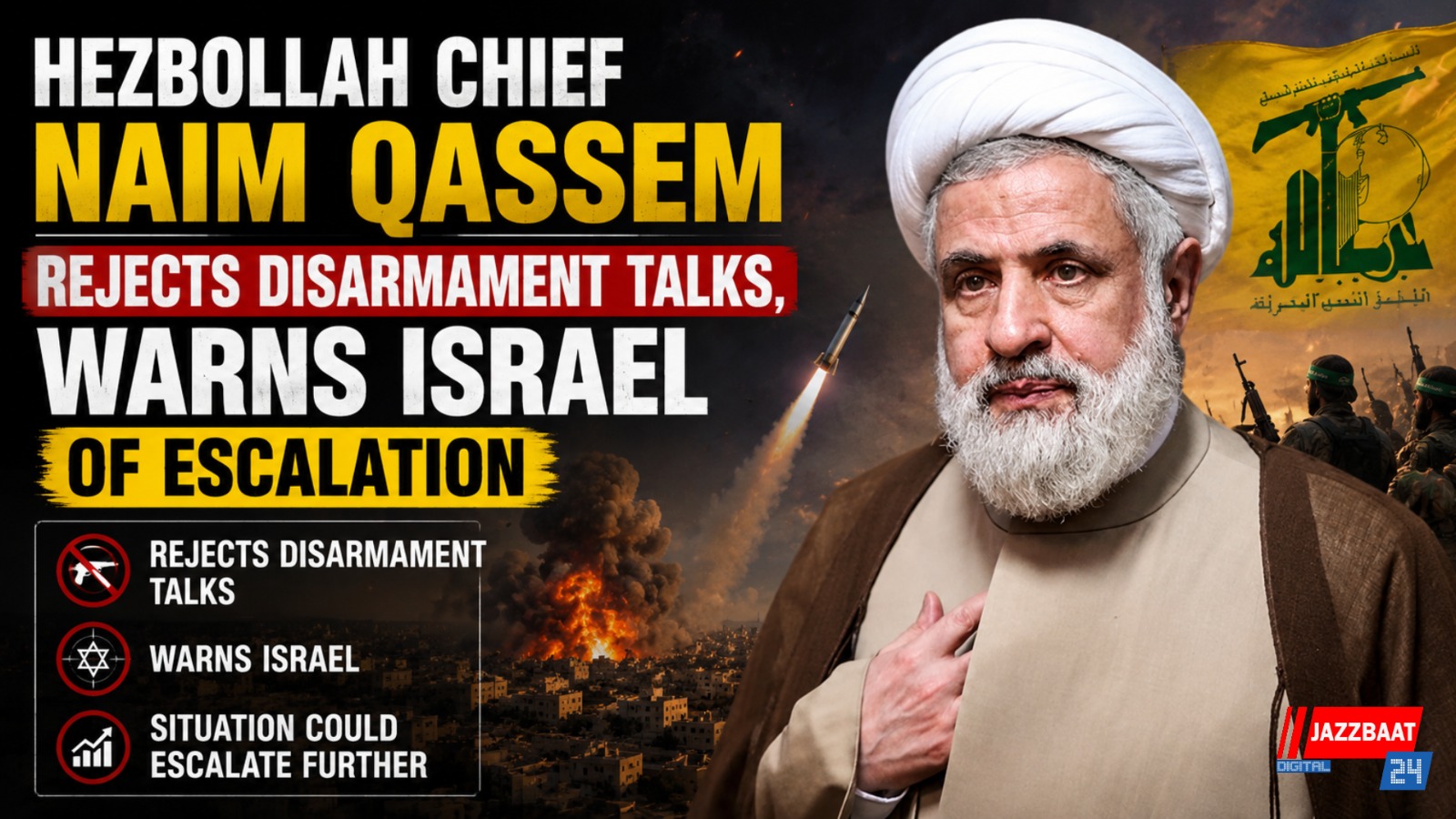
Naim Qassem, the deputy chief of the Lebanese militant group Hezbollah, has strongly rejected calls for the group’s disarmament and warned that any future conflict with Israel would be met with severe retaliation.
Speaking during a public address amid rising regional tensions, Qassem said Hezbollah would never surrender its weapons or enter discussions aimed at disbanding its military wing. He asserted that the organisation’s arms were essential for what he described as Lebanon’s defence against Israeli aggression.
“We will turn it into hell for Israel,” Qassem declared while referring to the possibility of a wider confrontation between Hezbollah and Israeli forces. His remarks come at a time when diplomatic efforts are underway in the region to prevent further escalation along the Israel-Lebanon border.
The Hezbollah leader criticised international pressure demanding the group’s disarmament, arguing that such proposals only serve Israeli interests. He maintained that Hezbollah’s military capabilities remain necessary despite calls from several Western nations and regional actors for armed groups in Lebanon to come under complete state control.
Tensions between Israel and Hezbollah have remained high since the outbreak of the Gaza conflict, with near-daily exchanges of fire across the Lebanon-Israel border. Airstrikes, drone attacks and artillery shelling have led to casualties and displacement on both sides, raising fears of a broader regional war.
Israeli officials have repeatedly warned Hezbollah against intensifying attacks, stating that Israel would respond forcefully to any major escalation. At the same time, international mediators including the United States and France have been attempting to ease tensions and revive discussions on border security arrangements.
Qassem’s latest comments are being viewed as a signal that Hezbollah is unwilling to compromise on its military position despite diplomatic pressure. Political analysts believe the statement could complicate ongoing regional negotiations aimed at reducing hostilities in the Middle East.
The Lebanese government has faced growing international pressure to assert greater control over armed groups operating within the country. However, Hezbollah continues to wield significant political and military influence in Lebanon, making the issue highly sensitive domestically.
Meanwhile, concerns continue to grow globally over the possibility of a wider conflict involving Iran-backed groups across the region. Observers fear that any major confrontation between Hezbollah and Israel could trigger severe humanitarian and geopolitical consequences across the Middle East.