

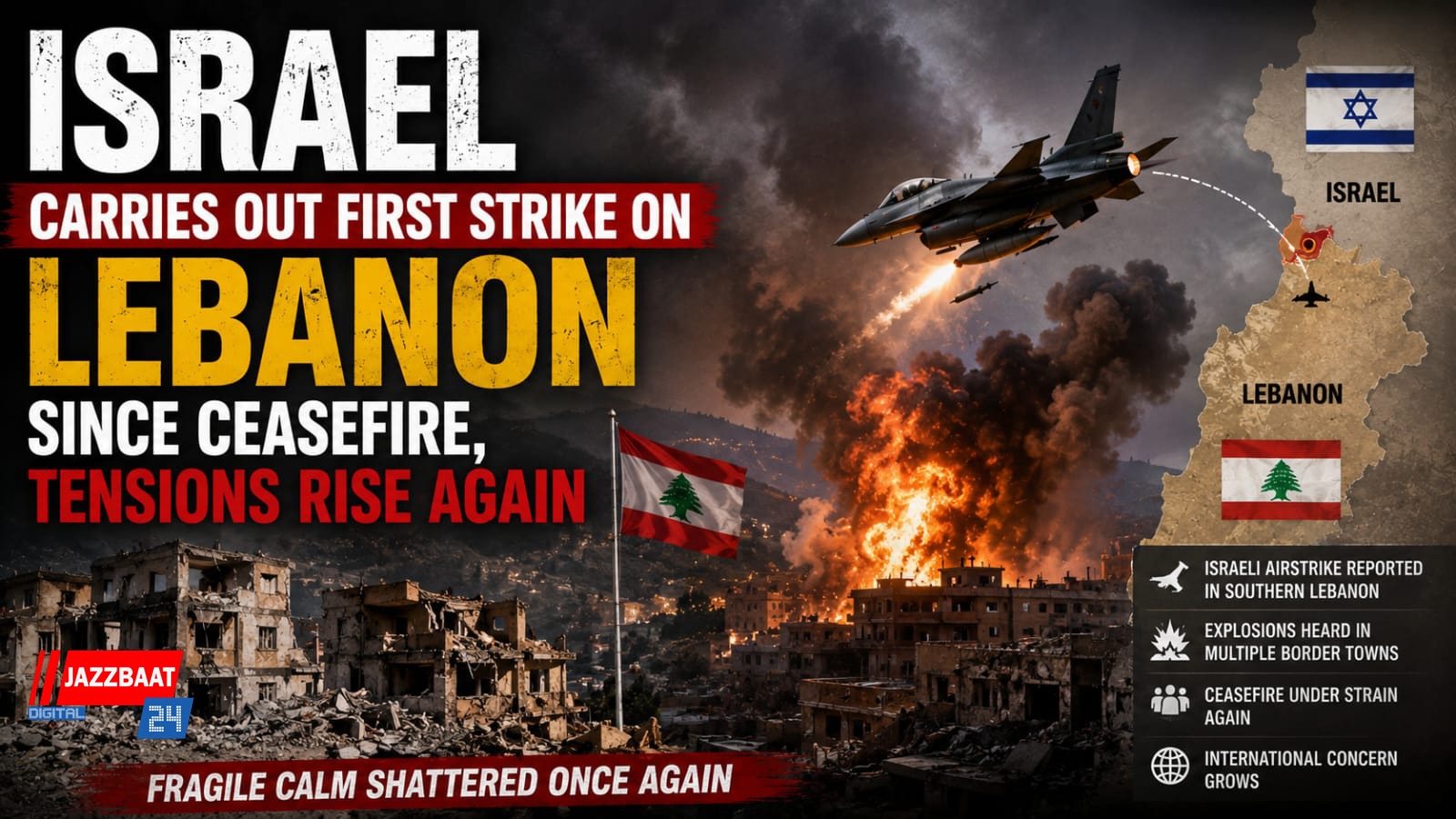
Beirut/Jerusalem: Israel has reportedly launched its first airstrike on Lebanese territory since the ceasefire agreement came into effect, marking a sharp escalation in an already fragile security situation along the border. The incident has raised concerns about renewed hostilities in the region.
According to early reports from regional sources, the strike targeted areas in southern Lebanon, a region that has frequently seen cross-border exchanges of fire in recent months. The Israeli military has stated that the action was carried out in response to what it described as threats and suspicious activity near the border area. However, detailed official confirmation regarding the scale of damage and casualties is still awaited.
Lebanese authorities confirmed that explosions were heard in several southern towns shortly after midnight. Local media reported damage to infrastructure, though the full extent is still being assessed. Emergency teams have been deployed to the affected areas to evaluate the situation and assist civilians.
The ceasefire, which had been holding with intermittent violations, was intended to reduce tensions after months of border clashes involving Israeli forces and armed groups operating in southern Lebanon. Despite the agreement, both sides have repeatedly accused each other of minor violations in recent weeks, creating an atmosphere of uncertainty.
Security analysts say the latest strike could significantly strain the fragile calm that had been maintained under the ceasefire arrangement. The border between Israel and Lebanon has long been a flashpoint, with periodic escalations raising fears of a broader conflict involving regional actors.
International reactions are expected as diplomatic channels monitor the situation closely. Peacekeeping forces deployed in southern Lebanon are also reportedly reviewing developments and maintaining communication with both sides to prevent further escalation.
Residents in border areas have expressed concern over the renewed violence, with some families reportedly moving away from exposed villages as a precaution. Humanitarian groups have warned that any prolonged escalation could worsen living conditions in already vulnerable regions.
While neither side has indicated a full breakdown of the ceasefire, the latest strike underscores the instability that continues to define the border situation. Observers caution that without sustained diplomatic engagement and restraint from both sides, the risk of further escalation remains high.
For now, the situation remains tense and fluid, with global attention focused on whether this incident marks an isolated response or the beginning of a renewed cycle of confrontation.