

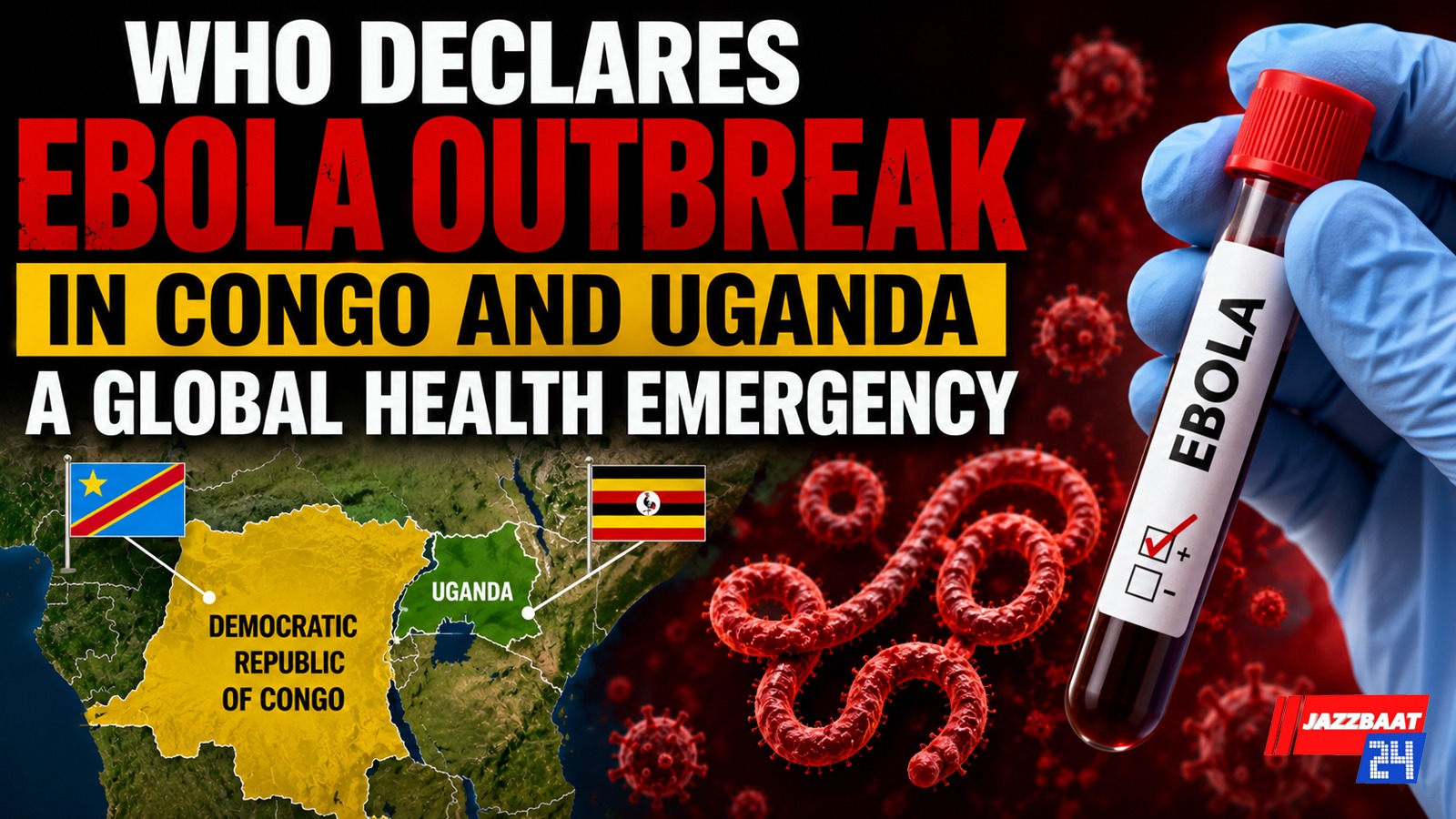
The World Health Organization has declared the Ebola outbreak in the Democratic Republic of Congo and Uganda a “Public Health Emergency of International Concern”, raising global alarm over the spread of the deadly virus in Central Africa.
According to the WHO, the outbreak is being caused by the rare Bundibugyo strain of the Ebola virus, for which there are currently no approved vaccines or specific treatments. Health officials said at least 246 suspected cases and around 80 suspected deaths have been reported in Congo’s Ituri province across several affected health zones, including Bunia, Rwampara and Mongbwalu.
Uganda has also confirmed cases linked to travel from Congo. Authorities reported two laboratory-confirmed infections in the capital Kampala, including one death. Another confirmed case was detected in Congo’s capital Kinshasa involving a traveller returning from the affected region.
The WHO clarified that the outbreak does not currently meet the criteria for a pandemic emergency, but warned that the risk of cross-border spread remains high. Countries neighbouring Congo have been advised to strengthen surveillance, emergency preparedness and contact tracing systems.
Health experts are particularly concerned because the outbreak is spreading in conflict-affected and mining regions where insecurity, population movement and weak healthcare infrastructure make containment difficult. The Africa Centres for Disease Control and Prevention has warned of active community transmission in some areas.
The WHO has urged governments not to close borders completely, saying such measures could drive movement underground and make monitoring harder. Instead, authorities have been asked to improve screening at transport hubs and isolate suspected cases quickly.
Ebola spreads through direct contact with infected bodily fluids and can cause severe fever, internal bleeding and organ failure. Previous outbreaks in Africa have killed thousands of people, though rapid isolation and contact tracing have helped contain many earlier epidemics.
International medical teams and emergency supplies are now being deployed to affected regions as global health agencies attempt to prevent the outbreak from expanding further.