
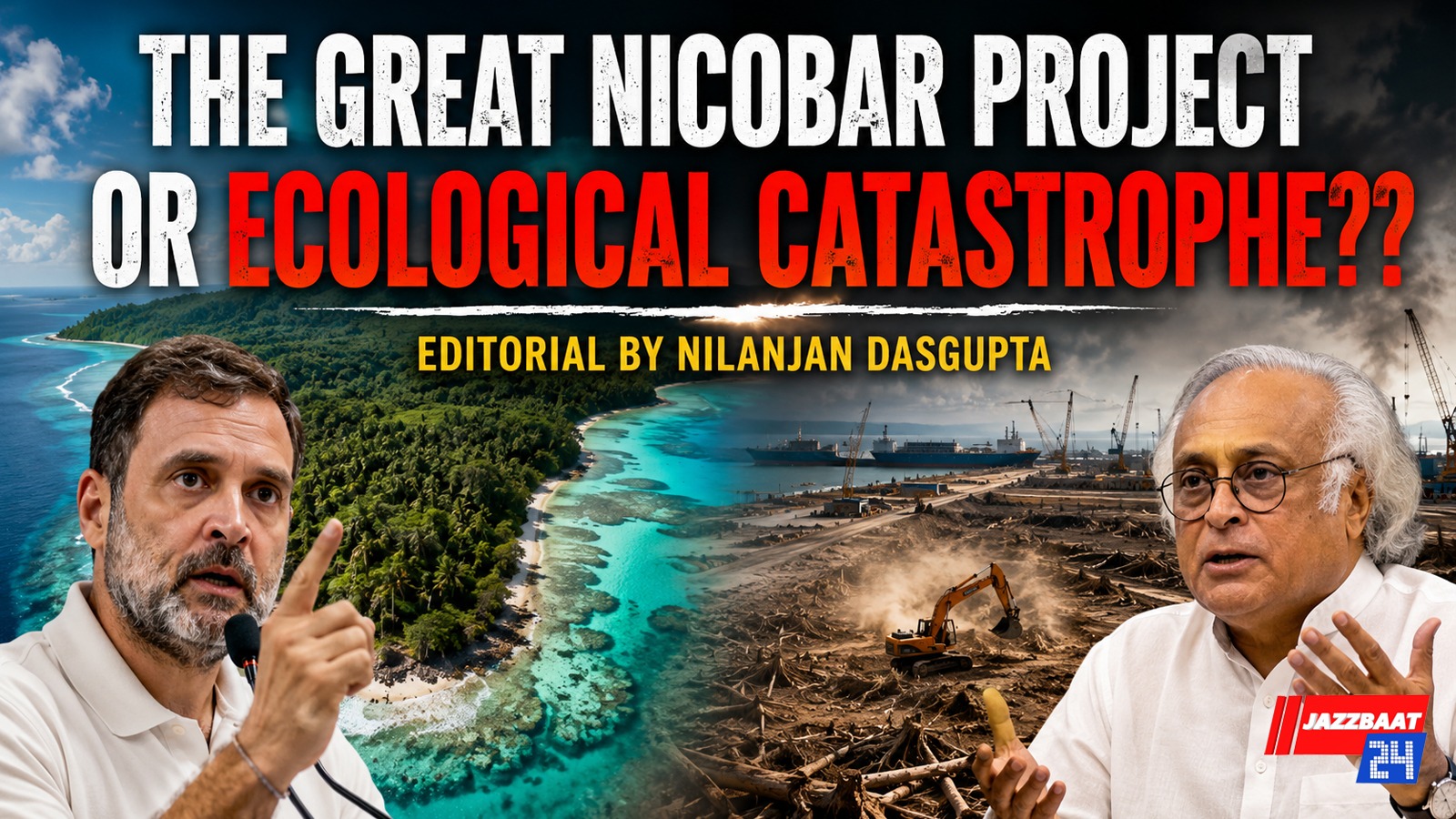
New Delhi: The proposed Great Nicobar Island mega-development project has once again become the centre of political controversy, with senior Congress leaders Rahul Gandhi and Jairam Ramesh alleging that the project could lead to irreversible ecological damage.
On World Environment Day, Rahul Gandhi released a video documenting his recent visit to Great Nicobar, where he explored coral reefs, rainforests, and local settlements. He accused the Centre of presenting the project as a strategic and transshipment initiative while allegedly facilitating commercial development. Gandhi claimed that the project would result in the felling of around 1.5 crore trees, destruction of coral reefs, and displacement of tribal communities and settlers. He further alleged that the project was intended to benefit "one businessman" through the development of hotels and casinos.
The Congress leader argued that expanding the existing naval facility, INS Baaz, could meet strategic requirements without causing large-scale environmental damage. He maintained that economic development should be balanced with ecological preservation and indigenous rights.
Backing Rahul Gandhi's criticism, Jairam Ramesh described the Great Nicobar project as an "ecological disaster" and questioned the environmental clearances granted to it. He argued that alternative options exist to address national security concerns while minimizing environmental impact. Earlier, Ramesh had written to Defence Minister Rajnath Singh, calling the project a "recipe for ecological disaster" and urging reconsideration of the plan.
The Great Nicobar project, estimated to cost around ₹81,000 crore, includes plans for a transshipment port, airport, power infrastructure, and urban development. Supporters of the project argue that it is crucial for strengthening India's strategic presence in the Indian Ocean Region and improving connectivity and economic opportunities in the islands. Critics, however, warn that the project threatens one of India's most ecologically sensitive regions.
The debate has intensified the broader discussion over balancing national security, infrastructure development, environmental conservation, and the rights of indigenous communities in ecologically fragile areas.