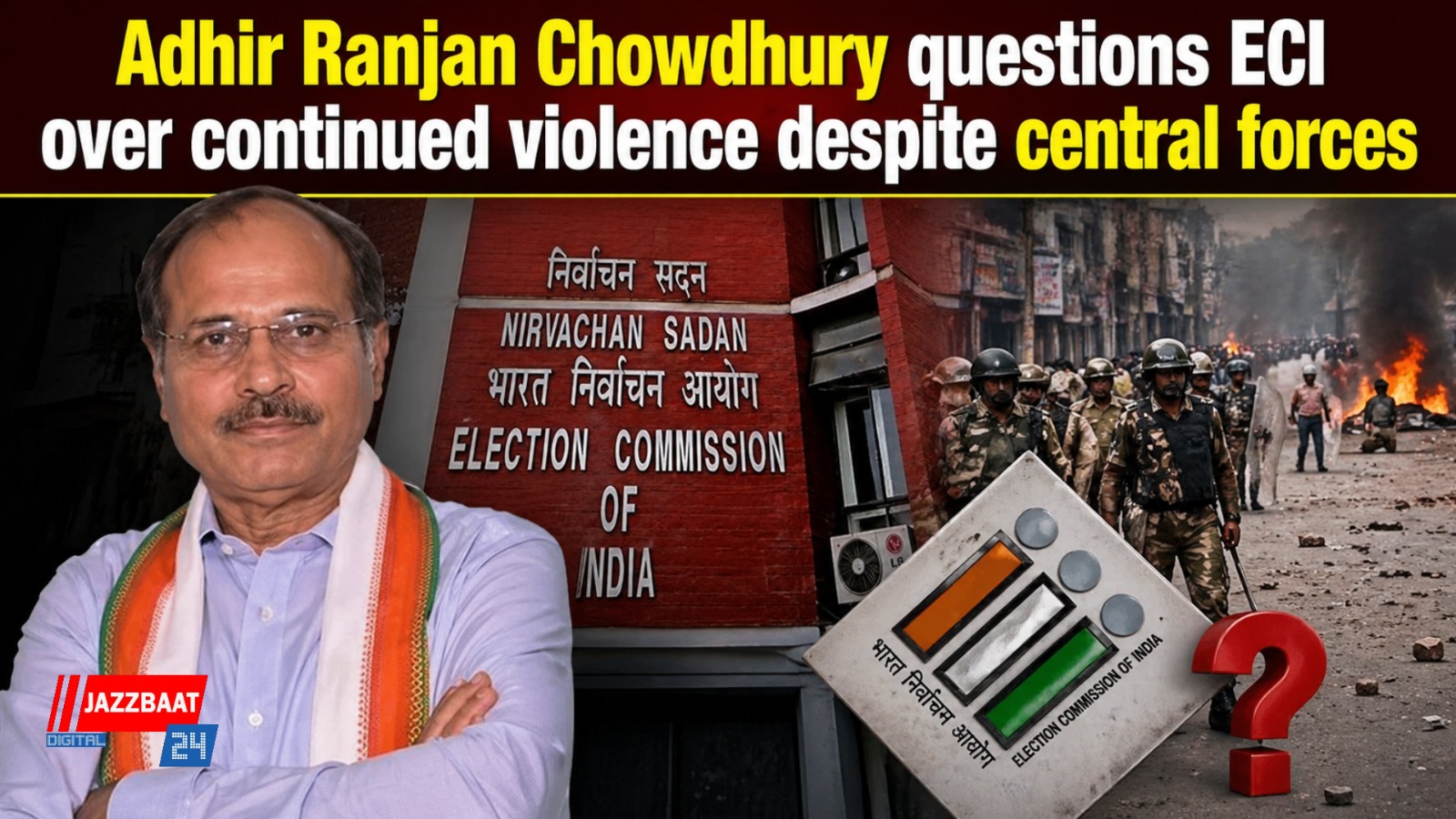
Senior Congress leader Adhir Ranjan Chowdhury on Sunday raised strong questions over the Election Commission of India (ECI), alleging “failures” in controlling violence during elections despite the deployment of central armed forces in West Bengal.
Speaking to reporters during the ongoing election campaign period, Chowdhury said that incidents of tension and sporadic violence in certain areas were deeply concerning and reflected gaps in the poll monitoring system. He argued that the presence of central forces was meant to ensure free and fair elections, but ground reports from several constituencies suggested otherwise.
“Even after deployment of central forces, if violence continues, then serious questions must be asked about the effectiveness of election management,” he said, indirectly pointing to administrative and security lapses. He added that the democratic process should not be overshadowed by fear or intimidation in any form.
Chowdhury also urged the Election Commission to take stronger and more visible action to ensure voter safety, especially in sensitive constituencies going to polls in the second phase. According to him, confidence among voters is essential for high turnout and fair participation, and any perception of insecurity could damage the credibility of the electoral process.
The Congress leader’s remarks come at a time when campaigning in West Bengal has intensified, with multiple political parties trading allegations over violence, booth capture fears, and administrative bias. Several areas in the state have already witnessed isolated clashes between party workers during rallies and campaigning activities, prompting tighter security measures.
The Election Commission has deployed additional central forces across sensitive districts and has been conducting regular reviews of the law-and-order situation. Officials have repeatedly stated that necessary steps are being taken to ensure peaceful polling, including strict monitoring of vulnerable booths and real-time coordination with district administrations.
However, opposition parties continue to raise concerns, claiming that ground-level enforcement does not always match the assurances given by authorities. The ruling party, on the other hand, has dismissed such allegations, accusing opposition leaders of attempting to create a negative narrative around the elections.
With the second phase of voting approaching, political tensions remain high in the state. Leaders from across parties are intensifying their campaigns while also highlighting issues of security and electoral fairness.
The debate over election violence and the role of the Election Commission is expected to remain a key point of discussion as polling progresses further in West Bengal.