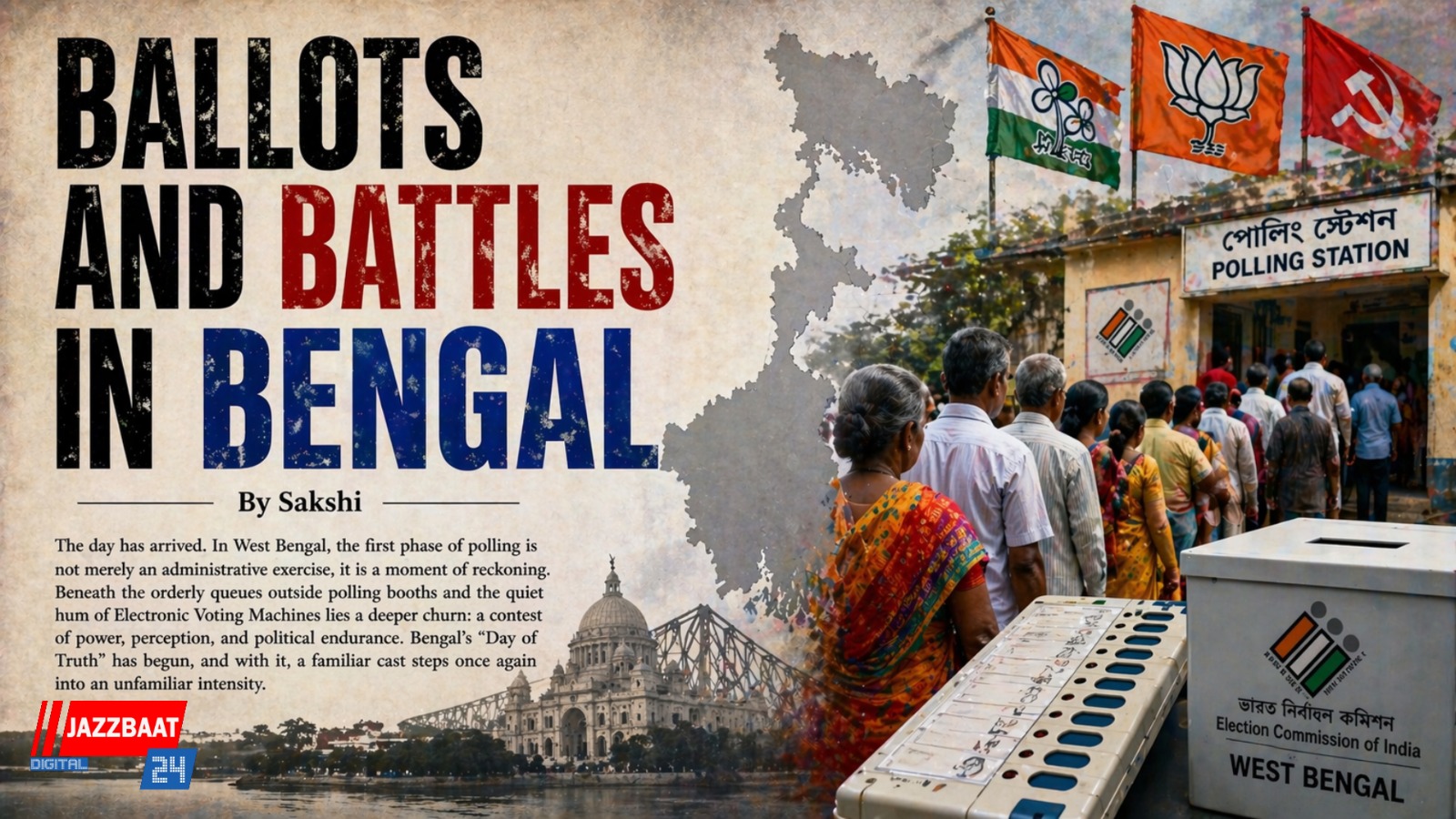
The day has arrived. In West Bengal, the first phase of polling is not merely an administrative exercise, it is a moment of reckoning. Beneath the orderly queues outside polling booths and the quiet hum of Electronic Voting Machines lies a deeper churn: a contest of power, perception, and political endurance. Bengal’s “Day of Truth” has begun, and with it, a familiar cast steps once again into an unfamiliar intensity.
At the heart of this electoral drama are the same towering figures who have defined the state’s politics over the past decade, Mamata Banerjee and a resurgent Bharatiya Janata Party leadership determined to expand its footprint. Yet, while the faces remain the same, the stakes have undeniably risen. This is no longer just a battle for seats; it is a battle for narrative dominance, for ideological space, and for the future trajectory of Bengal’s political identity.
What makes this election particularly compelling is the layering of issues. Governance, welfare schemes, unemployment, and rural distress intersect with questions of identity, polarization, and federal dynamics. The voter, standing silently in line, carries within them a complex calculus, of hope and hesitation, of loyalty and fatigue. Each vote cast today is less a routine choice and more a statement in an ongoing political conversation.
The machinery of democracy, orchestrated by the Election Commission of India, appears robust. Security is tight, surveillance is heightened, and procedural checks like mock polling have aimed to ensure credibility. But beyond these visible assurances lies the intangible test, public trust. In a state where elections often carry an undercurrent of tension, the real success will not just be in peaceful polling, but in the perception of fairness.
There is also an unmistakable shift in tone this time. The rhetoric has sharpened, the campaigns have intensified, and the margins for error have narrowed. Political actors are no longer merely defending or attacking; they are recalibrating. Alliances, strategies, and messaging have all evolved to match an electorate that is more aware, more vocal, and perhaps more unpredictable than ever before.
Yet, amid the clash of power, it is easy to overlook the quiet dignity of the voter. From the elderly walking slowly to polling stations, to the first-time voter capturing their inked finger in a photograph, democracy reveals its most authentic face not in rallies or speeches, but in these small, resolute acts of participation.
As the day unfolds, numbers will be tallied, trends will be analyzed, and narratives will begin to take shape. But today is not about outcomes, it is about expression. Bengal is speaking, one vote at a time.
And in that collective voice lies the truth that no campaign can fully script, no strategy can entirely predict. The same faces may dominate the stage, but the script, ultimately, belongs to the people.