
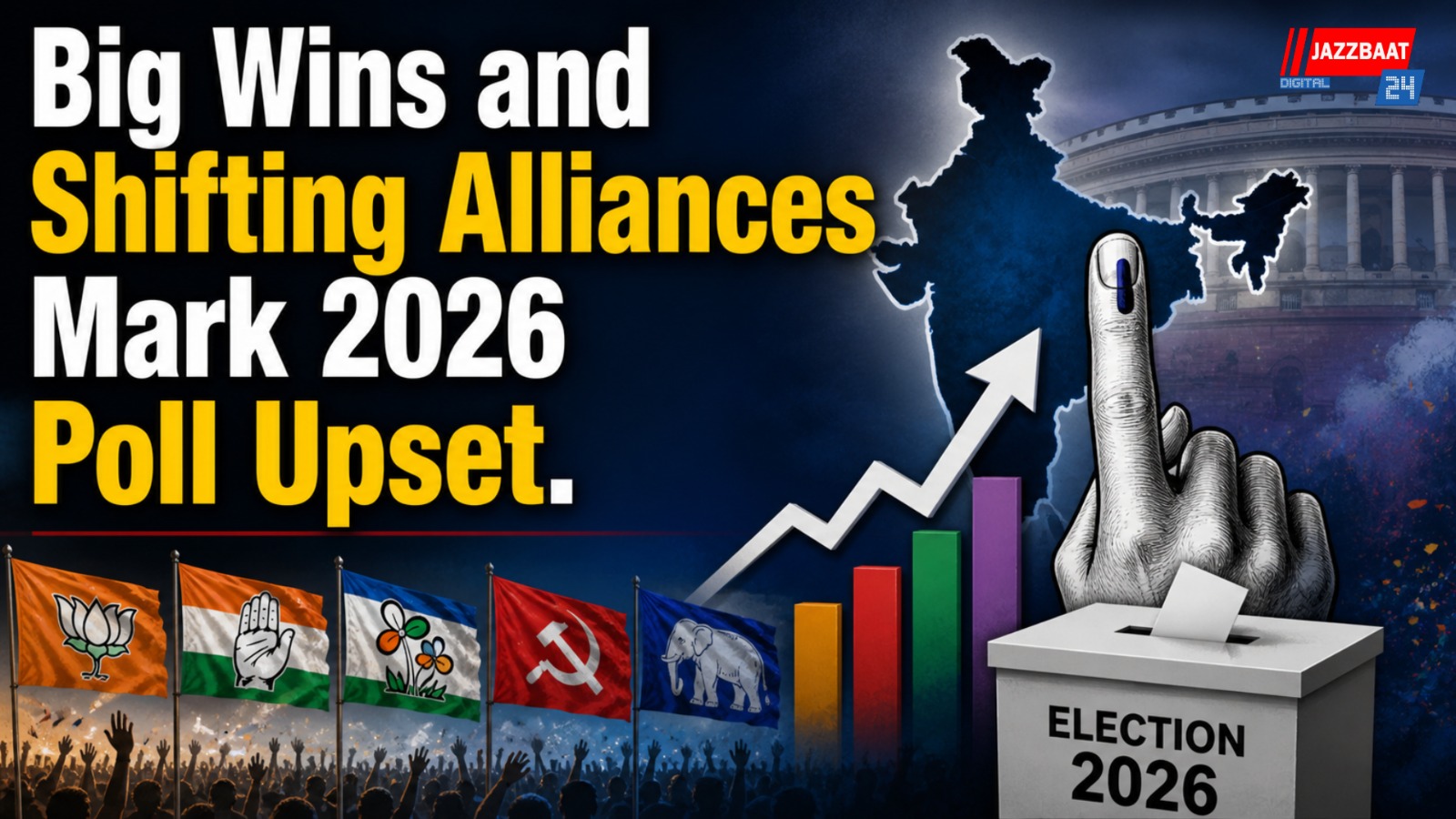
India’s 2026 state elections have dramatically reshaped the political landscape, delivering big wins, unexpected setbacks, and a clear shift in alliances across key regions. The most striking development came from West Bengal, where the Bharatiya Janata Party (BJP) secured a historic victory, ending over a decade of Trinamool Congress (TMC) rule led by Mamata Banerjee. The BJP won over 200 seats in the 294-member assembly, marking its first-ever government in the state and a major breakthrough in eastern India.
One of the biggest surprises was Mamata Banerjee’s defeat in her stronghold, Bhabanipur, to former ally Suvendu Adhikari, symbolising both a personal and political setback. This result reflects not just anti-incumbency but also a shift in voter alignment, as the BJP successfully expanded its support base across rural and urban belts. Analysts point to strong grassroots campaigning, welfare messaging, and organisational depth as key factors behind the party’s success.
Beyond Bengal, the elections highlighted a broader trend of changing alliances and weakening opposition unity. The INDIA bloc, which aimed to challenge the BJP nationally, suffered significant setbacks. Key regional allies like the TMC and DMK struggled, raising questions about the bloc’s future cohesion and strategy. In contrast, the BJP not only retained Assam but also made gains in other regions, strengthening its position across multiple states.
Another notable development came from Tamil Nadu, where a new political force disrupted traditional party dominance, pushing established players to the margins. Meanwhile, in Kerala, the Congress-led alliance staged a comeback, showing that regional dynamics remain complex and varied.
Smaller parties and independents also made limited but meaningful gains in certain constituencies, indicating that while national parties dominate, local factors still influence outcomes. The Congress, for instance, managed to win a couple of seats in Bengal after a poor performance in previous elections, hinting at small openings despite overall decline.
Overall, the 2026 polls underline a decisive shift in India’s political map. The BJP’s expanding footprint contrasts with a fragmented opposition, while new regional players and changing alliances suggest that Indian politics remains fluid and unpredictable.