
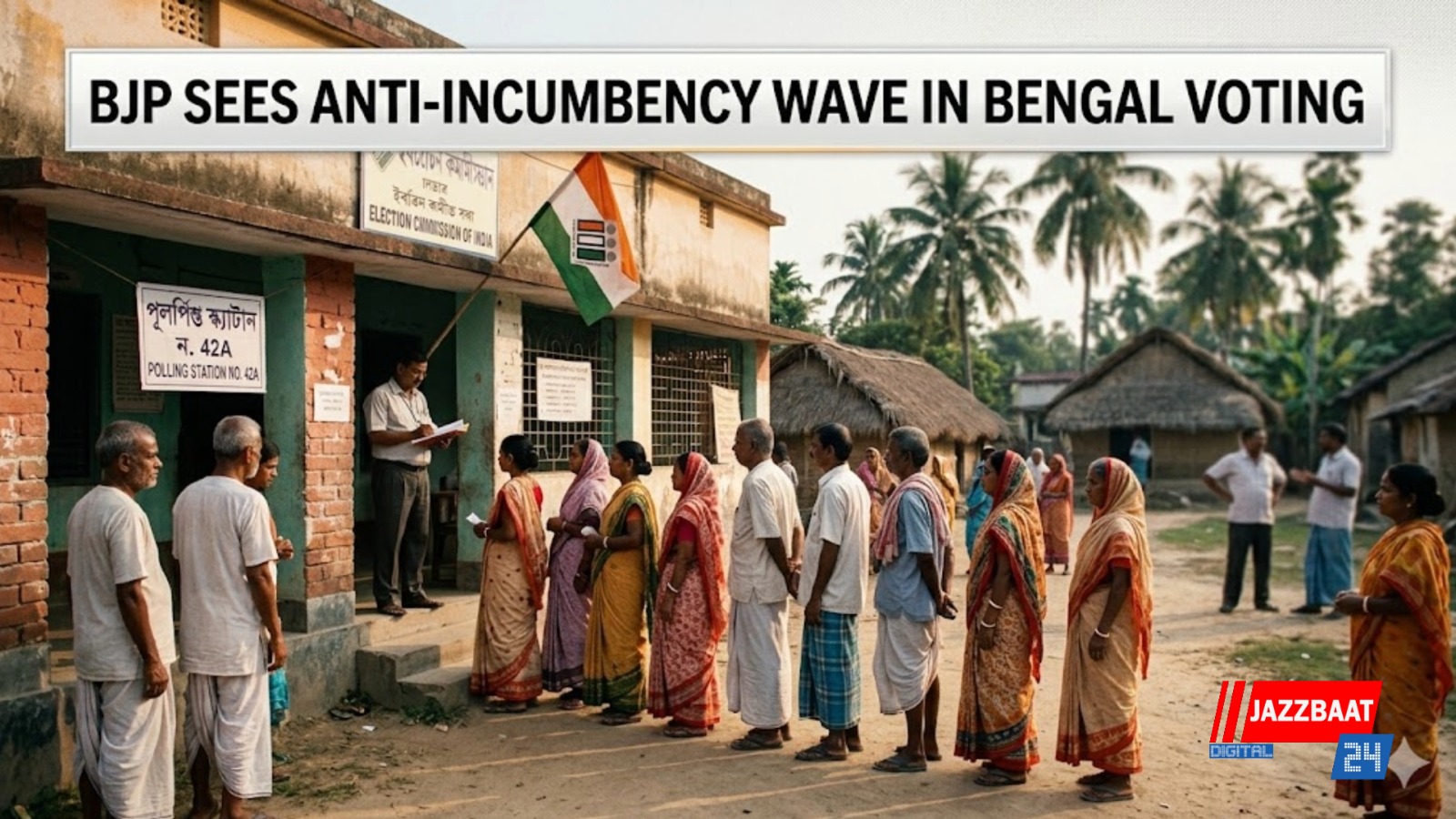
Kolkata: Maharashtra minister Chandrashekhar Bawankule on Friday claimed that the high voter turnout in West Bengal reflects a strong public desire to remove Chief Minister Mamata Banerjee from power. He said people “voted enthusiastically to oust Mamata didi,” interpreting the polling percentage as a sign of growing anti-incumbency against the ruling Trinamool Congress (TMC).
Reacting to the ongoing Assembly election, Bawankule, a senior leader of the Bharatiya Janata Party, argued that the enthusiasm among voters indicates a clear shift in public mood. He suggested that large turnout, particularly in rural and semi-urban areas, signals dissatisfaction with the current state government and a desire for political change.
The BJP has consistently linked higher voter participation in Bengal to what it describes as a “pro-change wave.” Party leaders have maintained that increased turnout often works in favour of challengers, especially when voters are motivated to express discontent with the incumbent administration. Bawankule echoed this line, asserting that the electorate has come out in large numbers to “bring development-oriented governance” to the state.
However, the ruling TMC has strongly rejected such claims, stating that high turnout reflects the strength of democracy and not necessarily anti-incumbency. Party leaders argue that enthusiastic participation benefits all sides and cannot be interpreted as support for any one political formation. They have also accused the BJP of attempting to create a narrative of momentum ahead of the remaining phases of polling.
Political observers caution that while voter turnout can offer clues about electoral trends, it is not always a definitive indicator of the final outcome. Factors such as local dynamics, candidate profiles and regional issues often play a decisive role in shaping results.
The contest in West Bengal remains intense, with both the BJP and TMC projecting confidence. As more phases of polling unfold, competing interpretations of voter behaviour are likely to continue shaping the political discourse, with each side seeking to claim the advantage from the turnout figures.