
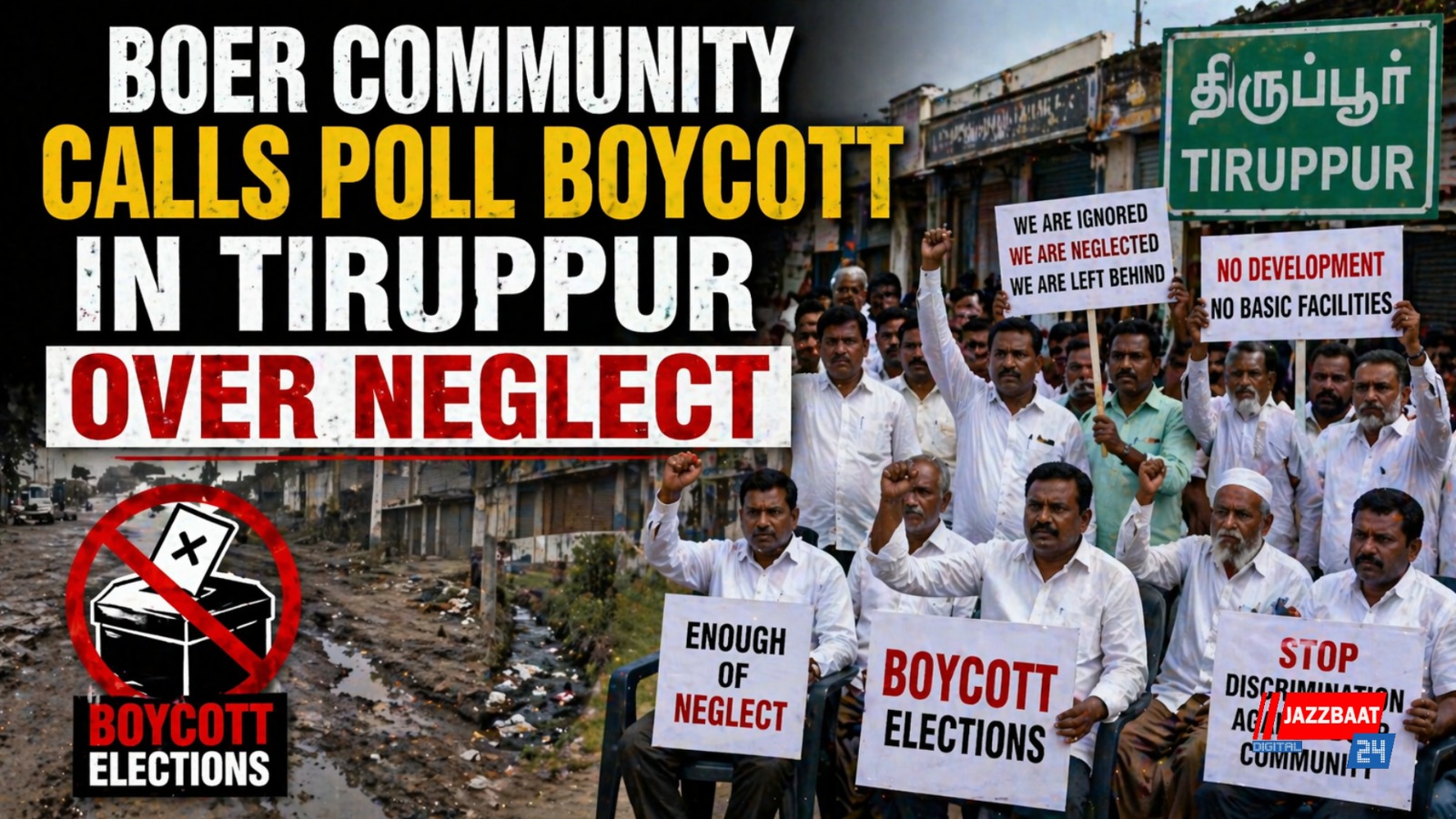
In a significant development during the ongoing 2026 Tamil Nadu Assembly elections, the Boer Community Welfare Association in Tiruppur has announced a boycott of the polling process, citing long-standing grievances related to political neglect and lack of socio-economic progress.
The decision, made public on polling day, has drawn attention as it involves a sizeable section of voters in a key industrial district. According to community leaders, the boycott is a protest against what they describe as decades of marginalisation, absence of adequate political representation, and insufficient government initiatives aimed at improving their economic and educational conditions.
Leaders of the association reportedly urged members of the community to stay away from polling booths as a mark of dissent. They claim that despite having a substantial population across Tamil Nadu, their issues have largely been ignored by successive governments and mainstream political parties.
The president of the district-level association highlighted that younger members of the community are increasingly frustrated over limited opportunities and a lack of recognition. According to him, the boycott is intended to send a strong message to political stakeholders that their concerns can no longer be overlooked.
Tiruppur, known as one of Tamil Nadu’s major textile hubs, plays an important role in shaping electoral outcomes due to its mix of industrial workers, entrepreneurs, and community-based voting patterns. The absence of Boer community voters in certain pockets where they hold a noticeable share of the electorate could potentially influence margins in closely contested constituencies.
The boycott also reflects a broader trend seen in parts of Tamil Nadu, where communities have resorted to election boycotts to highlight grievances ranging from lack of basic amenities to livelihood concerns. Such actions are often aimed at drawing immediate attention from authorities and political parties during the high-stakes election period.
Meanwhile, polling across Tamil Nadu’s 234 constituencies is being conducted in a single phase, with millions of voters participating to decide the state’s political future. Authorities have made extensive arrangements to ensure smooth voting, though incidents like this boycott underscore underlying social and political challenges.
As voting continues, it remains to be seen whether the protest by the Boer community will prompt engagement from political leaders or lead to policy responses addressing their demands.