
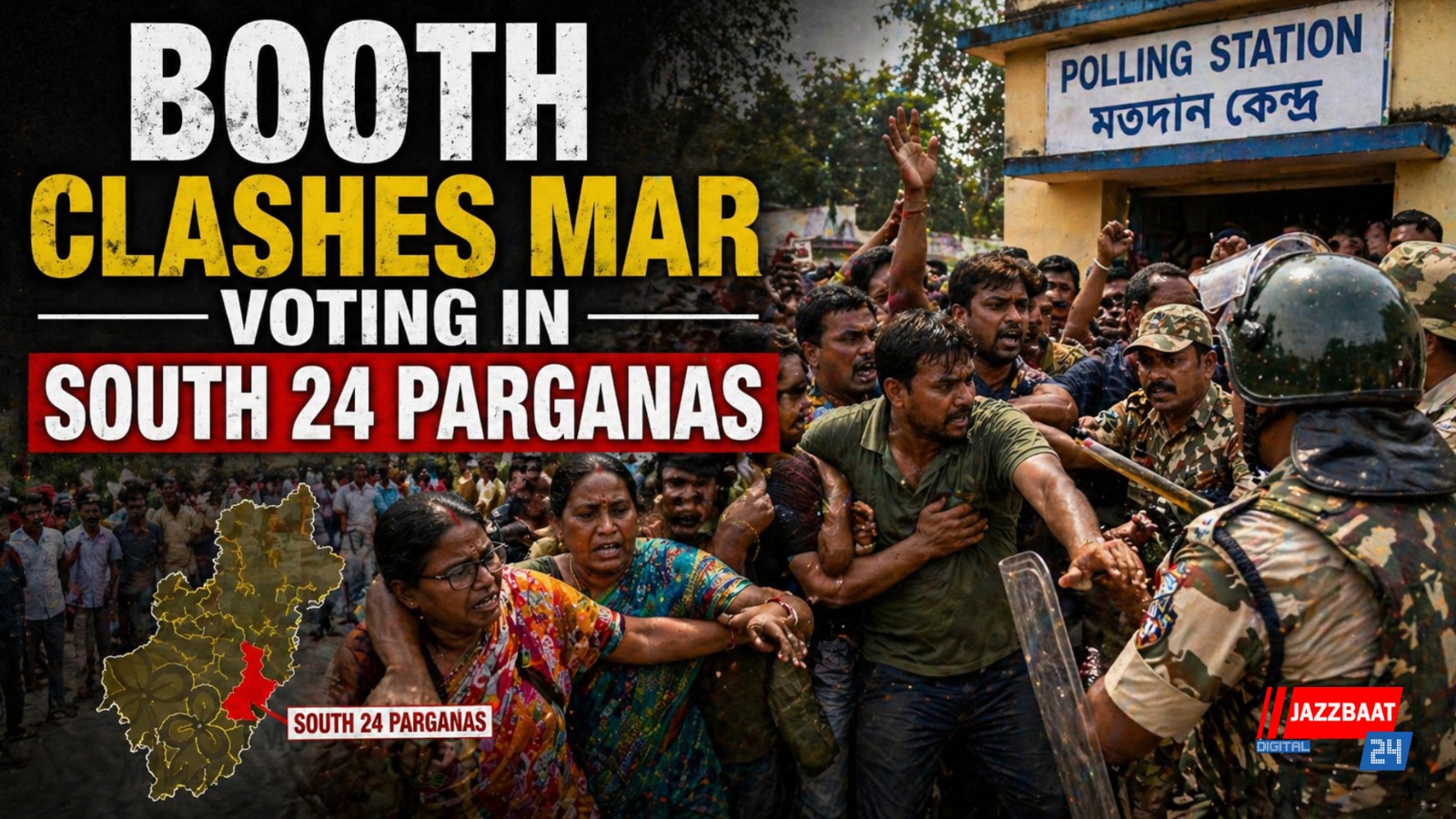
Voting in parts of South 24 Parganas during the second phase of the West Bengal Assembly elections on April 29 witnessed tense scenes, with allegations of clashes, voter intimidation, and disruption at several polling booths. The otherwise high-voltage election, marked by heavy turnout, saw pockets of unrest that briefly disturbed the polling process.
According to reports from the ground, tensions escalated in areas such as Canning Paschim, where clashes broke out near polling stations. Local accounts suggested that groups of voters became agitated following allegations of interference and aggressive behaviour, leading to chaotic scenes around booths. In some instances, heated arguments reportedly turned into physical scuffles, prompting intervention by security personnel.
Political reactions further intensified the situation. Allegations surfaced from sections of the ruling party accusing central forces of intimidating voters and using excessive force. These claims were strongly contested by opposition voices, who instead alleged attempts to influence voting at certain booths. The competing narratives added to the charged atmosphere on polling day.
Meanwhile, reports of sporadic violence and disturbances were not limited to a single location. Election updates indicated that while the overall polling process remained largely functional, isolated incidents of unrest were recorded across multiple districts, including South 24 Parganas. Authorities maintained that security arrangements were robust, with central forces deployed in large numbers to ensure orderly voting.
Adding to the controversy, complaints regarding possible irregularities—such as alleged tampering with voting machines in nearby constituencies like Falta—also surfaced during the day. Election officials stated that strict action, including possible re-polling, would be taken if such allegations were verified, underscoring the sensitivity of the electoral process.
Despite these disruptions, voter participation remained significantly high. By late afternoon, turnout figures approached nearly 90 percent across the constituencies voting in this phase, reflecting strong public engagement in the electoral process.
Officials emphasized that most polling stations functioned normally and that incidents of unrest were contained quickly. However, the developments in South 24 Parganas highlighted the persistent challenges of conducting peaceful elections in politically sensitive regions, where local tensions can rapidly escalate during high-stakes voting.
As voting concluded, attention now shifts to the outcome, with results expected to determine the political direction of the state in the coming years.