

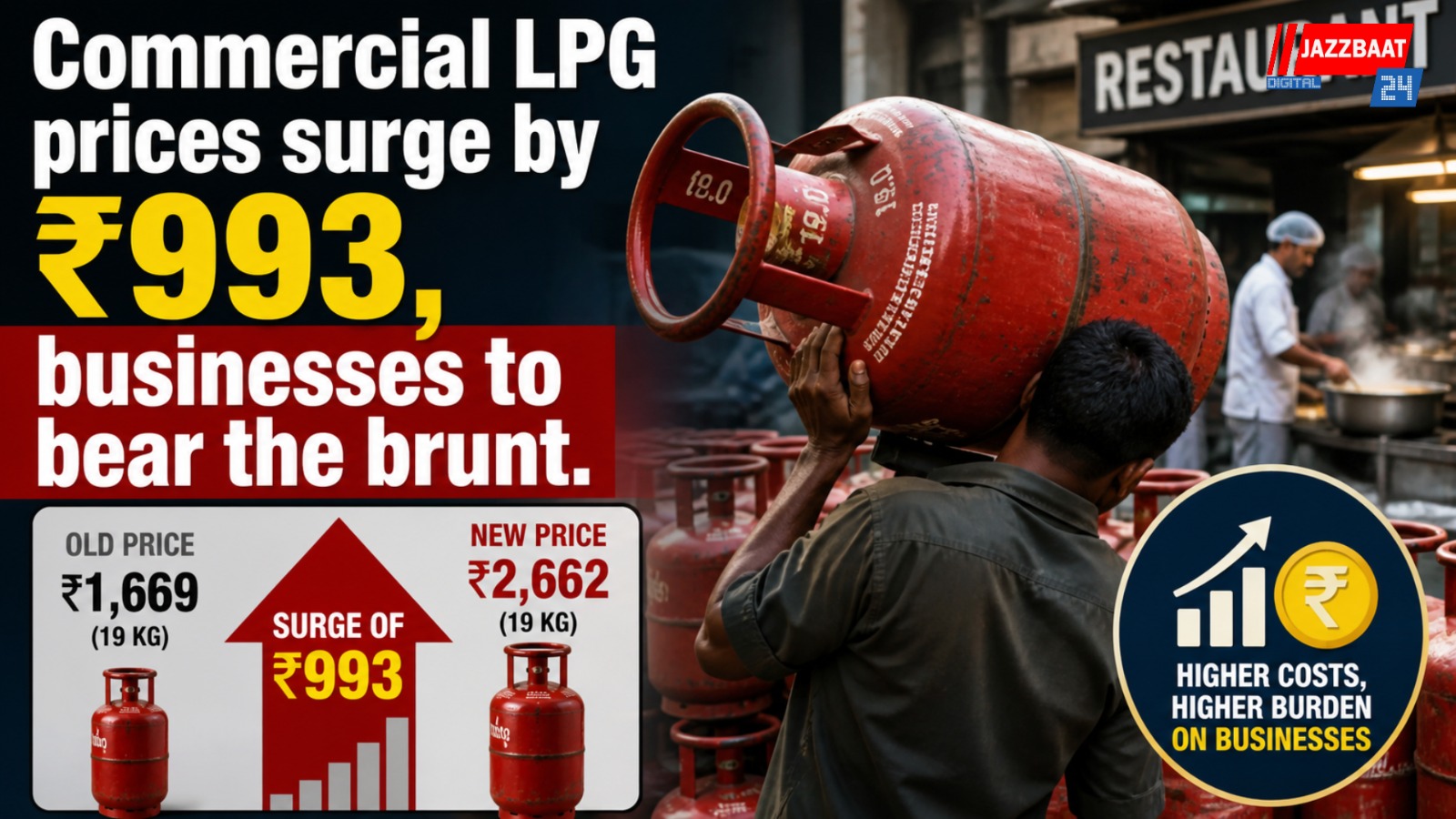
India witnessed a sharp rise in commercial cooking gas prices on May 1, as oil marketing companies increased the price of 19-kg LPG cylinders by ₹993, marking one of the steepest hikes in recent times. The revision has pushed the cost of a commercial cylinder in Delhi to around ₹3,071.50, crossing the ₹3,000 mark for the first time.
The hike comes amid a global energy crisis triggered by geopolitical tensions, particularly in the Middle East. Disruptions in crude oil supply and rising international fuel prices have directly impacted LPG rates in India.
While commercial users face a significant burden, there is some relief for households as domestic LPG cylinder prices remain unchanged for now. Officials confirmed that the increase applies only to commercial cylinders, which are widely used by hotels, restaurants, catering services, and small businesses.
The impact is expected to be immediate across the hospitality and food sectors. Restaurant owners and small vendors are likely to see a sharp rise in operational costs, which could lead to higher prices for consumers. Industry experts warn that the hike may trigger a ripple effect, increasing the cost of eating out and possibly affecting inflation in urban areas.
This is not the first increase in recent months. Commercial LPG prices have been revised multiple times since March, reflecting continued volatility in global energy markets. In fact, in cities like Kolkata and Mumbai, cumulative hikes over the past few months have been substantial, putting sustained pressure on businesses.
The move has also sparked political reactions. Opposition parties have criticised the government, alleging that repeated fuel price hikes are adding to the financial strain on small businesses and the common man.
Government sources, however, maintain that LPG prices are linked to international market trends and cannot be insulated entirely from global fluctuations. India imports a significant portion of its LPG requirements, making it vulnerable to external shocks.
As global uncertainties continue, experts believe fuel prices may remain volatile in the near term. For now, businesses across India will have to absorb or pass on the increased costs, while consumers may soon feel the pinch in everyday expenses.