
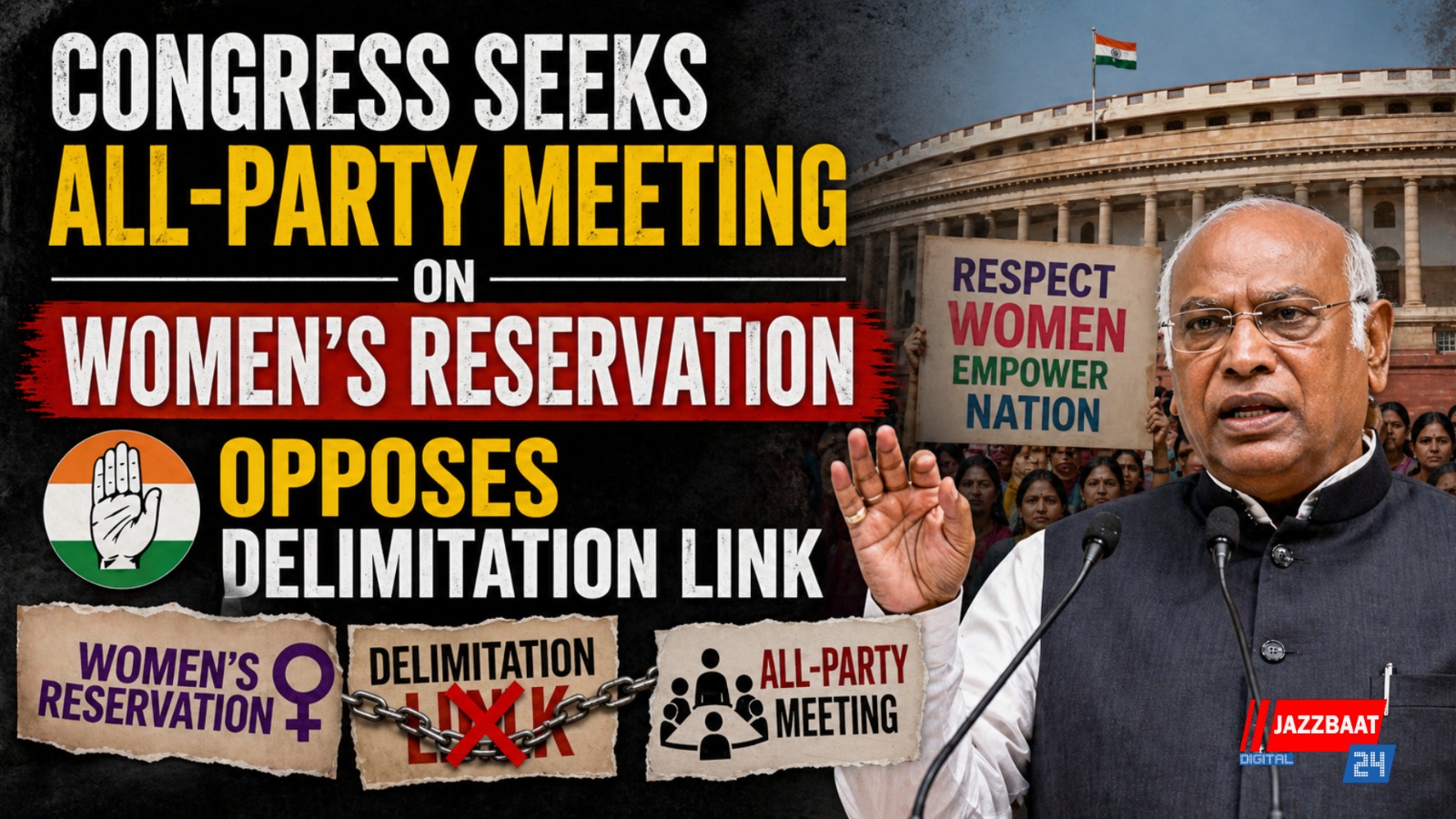
The Indian National Congress has called for an all-party meeting to discuss the implementation of women’s reservation in legislatures, demanding that it be pursued without linking it to the process of delimitation. The party has raised concerns that tying the two issues together could delay long-pending political representation reforms for women.
The demand comes in the context of ongoing national debate over the rollout of the women’s reservation framework, which aims to increase female representation in elected bodies. The Congress has argued that the issue of women’s reservation should be treated as a standalone reform and not be made dependent on constituency restructuring exercises such as delimitation.
Leaders of the Indian National Congress stated that women’s political empowerment has already been delayed for years, and further procedural linking could push implementation into an uncertain timeline. They urged the central government to initiate a consensus-building process by convening all political parties for a structured discussion.
According to party representatives, an all-party meeting would help clarify concerns, build agreement on the roadmap, and ensure that the reservation for women in legislatures is implemented without administrative or political delays. They also emphasized that broad consensus is essential for a reform of this scale.
The debate around delimitation refers to the redrawing of electoral constituencies based on population changes. Several parties have expressed differing views on whether women’s reservation should be implemented before or after this exercise. Critics of linking the two argue that it could postpone enforcement for an extended period.
The Congress maintained that women’s representation in Parliament and state assemblies is a matter of democratic equity and should not be subjected to procedural postponements. It reiterated its support for the principle of reservation but stressed the need for immediate action.
Other political parties are expected to respond to the proposal in the coming days, as the issue continues to gain attention across the political spectrum. The central government has not yet officially reacted to the demand for an all-party meeting.
Political observers note that the debate reflects broader disagreements over electoral reforms and timing, with women’s representation emerging as a key point of discussion in contemporary legislative politics.
As discussions continue, the demand for consensus-building signals that the issue of women’s reservation remains both politically significant and sensitive, requiring coordination across party lines to move forward.