
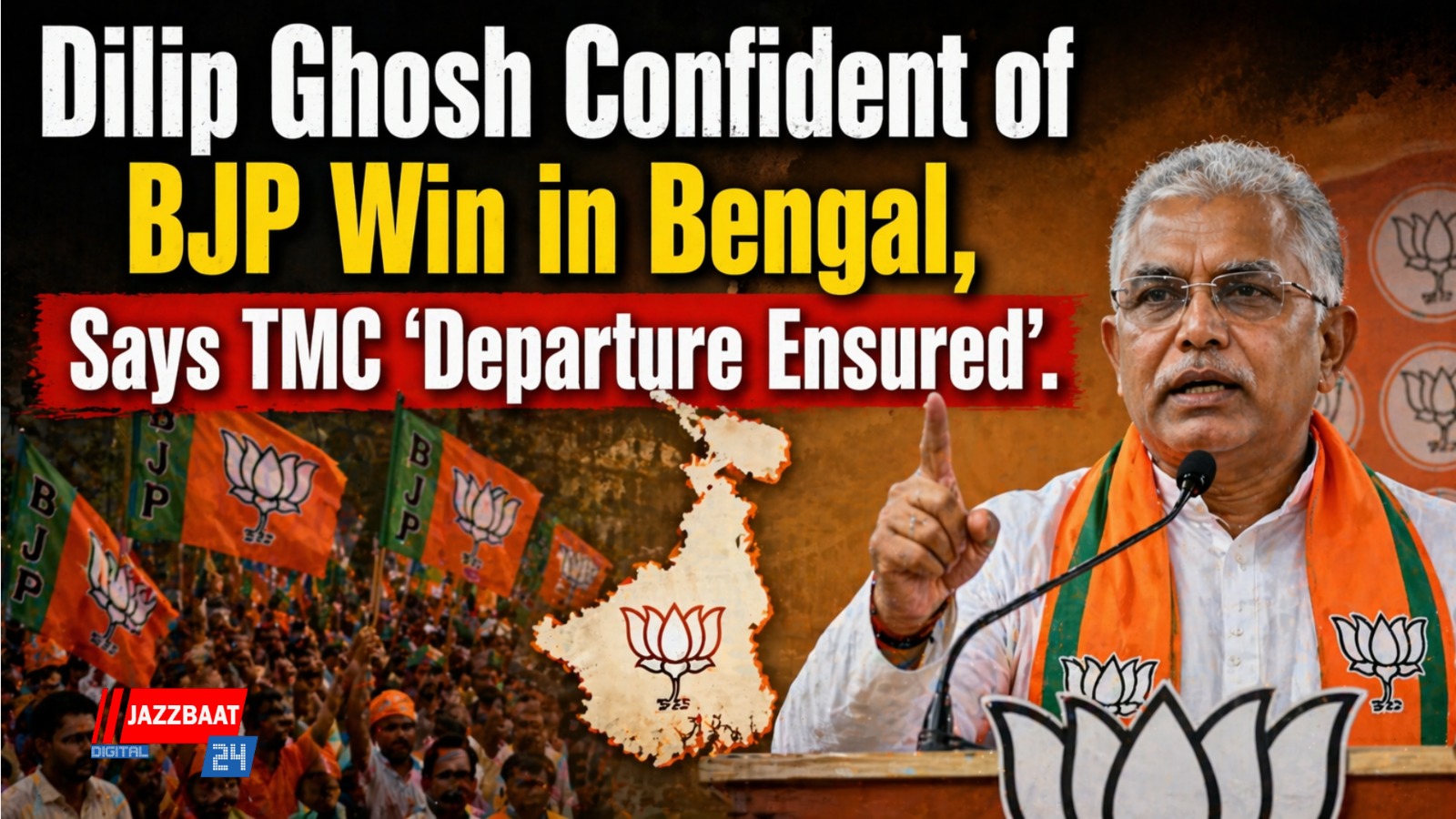
Senior BJP leader Dilip Ghosh has expressed strong confidence in his party’s prospects in the upcoming West Bengal Assembly elections, asserting that the ruling All India Trinamool Congress is headed for defeat and its “departure is ensured.”
Speaking to reporters in Kharagpur, where he is contesting from the Kharagpur Sadar constituency, Ghosh said that the political mood in the state has shifted decisively against the ruling party. “The time has come for TMC to go… their departure is ensured,” he stated, projecting a clear victory for the Bharatiya Janata Party.
Ghosh also raised concerns about voter intimidation, alleging that the presence of central forces at polling booths would enable people to vote freely without fear. He claimed that such deployment would ensure a fair electoral process, allowing voters to exercise their democratic rights without pressure.
The BJP leader is aiming to reclaim and strengthen his political standing in Kharagpur Sadar, a key constituency with a diverse voter base. The seat has witnessed shifting political fortunes in recent elections, making it a closely watched battleground in the larger contest between the BJP and the TMC.
His remarks come amid an intense and highly polarised campaign in West Bengal, where both the BJP and the TMC are aggressively targeting each other over governance, law and order, and development issues. While the BJP has been projecting strong anti-incumbency sentiment, the ruling TMC continues to highlight its welfare schemes and grassroots support.
Political observers note that such confident assertions from BJP leaders are part of a broader campaign strategy aimed at energising party workers and consolidating voter support in the final phase before polling. At the same time, leaders from the TMC have dismissed these claims, maintaining that they will retain power for another term.
As campaigning enters its final stretch, the electoral battle in West Bengal remains highly competitive, with both sides projecting confidence. The outcome will ultimately depend on voter turnout and how effectively each party converts its narrative into votes on polling day.