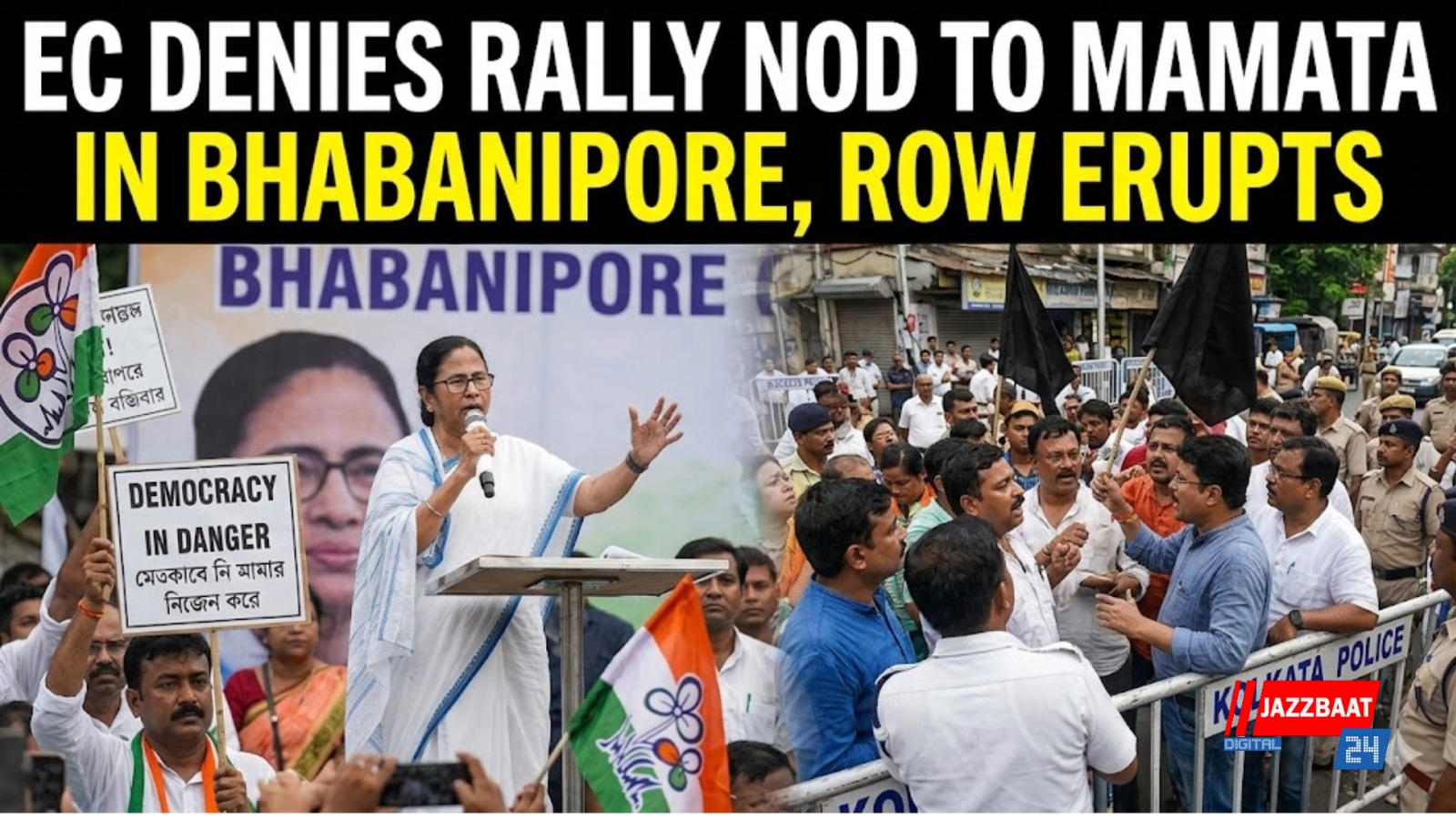
The Election Commission of India (EC) has denied permission to West Bengal Chief Minister Mamata Banerjee to hold a rally in Bhabanipore ahead of the crucial Assembly polls, triggering a fresh political controversy in the state.
According to reports, the proposed rally was scheduled in her home constituency just days before voting. However, the EC did not grant clearance, citing procedural issues related to permissions and applications.
The decision has drawn a sharp reaction from Banerjee, who questioned how she could be denied permission to campaign in her own constituency. She alleged discriminatory treatment and accused authorities of bias, pointing out that permissions for other leaders’ rallies were granted swiftly.
The controversy comes at a critical time, with West Bengal heading into polling phases on April 23 and April 29. Bhabanipore is one of the key constituencies in the election, and Banerjee has been actively campaigning there after focusing on statewide outreach.
Reports also suggest that in a related incident, a planned rally in Kolkata had to be cancelled at the last moment due to the absence of a valid online application through the EC’s mandated system. Officials clarified that offline permissions are not accepted under current rules, leading to denial of the event.
Following the denial, Banerjee adapted her campaign style, opting for direct voter outreach instead of large rallies. In one instance, she was seen interacting with locals at a roadside tea stall, engaging in informal conversations with voters.
The Trinamool Congress (TMC) has criticised the EC’s decision, alleging a pattern of unequal treatment during the election process. Party leaders claim that administrative and procedural hurdles are being selectively applied to restrict their campaign activities.
The EC, however, has maintained that all decisions are taken based on established guidelines and that parties must comply with prescribed procedures, including timely online applications for rallies and public meetings.
With campaigning entering its final phase, the issue has intensified the already charged political atmosphere in West Bengal. As both the ruling All India Trinamool Congress and the opposition Bharatiya Janata Party continue their aggressive campaigns, such disputes are likely to remain at the centre of political debate in the run-up to voting.