

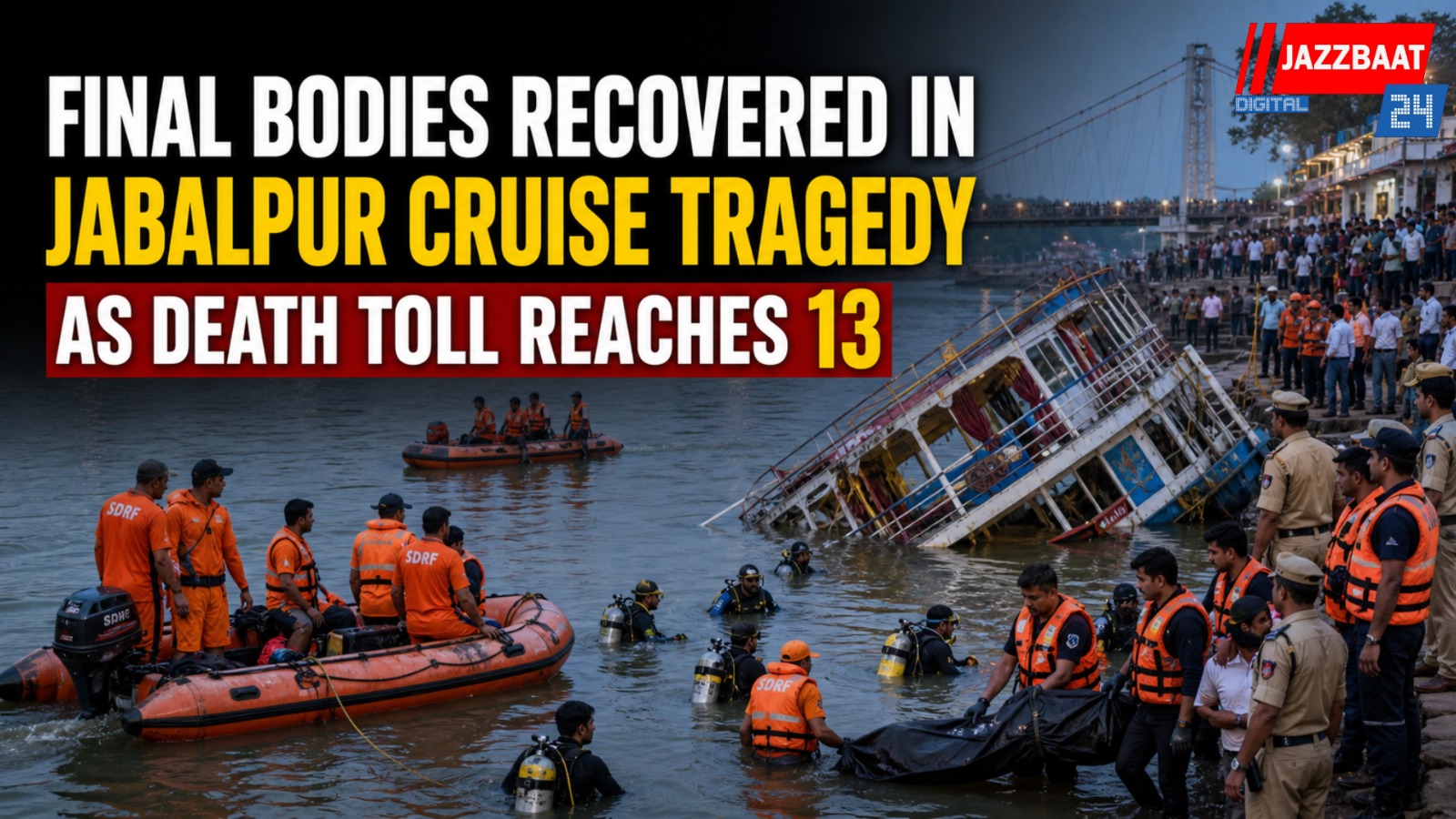
The search operation following the devastating cruise boat capsize at Bargi Dam in Madhya Pradesh concluded on Sunday morning with the recovery of the last two missing passengers. The discovery of the bodies of five-year-old Mayuram and his uncle, Kamraj (50), has brought the final death toll to 13. Kamraj was an employee of the Ordnance Factory in Khamaria, and his body was found floating approximately 100 meters from the site of the accident.
The tragedy occurred on the evening of Thursday, April 30, when a Madhya Pradesh Tourism (MPT) cruise boat carrying more than 40 passengers was struck by a violent storm on the Narmada River reservoir. While 28 people were rescued in the immediate aftermath, the following days saw a grueling recovery effort. On Saturday, rescuers retrieved the bodies of five-year-old Viraj Soni and five-year-old Tamilvendan Arya, which had initially raised the toll to 11. With the final recovery of Mayuram and Kamraj today, all missing persons have now been accounted for.
Survival stories from the incident have highlighted severe safety concerns. Witnesses and survivors alleged that life jackets were not distributed until the vessel began to tilt, making it nearly impossible for many to secure them in time. One survivor recounted the heartbreaking moment a mother attempted to shield her young son within her own life jacket before they were both swept away by the waves.
In response to the mounting outcry, the Madhya Pradesh government has ordered a high-level probe into the disaster. Preliminary findings indicate that the cruise sailed despite a "yellow alert" for strong winds, with gusts reaching up to 50 km/h. Three crew members, including the boat’s pilot, have been dismissed from their services, and the state has temporarily banned the operation of similar tourist vessels across all reservoirs.
Chief Minister Mohan Yadav has announced a compensation of ₹4 lakh for the families of each deceased victim. As Jabalpur begins a period of mourning, the focus has shifted to the strict implementation of safety protocols for inland water tourism to prevent a repeat of this avoidable catastrophe.