

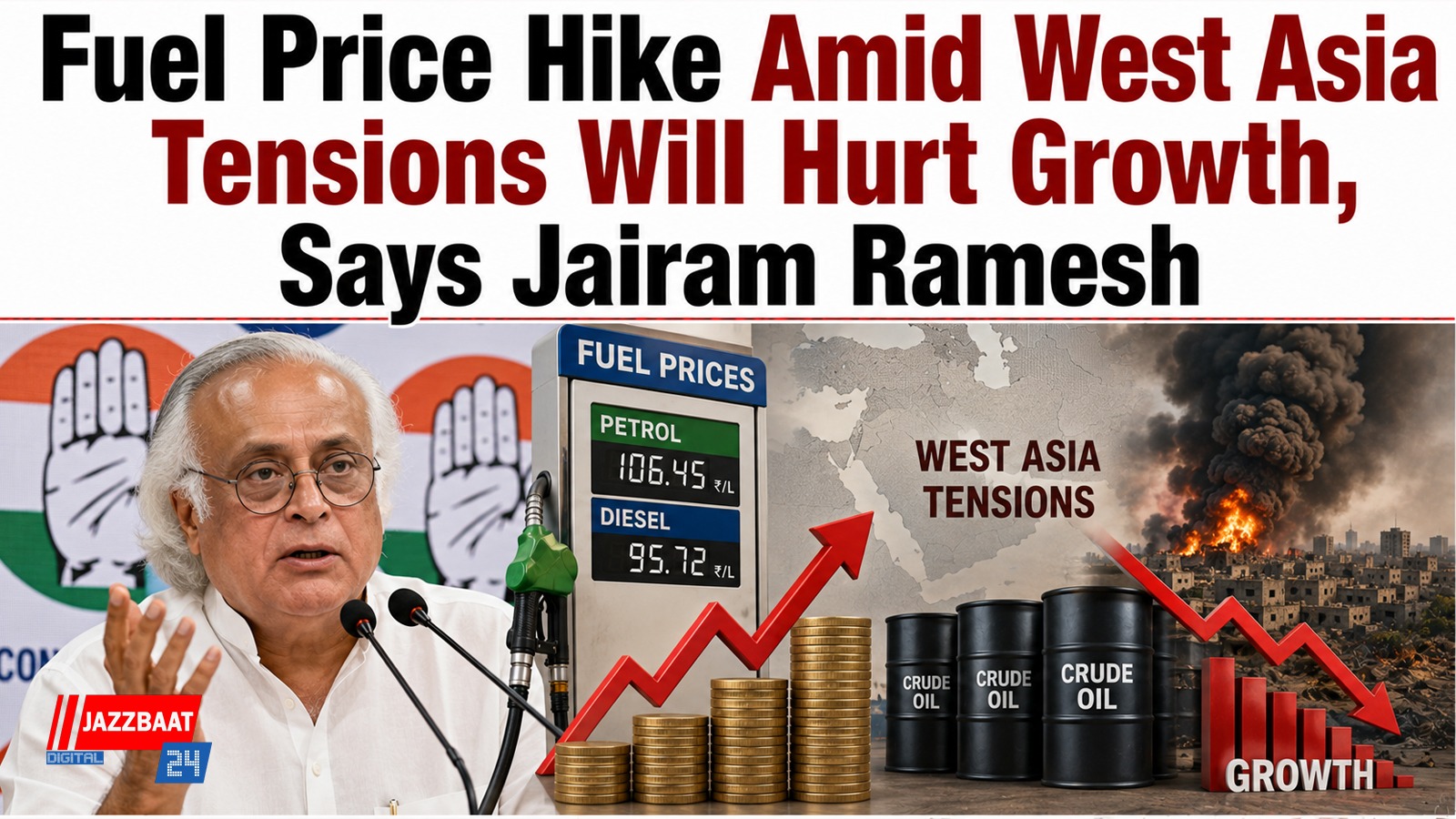
Congress leader and senior spokesperson Jairam Ramesh on Friday criticised the Centre over the recent increase in fuel prices, warning that it could intensify inflationary pressures and negatively impact India’s economic growth outlook at a time when global uncertainties are already high due to the ongoing West Asia crisis.
In a strongly worded statement, Ramesh said the timing of the fuel price revision was “deeply concerning,” arguing that international crude oil volatility triggered by tensions in West Asia should have prompted the government to shield domestic consumers rather than pass on the burden. He claimed that higher fuel prices would have a direct cascading effect on transportation costs, agriculture input prices, and essential commodities.
Ramesh alleged that the decision would “further squeeze household budgets” and disproportionately affect middle-class families, daily wage earners, and small businesses. He also said that rising fuel costs could force economists to revise India’s growth estimates downward in the coming quarters, especially if inflation remains persistent.
“The economy is already facing multiple headwinds, and this will only add to them,” he said, pointing to global geopolitical instability, supply chain disruptions, and fluctuating energy markets. According to him, India’s macroeconomic stability could come under strain if fuel-driven inflation continues unchecked.
The Congress leader also questioned the government’s taxation policy on petroleum products, arguing that reductions in excise duties could have provided immediate relief to consumers. He urged the Centre to adopt a more “pro-people approach” and insulate essential commodities from international oil price shocks.
The criticism comes at a time when global oil markets have seen volatility due to tensions in West Asia, raising concerns among energy-importing nations like India. Economists have noted that India’s dependence on imported crude makes domestic fuel pricing sensitive to geopolitical developments, though they differ on how much of the global price movement should be passed on to consumers.
Meanwhile, government sources have in the past maintained that fuel pricing is determined by a combination of global crude rates, currency exchange fluctuations, and tax structures set by both central and state governments. Officials also argue that India has taken steps to diversify energy sources and build strategic reserves to cushion against external shocks.
Ramesh’s remarks add to the ongoing political debate over inflation and economic management, with opposition parties increasingly targeting the government on cost-of-living issues. The Centre is yet to respond directly to his latest comments.
As West Asia tensions continue to influence global energy markets, fuel pricing is expected to remain a key political and economic concern in India in the coming weeks.