
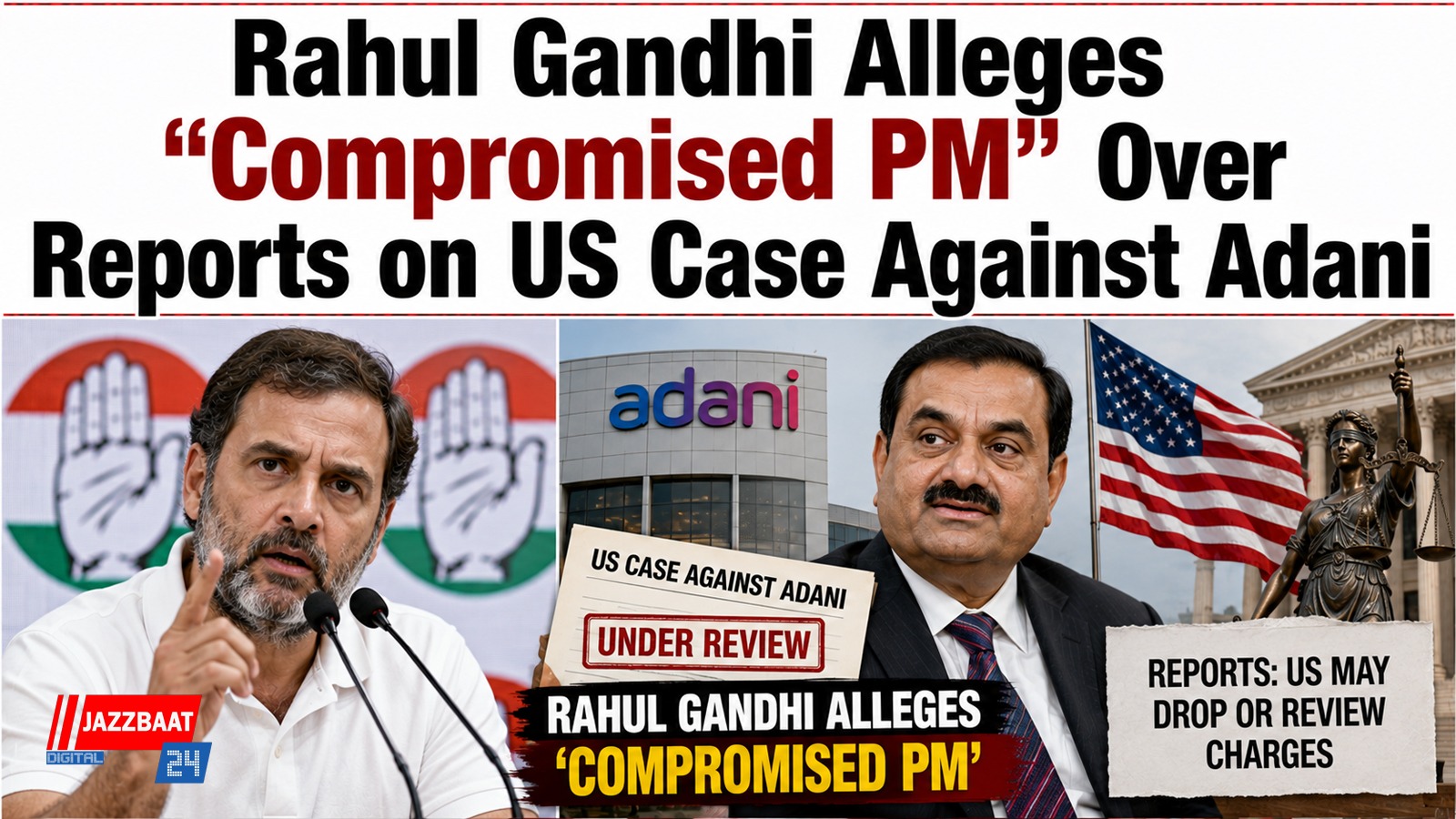
Congress leader Rahul Gandhi on Friday launched a fresh attack on the Centre, alleging that Prime Minister Narendra Modi had “bargained for favours” after reports suggested that the United States may be moving to drop certain charges against industrialist Gautam Adani.
Reacting to the media reports, Rahul Gandhi described the Prime Minister as a “compromised PM” and claimed that there were political dealings behind the scenes aimed at protecting select business interests. He alleged that the government’s foreign policy decisions were being influenced to benefit close industrial allies, a charge that the ruling party has repeatedly denied.
The controversy comes after international media reports indicated that US authorities are considering dropping or reviewing certain legal proceedings related to allegations against Adani Group entities. While there has been no official confirmation of any final decision, the development has triggered a strong political debate in India.
Speaking to reporters and in a post on social media, Rahul Gandhi questioned the timing of diplomatic engagements and suggested that there may be a connection between India’s international negotiations and the legal situation involving the business group. He alleged that “India’s foreign policy is being used as a shield for powerful individuals,” and accused the Centre of prioritising “corporate interests over public accountability.”
The Congress party has also stepped up its criticism, demanding a transparent explanation from the government regarding any diplomatic discussions that may be linked to ongoing international investigations. Party leaders have called for a parliamentary discussion on the matter, stating that any perception of external pressure or influence would be “deeply damaging to India’s democratic credibility.”
On the other hand, the government has consistently rejected such allegations in the past, maintaining that India’s foreign policy operates independently and that no individual or corporate group receives preferential treatment. Officials have also emphasised that legal proceedings in foreign jurisdictions are beyond the control of the Indian government.
Meanwhile, political analysts say the issue is likely to intensify the ongoing confrontation between the ruling party and the opposition, particularly around themes of corporate influence, transparency, and governance.
The latest remarks by Rahul Gandhi add to a series of sharp exchanges between the Congress and the BJP over industrial policy and the role of major business houses in India’s economic growth story.
As the situation develops, both domestic political reactions and any official clarification from US authorities are expected to shape the next phase of the controversy.