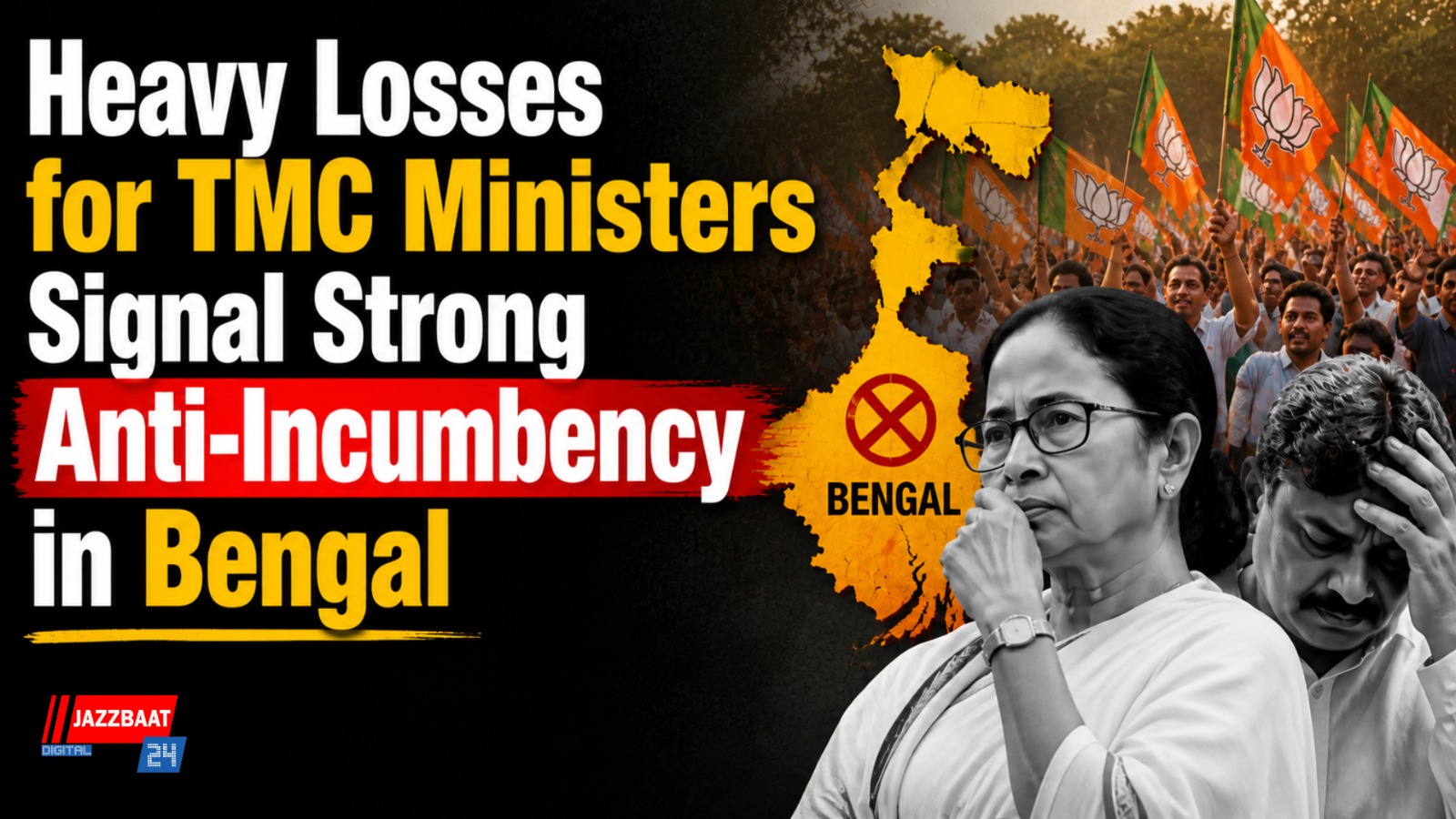
The sweeping defeat of several senior ministers from the All India Trinamool Congress (TMC) in the 2026 Assembly elections has underscored a deep wave of anti-incumbency across West Bengal, marking a dramatic shift in the state’s political landscape.
A number of high-profile faces from Chief Minister Mamata Banerjee’s cabinet failed to retain their seats, reflecting growing voter dissatisfaction after years of uninterrupted governance. Political observers say that this pattern of losses among ministers is not incidental but indicative of a broader sentiment against the ruling establishment.
Anti-incumbency typically builds over time due to factors such as governance fatigue, local grievances, allegations of corruption, and unmet expectations. In Bengal, issues like unemployment, alleged irregularities in recruitment, and complaints of political favoritism appear to have contributed to voter discontent. The scale of ministerial defeats suggests that these concerns resonated strongly at the grassroots level.
The setback for TMC has also been amplified by the aggressive campaign mounted by the Bharatiya Janata Party (BJP), which capitalized on these issues and positioned itself as a viable alternative. The BJP’s narrative of change, combined with strategic candidate selection, appears to have struck a chord with a section of the electorate.
Beyond individual constituencies, the defeat of ministers carries symbolic weight. Cabinet members are often seen as representatives of the government’s performance, and their losses can reflect a rejection of policy decisions and administrative approaches. In this case, it points to a broader erosion of trust in the ruling leadership.
Despite the setback, the TMC has acknowledged the verdict and indicated that it will introspect and rebuild. Party leaders have stressed the need to reconnect with voters and address concerns more effectively.
The 2026 results in West Bengal highlight how quickly political equations can change in a vibrant democracy. The fall of several prominent ministers serves as a clear reminder that electoral success is never permanent, and governments must continuously respond to public expectations to retain support.