
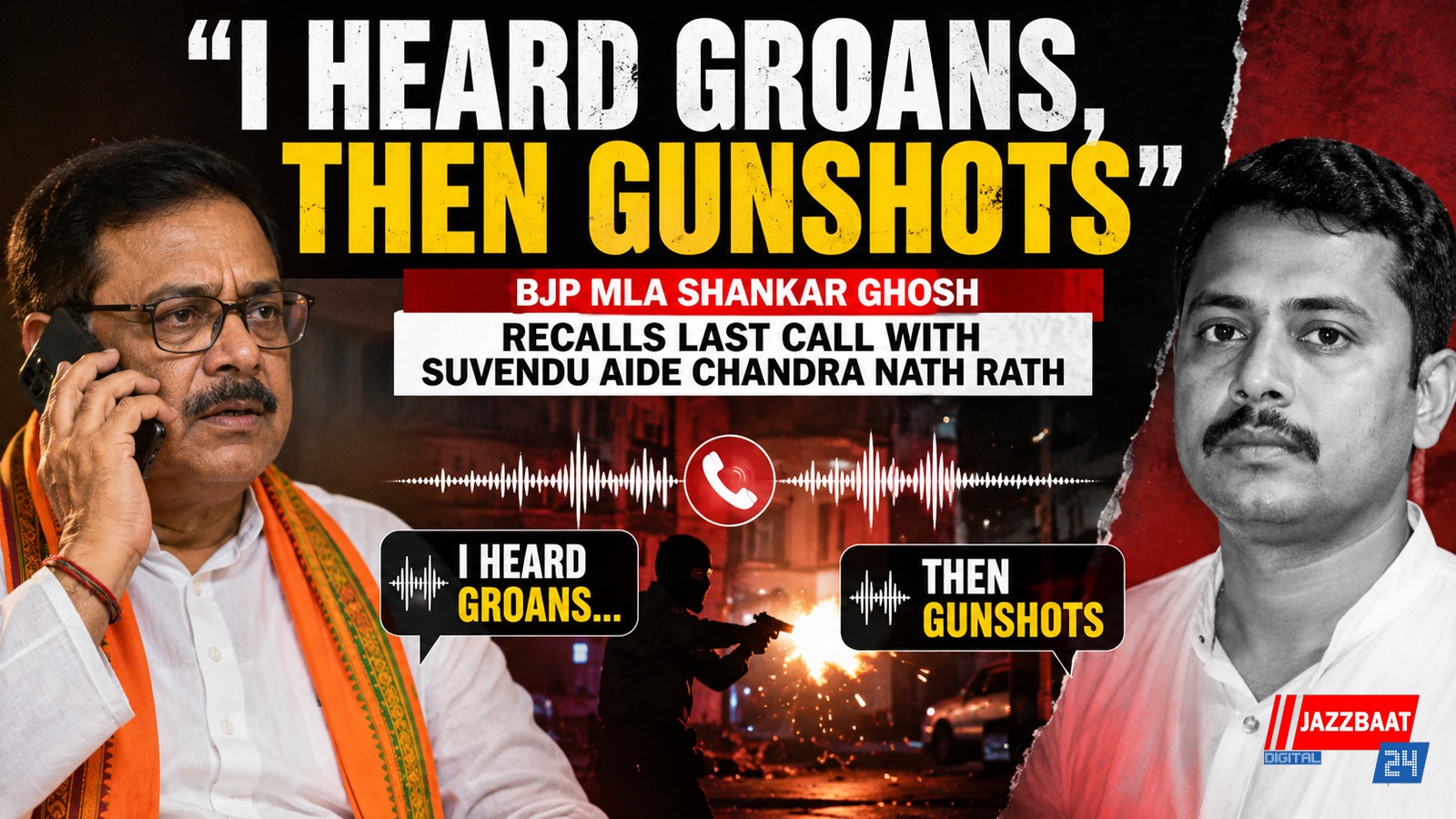
Bharatiya Janata Party MLA Shankar Ghosh has made a disturbing revelation about his final phone conversation with the aide of West Bengal Leader of Opposition Suvendu Adhikari, describing moments before the latter was reportedly attacked.
Ghosh said he received a distressing call from the aide, identified as Chandra Nath Rath, during which he first heard unusual sounds over the phone. “I heard groans, then gunshots,” he recalled, suggesting that the conversation was abruptly interrupted amid what appeared to be a violent incident.
According to preliminary accounts, Rath was allegedly killed in a brutal attack that has triggered political shockwaves across West Bengal. The incident is now under police investigation, with authorities trying to establish the sequence of events, motive, and those involved.
The BJP has alleged that the killing may be linked to political rivalry and rising tensions in the region. Party leaders have demanded a thorough investigation and accused the state administration of failing to ensure adequate protection for political workers and associates.
On the other hand, ruling party representatives have urged restraint, stating that investigations must proceed based on evidence rather than political narratives. Police officials have confirmed that multiple angles are being examined, including personal disputes and political enmity.
The incident has further intensified the already heated political climate in West Bengal, where clashes between rival party workers and allegations of targeted violence have been a recurring issue. Security concerns around political leaders and their associates have also come under renewed scrutiny following the incident.
Law enforcement agencies have launched a detailed probe, including examination of call records, location data, and eyewitness accounts. Officials said that identifying the attackers and establishing the exact timeline of events remains a top priority.
As investigations continue, the shocking account shared by Shankar Ghosh has added a grim dimension to the case, deepening political tensions and raising fresh questions about safety in politically sensitive areas of the state.