

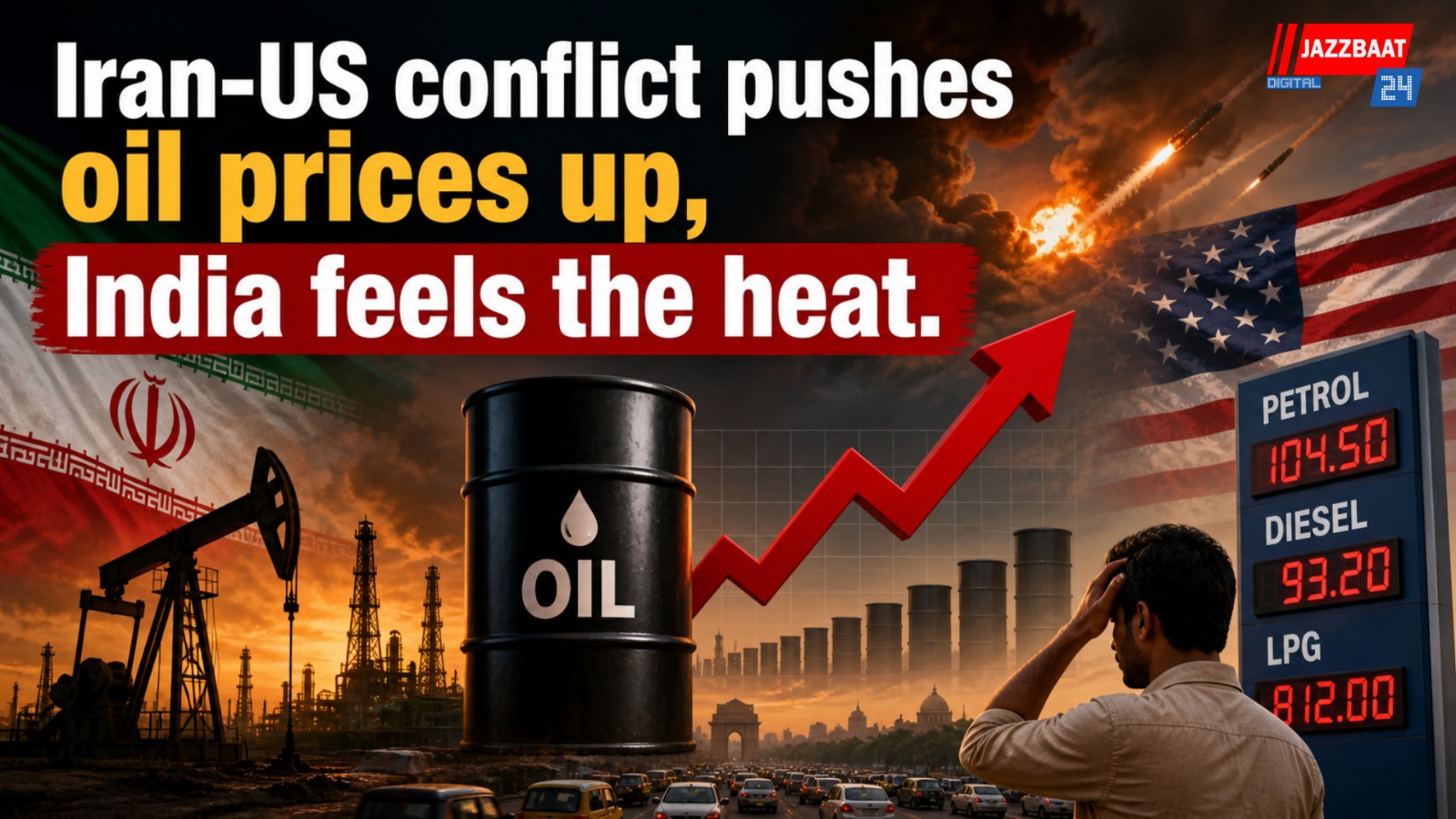
The ongoing conflict between the United States and Iran has sharply pushed global oil and gas prices higher, triggering economic ripple effects across countries like India that depend heavily on energy imports.
The crisis escalated after military tensions in late February led to disruptions in the Strait of Hormuz, a crucial route through which nearly a fifth of the world’s oil supply passes. Iran’s actions to restrict movement in the strait, combined with US-led blockades on Iranian exports, have significantly tightened global supply.
As a result, crude oil prices surged to over $120 per barrel at one point, nearly doubling compared to pre-conflict levels. Even the fear of prolonged disruption has added a “war premium” to oil, making fuel more expensive worldwide.
For India, the impact has been immediate and significant. The country imports over 80% of its crude oil needs, making it highly vulnerable to global price shocks. Higher crude prices directly increase India’s import bill, putting pressure on the economy.
One of the biggest effects is rising inflation. As fuel prices increase, transportation and production costs also go up, leading to costlier food, goods, and services. Experts warn that sustained oil price hikes can widen India’s current account deficit and weaken the rupee.
The conflict is also affecting industries. Sectors like aviation, logistics, manufacturing, and agriculture are facing higher input costs due to expensive fuel and gas. In some cases, companies may pass on these costs to consumers, further adding to inflationary pressure.
Despite these challenges, there is no immediate shortage of oil supplies in India. Officials say the country has sufficient reserves and diversified sourcing from regions like the US, Russia, and Africa to manage short-term disruptions. However, price volatility remains a major concern.
The geopolitical tensions have also weakened investor sentiment and increased uncertainty in financial markets. The Indian rupee has faced pressure, while stock markets remain sensitive to fluctuations in crude prices.
In the longer term, the crisis highlights India’s vulnerability to global energy shocks. Experts suggest that accelerating renewable energy adoption and diversifying energy sources will be crucial to reducing dependence on volatile regions.
As the Iran-US standoff continues with no clear resolution, oil markets are expected to remain unstable, keeping India on edge as it balances growth, inflation, and energy security.