
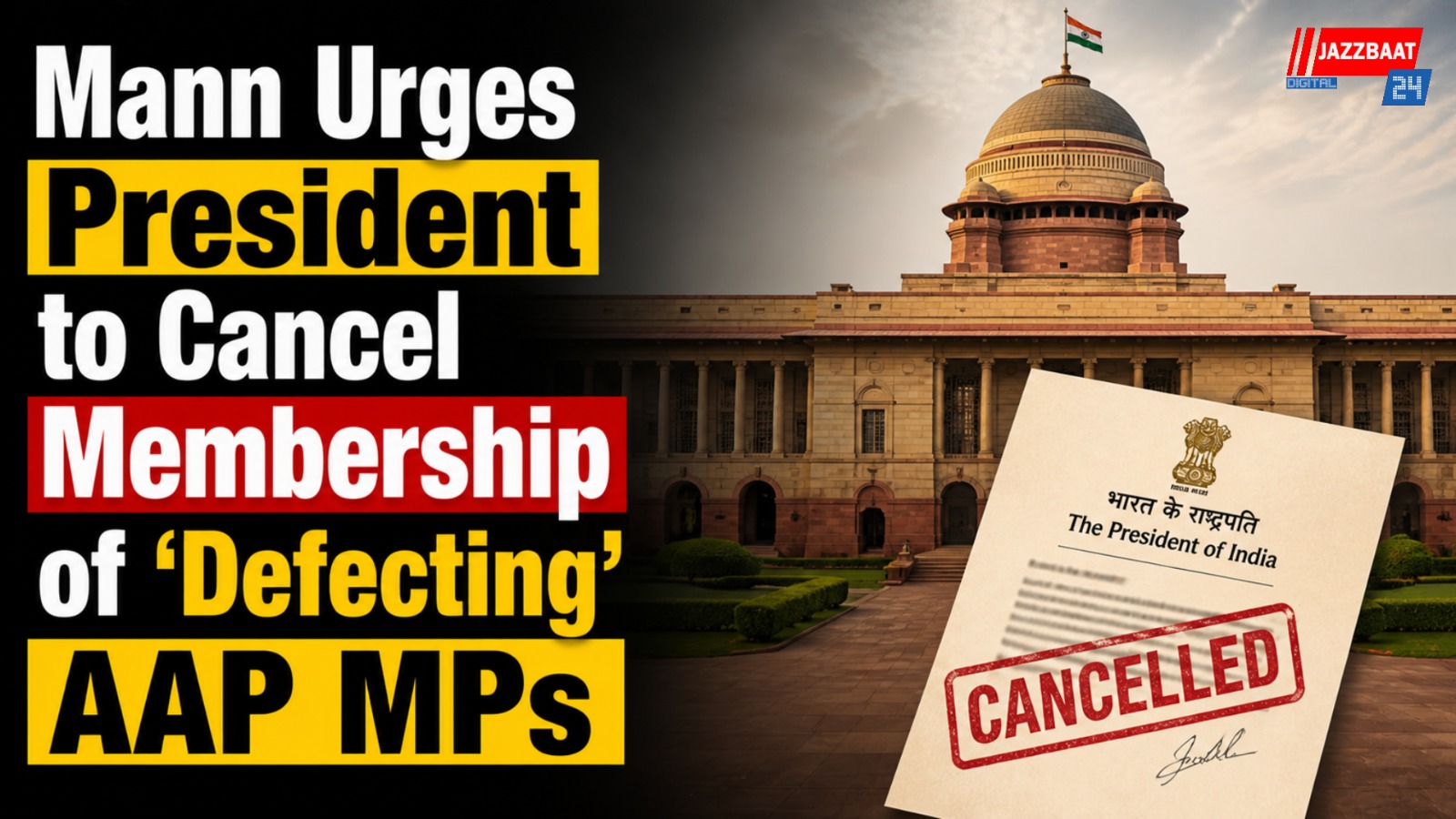
In a sharp political move, Punjab Chief Minister Bhagwant Mann has urged President Droupadi Murmu to cancel the parliamentary membership of Aam Aadmi Party (AAP) MPs who recently joined the Bharatiya Janata Party (BJP).
The demand came after Mann met the President in New Delhi, where he submitted a formal memorandum highlighting what he described as “defection” by elected representatives. According to Mann, these MPs were elected on an AAP ticket but later switched allegiance to the BJP, thereby “betraying the mandate of the people.”
Mann argued that such political defections undermine democratic values and violate the spirit of the Anti-Defection Law. He emphasized that voters elect candidates based on party ideology and promises, and switching parties after elections is unfair to the electorate.
The Aam Aadmi Party has been vocal about the issue, alleging that attempts are being made to weaken opposition parties by encouraging defections. Mann reiterated that strict action must be taken to preserve the integrity of parliamentary democracy.
While there has been no immediate response from the President’s office, constitutional experts note that disqualification of MPs under the Anti-Defection Law is typically handled by the Speaker of the Lok Sabha or the Chairman of the Rajya Sabha, depending on the House in which the member serves.
The BJP, on the other hand, has not officially responded to Mann’s demand but has previously maintained that leaders joining the party do so voluntarily.
This development adds another layer to the ongoing political tussle between AAP and BJP, especially ahead of key elections. The issue of defections continues to remain a contentious topic in Indian politics, often raising questions about ethics, accountability, and the stability of elected governments.