

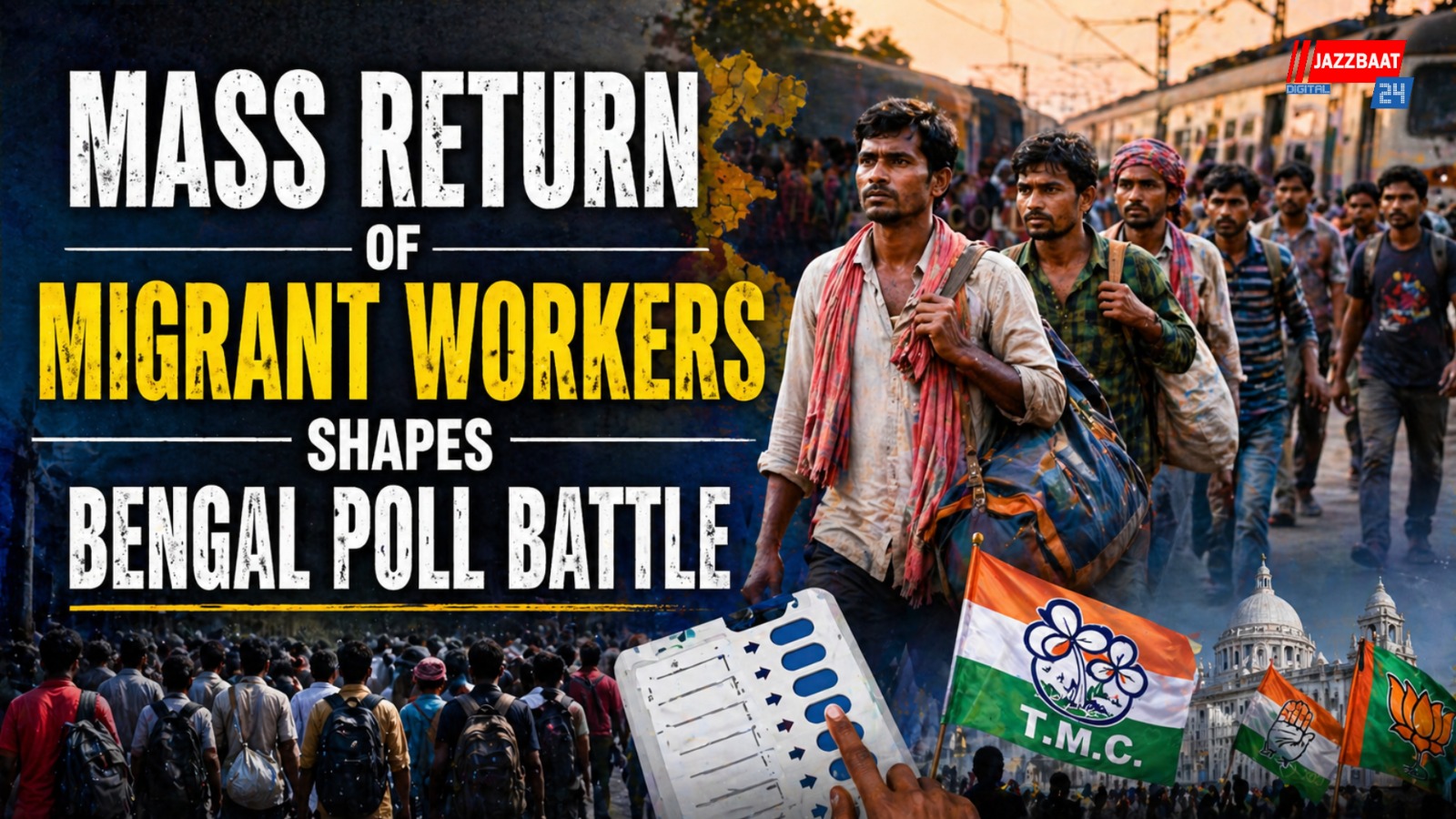
More than 29 lakh migrant workers returned to West Bengal to cast their votes in the ongoing 2026 Assembly elections, according to sources in the state’s migrant workers’ welfare board. The large-scale homecoming, spread across the two polling phases, has emerged as a crucial factor influencing the electoral landscape.
The influx of migrant voters has triggered intense political debate, with major parties claiming that the returning workforce could tilt the balance in their favour. While the ruling side believes the migrant vote reflects dissatisfaction over voter list revisions, the opposition argues that the workers’ experiences outside the state may influence them to vote for change.
Data from field observations and research groups suggest that the return of migrant workers may already be reflected in voting patterns. A notable increase in male voter turnout particularly in districts such as Murshidabad, Malda, and parts of Midnapore has been linked to the participation of migrant labourers, who form a significant portion of the male workforce employed outside the state.
The welfare board reportedly maintains a database of around 31 lakh migrant workers, though unofficial estimates suggest the actual number may be higher. During the COVID-19 pandemic, the state had earlier recorded nearly 40 lakh migrant workers returning home, indicating the scale of outward migration from Bengal.
Political mobilisation efforts have also played a role in facilitating this return. Reports indicate that transport arrangements, including special trains and buses, were organised from multiple states such as Gujarat, Maharashtra, and Uttar Pradesh to bring workers back in time for voting.
For many migrant workers, the journey home was driven by more than just electoral participation. Concerns over voter list revisions and the fear of losing voting rights prompted thousands to return, often at the cost of wages and job security.
As West Bengal votes in two phases for its 294 seats, the role of migrant workers has taken centre stage. Analysts believe their participation could significantly impact the final outcome, making them one of the most decisive voting blocs in this election.