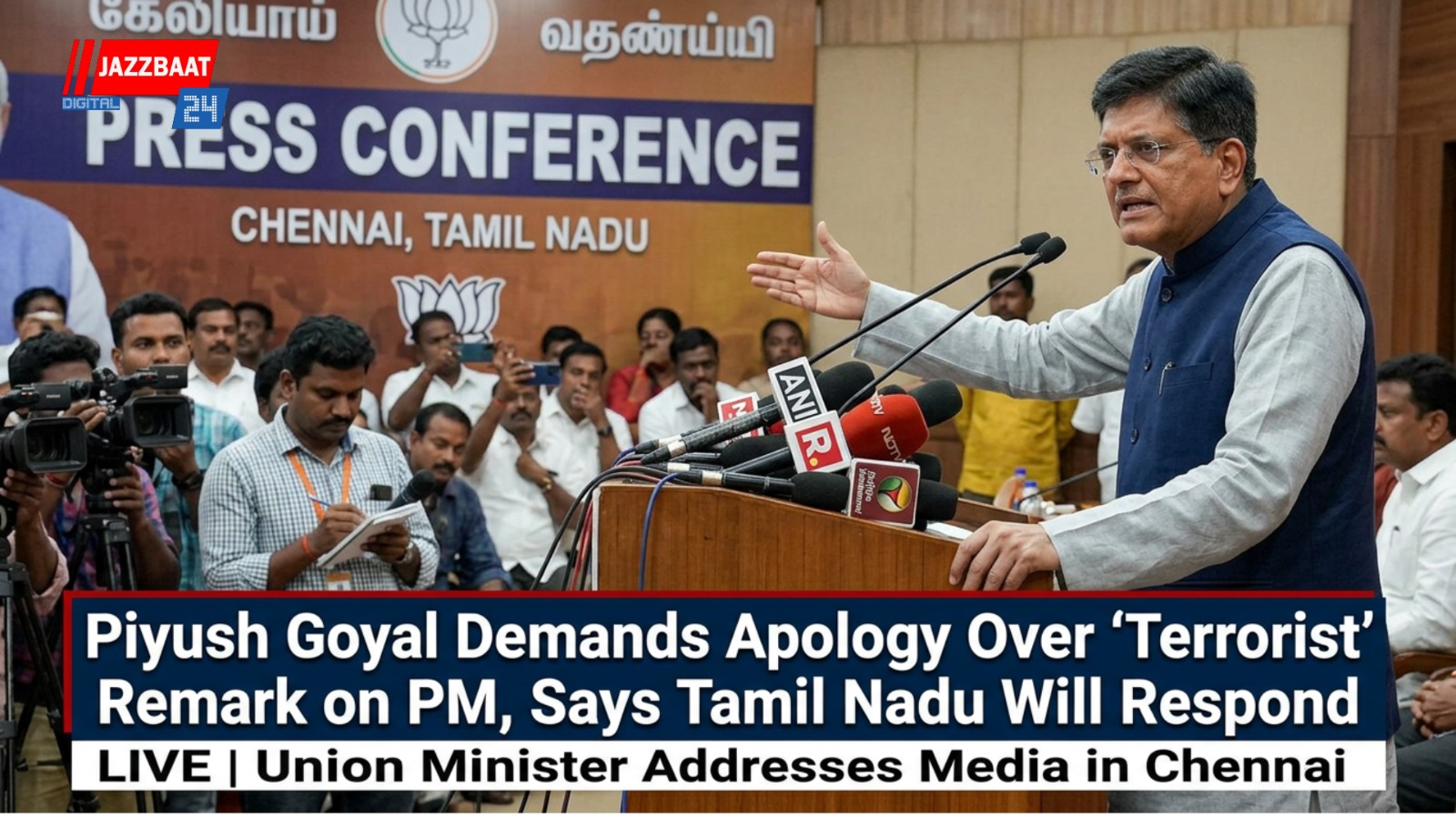
Union Minister Piyush Goyal on Tuesday launched a sharp attack on the opposition after Congress president Mallikarjun Kharge triggered a major controversy by referring to Prime Minister Narendra Modi as a “terrorist” during a campaign event in Tamil Nadu.
Addressing a press conference in Chennai, Goyal condemned the remark, calling it an “insult to the people of India” and demanded an immediate apology from the Congress leadership and its ally, the Dravida Munnetra Kazhagam (DMK). He said the opposition had “stooped to a new low” by using such language against a democratically elected Prime Minister.
“I strongly condemn this statement. They must apologise to the nation,” Goyal said, adding that the people of Tamil Nadu would give a “befitting reply” to such remarks in the ongoing Assembly elections.
The controversy erupted after Kharge, while criticising the AIADMK-BJP alliance, used the word “terrorist” for Modi during a speech. His comments quickly drew strong reactions from the BJP, escalating political tensions ahead of polling.
However, Kharge later issued a clarification, stating that his remarks were taken out of context. He said he did not intend to label the Prime Minister a terrorist but meant that Modi was “terrorising people and political parties” through the use of central agencies and political pressure.
Despite the clarification, BJP leaders intensified their attack, accusing the Congress-DMK alliance of indulging in “derogatory and irresponsible politics.” Goyal also targeted senior Congress leader Rahul Gandhi and DMK chief M. K. Stalin, holding them accountable for the statement and demanding that they apologise to the country.
He further said that such remarks were not just directed at an individual but insulted “140 crore Indians” who elected the Prime Minister. Goyal expressed confidence that voters in Tamil Nadu would reject what he described as “politics of abuse” and support the BJP-led alliance.
The row has added to the already heated political atmosphere in Tamil Nadu, where campaigning has reached its peak ahead of voting. With both sides trading sharp accusations, the issue is expected to remain a key talking point in the final phase of the election campaign.
As political rhetoric intensifies, the controversy underscores the increasingly combative nature of election discourse, with leaders across parties engaging in sharp verbal exchanges to influence voter sentiment.