
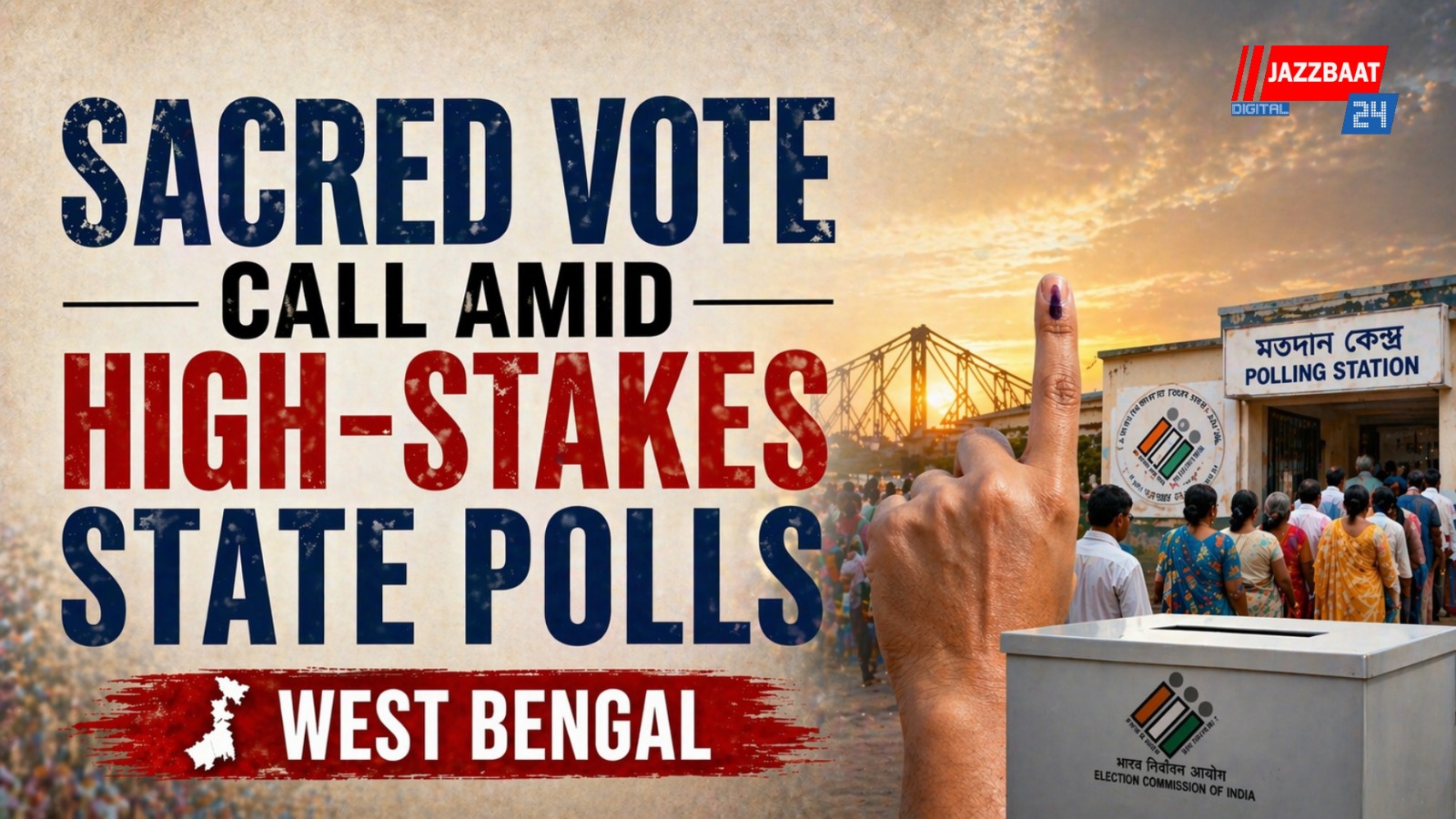
Prime Minister Narendra Modi on Thursday urged citizens in West Bengal and Tamil Nadu to participate enthusiastically in the ongoing Assembly elections, describing voting as a “sacred democratic duty” and calling for a record turnout. His appeal came as polling began across both politically crucial states, marking one of the most closely watched electoral contests of 2026.
In a series of messages, the Prime Minister specifically encouraged youth and women voters to come out in large numbers, stressing that their participation is essential in shaping the future of the nation. Referring to elections as a “festival of democracy,” he highlighted the importance of civic engagement and collective responsibility in strengthening democratic values.
Polling is being conducted in all 234 Assembly constituencies of Tamil Nadu in a single phase, while West Bengal has begun its first phase of voting covering 152 of the total 294 seats. Authorities have deployed extensive security arrangements and logistical measures to ensure smooth and peaceful voting across both states.
The elections are significant not only because of their scale—with over 12 crore voters eligible across both states—but also due to the intense political battles underway. In West Bengal, the contest is primarily between the ruling Trinamool Congress and the Bharatiya Janata Party, with issues such as unemployment, welfare policies, and identity politics dominating the campaign narrative.
Meanwhile, Tamil Nadu is witnessing a multi-cornered fight led by the ruling Dravida Munnetra Kazhagam, the AIADMK alliance, and emerging political forces, adding a new dimension to the traditionally bipolar contest.
Election officials reported steady voter turnout since early morning, with long queues seen outside polling booths in several districts. Mock polls and technical checks were conducted before voting commenced to ensure proper functioning of Electronic Voting Machines (EVMs).
The outcome of these elections is expected to have a significant impact on regional as well as national political equations. With high voter enthusiasm and strong campaigning from all major parties, both states are set to play a crucial role in shaping India’s political landscape in the coming years.