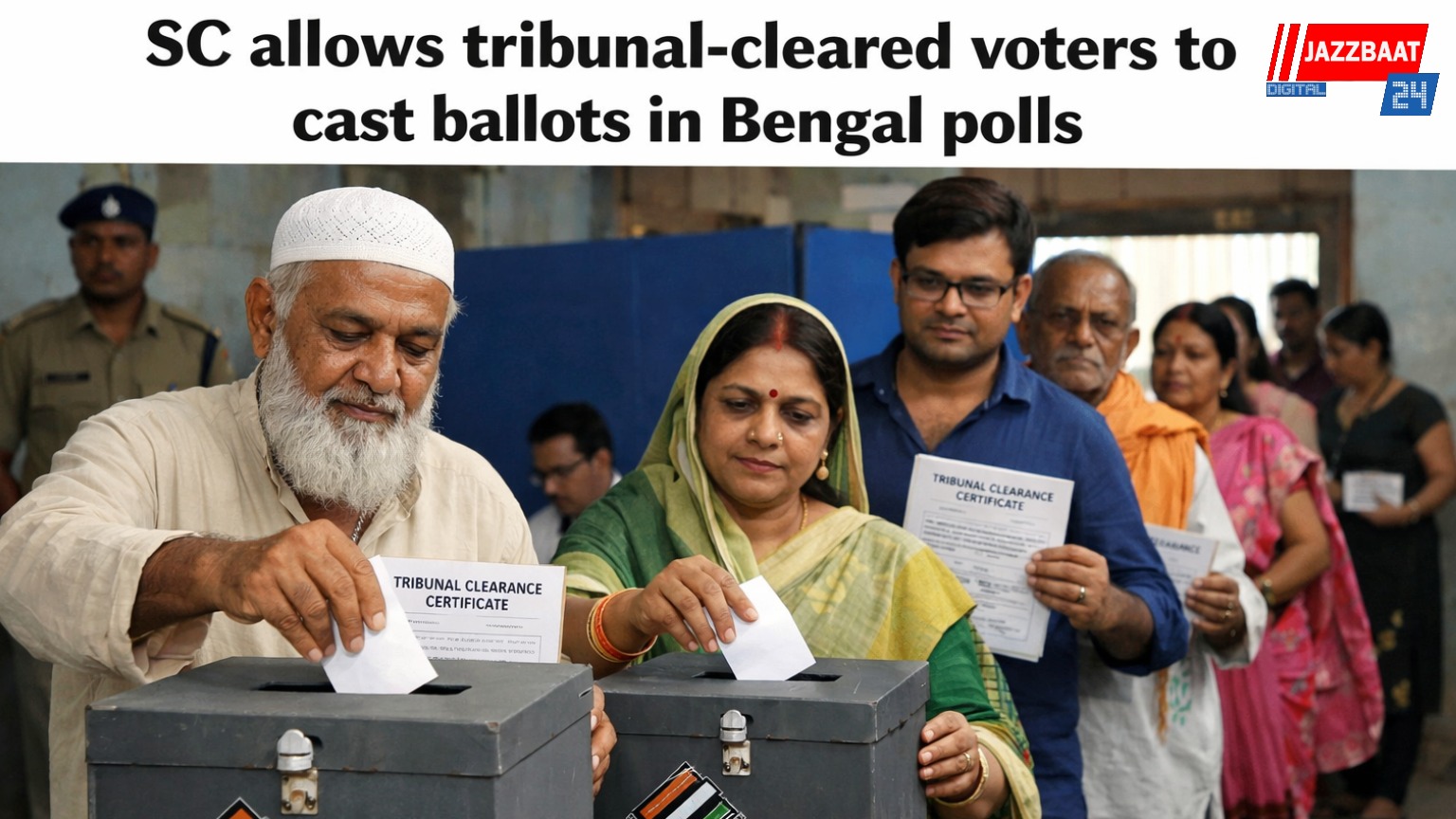
In a significant relief ahead of the 2026 West Bengal Assembly elections, the Supreme Court of India has ruled that voters whose names were deleted during the Special Intensive Revision (SIR) of electoral rolls will be allowed to vote provided they are cleared by appellate tribunals within specified deadlines.
A bench led by Chief Justice Surya Kant invoked its powers under Article 142 of the Constitution to ensure that eligible voters are not disenfranchised due to procedural delays. The court directed the Election Commission of India to prepare and publish supplementary electoral rolls incorporating such voters before polling dates.
As per the order, individuals whose appeals against exclusion are accepted by tribunals by April 21 will be eligible to vote in Phase 1 polling on April 23. Similarly, those cleared by April 27 will be allowed to vote in Phase 2 polling on April 29.
The court clarified that only those whose appeals are conclusively decided in their favour within these timelines will be permitted to vote. It explicitly stated that merely having a pending appeal will not grant voting rights, emphasising the need for final adjudication before inclusion in the rolls.
The ruling comes in the backdrop of widespread controversy over the SIR exercise in West Bengal, where lakhs of names were deleted from voter lists, leading to a surge in appeals before specially constituted tribunals. Judicial officers were deployed across the state to handle these cases, highlighting the scale and urgency of the issue.
To implement the order, the Election Commission has been instructed to issue “supplementary revised electoral rolls” reflecting tribunal decisions. These updated lists are expected to be published just days before each polling phase, ensuring that eligible voters can exercise their franchise.
The decision has major electoral implications, as the 2026 West Bengal Assembly elections covering all 294 constituencies are being held in two phases on April 23 and April 29. Political parties had raised concerns about large-scale exclusions potentially affecting voter turnout and fairness.
While the ruling has been welcomed by several stakeholders as a step toward protecting democratic rights, it also presents logistical challenges. Authorities now face a tight deadline to process appeals, update rolls, and inform voters in time for polling.
Overall, the Supreme Court’s intervention aims to strike a balance between maintaining the integrity of electoral rolls and ensuring that no eligible voter is denied the right to vote due to administrative delays.