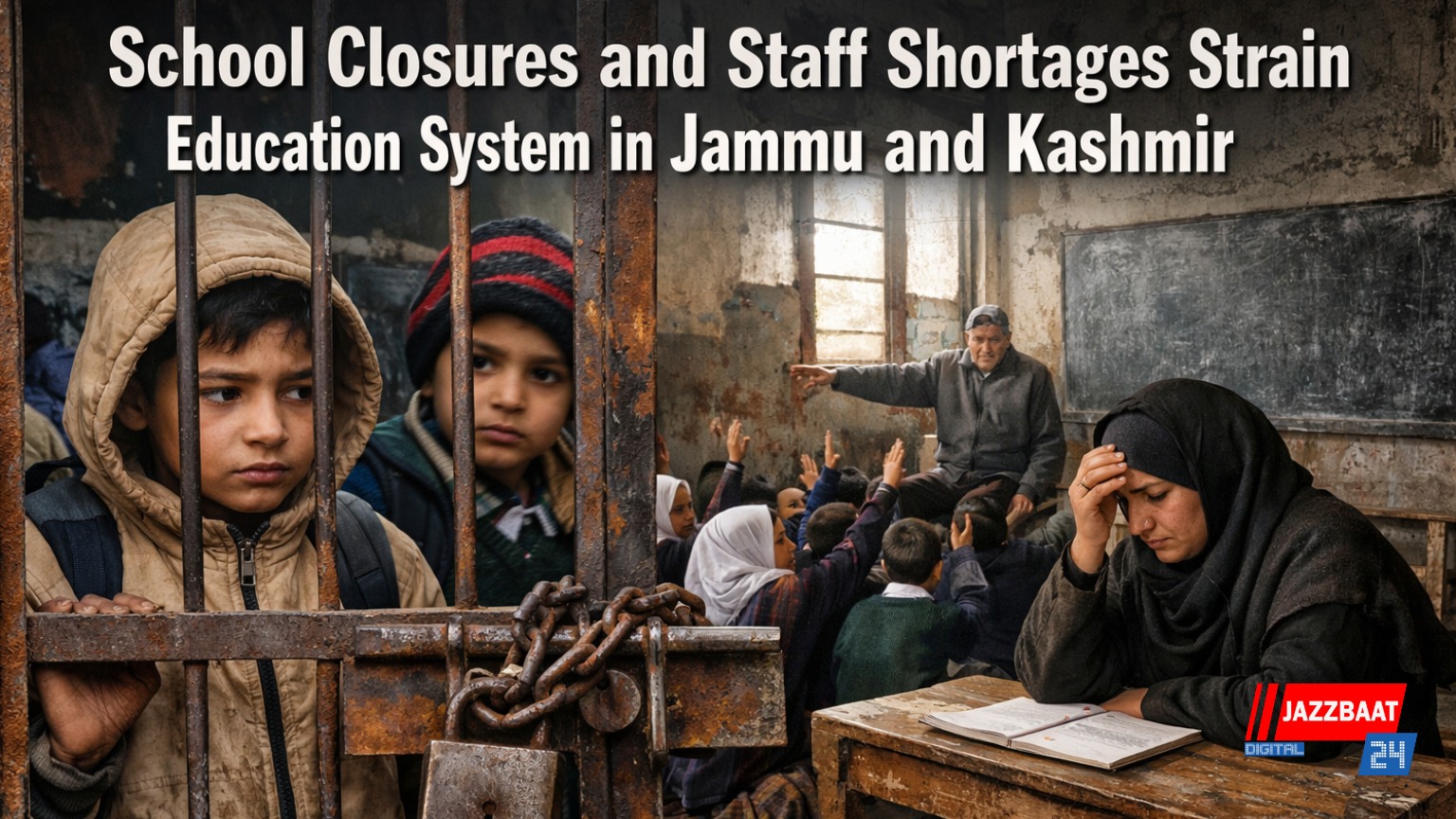
The education system in Jammu and Kashmir is facing mounting challenges as a combination of school closures, low enrolment, and severe teacher shortages threatens learning outcomes across the region.
Recent official data reveals that thousands of government schools are either shut, merged, or functioning with extremely low student numbers. Since 2019, around 1,700 schools have been closed or merged due to negligible enrolment, while over 3,000 schools have reported fewer than 10 students in recent years. These figures highlight a deep structural imbalance in the region’s school network.
At the same time, teacher deployment remains uneven. While some schools operate with surplus staff despite low enrolment, many rural and high-enrolment schools face acute shortages of qualified teachers. In districts like Baramulla, hundreds of teaching posts remain vacant, and several higher secondary schools are functioning without principals or headmasters. This has led to administrative inefficiencies and poor academic supervision.
The shortage is particularly severe in subject-specific teaching positions at the higher secondary level. Officials note that the lack of lecturers in key subjects is directly affecting the quality of education, especially for students preparing for board examinations. The system has increasingly relied on “additional charge” arrangements, where one official handles multiple responsibilities, further straining the already fragile structure.
Frequent school closures due to security concerns and natural factors have added to the disruption. Earlier this year, schools in parts of Kashmir were temporarily shut following drone intrusion alerts along the Line of Control, while weather-related closures have also been common in the region. Such interruptions continue to impact academic continuity.
Infrastructure gaps compound the crisis. Thousands of schools reportedly lack basic facilities such as toilets, drinking water, boundary walls, and playgrounds. Incomplete building projects and deteriorating infrastructure in several areas have raised concerns about safety and learning environments.
Experts warn that the mismatch between teacher availability and student distribution, along with declining enrolment in rural areas, reflects deeper demographic and policy issues. Migration, population shifts, and preference for private schooling are also contributing factors.
The government has initiated steps such as referring vacancies to recruitment bodies and consolidating schools to optimise resources. However, educationists argue that without a comprehensive strategy addressing staffing, infrastructure, and enrolment, the system may continue to struggle.
As Jammu and Kashmir Board of School Education oversees academic standards in the region, stakeholders stress the urgency of reforms to ensure equitable access to quality education. The situation underscores the need for long-term planning to stabilise and strengthen the education sector in Jammu and Kashmir.