
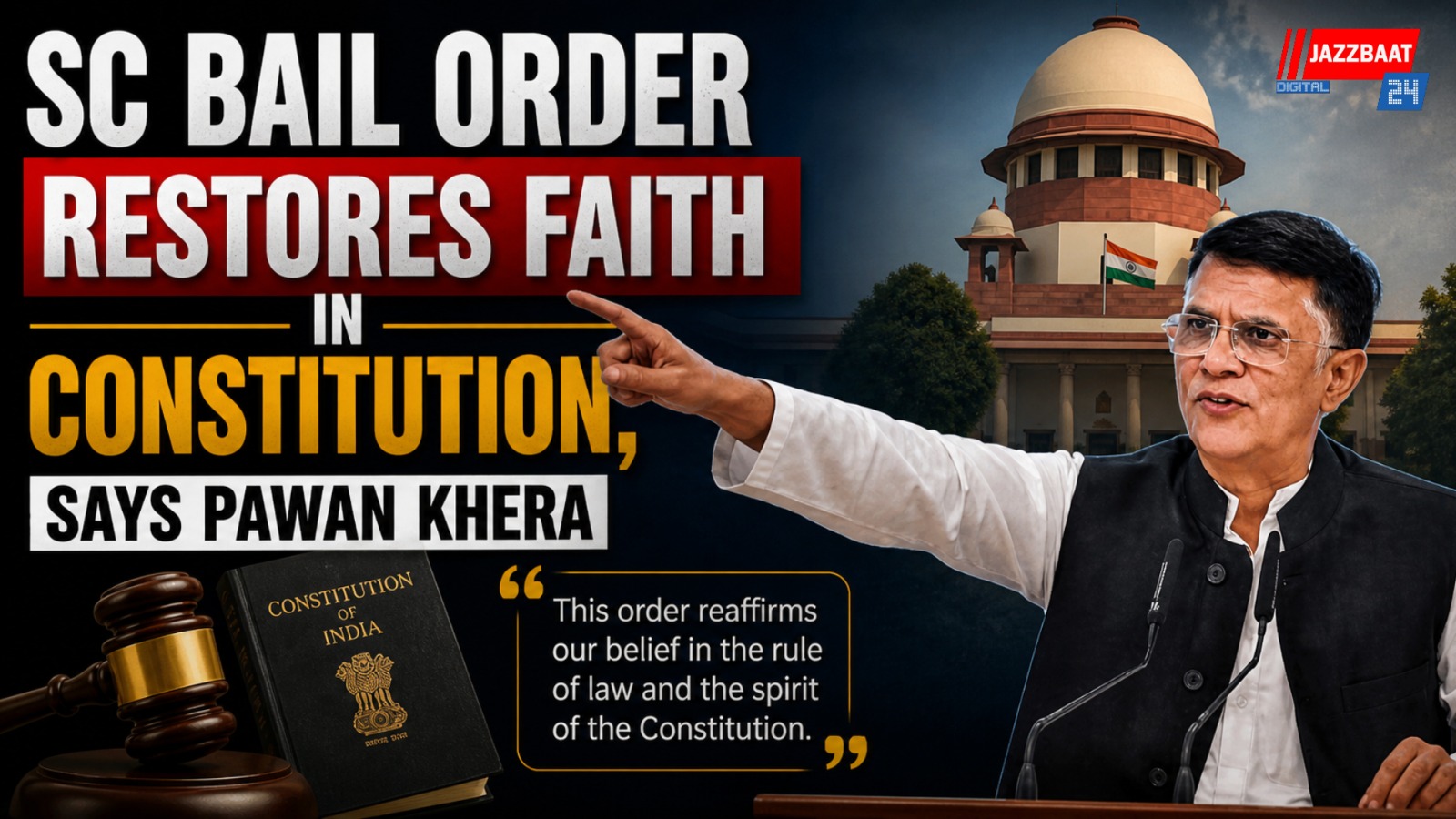
New Delhi: Congress leader Pawan Khera on Saturday said his faith in the Constitution and the rule of law has been “restored once again” after the Supreme Court granted him anticipatory bail in a defamation and forgery case linked to alleged remarks against Assam Chief Minister Himanta Biswa Sarma’s wife, Riniki Bhuyan Sharma.
The Supreme Court granted Khera pre-arrest bail earlier this week, providing him protection from immediate arrest while the investigation continues. The case stems from allegations that Khera made false claims and used purportedly fabricated documents to target Sharma during a politically sensitive period.
Reacting to the relief, Khera took to social media to thank the apex court, calling the decision a reaffirmation of “personal liberty” and constitutional values. He also described the verdict as a reminder against the misuse of state power, alleging that he had faced sustained “threats and intimidation” in connection with the case.
According to details of the case, an FIR was registered by Assam Police based on a complaint that Khera had levelled unverified allegations regarding multiple passports and foreign assets linked to Sharma. Investigators have claimed that some of the documents cited during his press statements were forged, an allegation strongly contested by Khera and his legal team.
The Supreme Court, while granting anticipatory bail, observed that the matter appeared to involve political rivalry and that custodial interrogation was not necessary at this stage. The bench also clarified that its observations were limited to the bail plea and would not influence the merits of the ongoing investigation.
Khera had earlier faced setbacks in lower courts, including the Gauhati High Court, which had denied him anticipatory bail, citing the seriousness of the allegations and the need for custodial interrogation.
The ruling has triggered sharp political reactions. While Congress leaders have hailed the decision as a victory for democratic rights and free speech, Assam Chief Minister Himanta Biswa Sarma maintained that the law would take its course and that those found guilty would face consequences.
The case has also sparked a broader debate on political discourse, defamation laws, and the limits of free speech in electoral politics. Legal experts say the Supreme Court’s intervention underscores the balance courts seek to maintain between individual liberty and the need for investigation.
As the legal proceedings continue, Khera remains protected from arrest but will be required to cooperate with investigators, ensuring that the case moves forward under judicial scrutiny.