

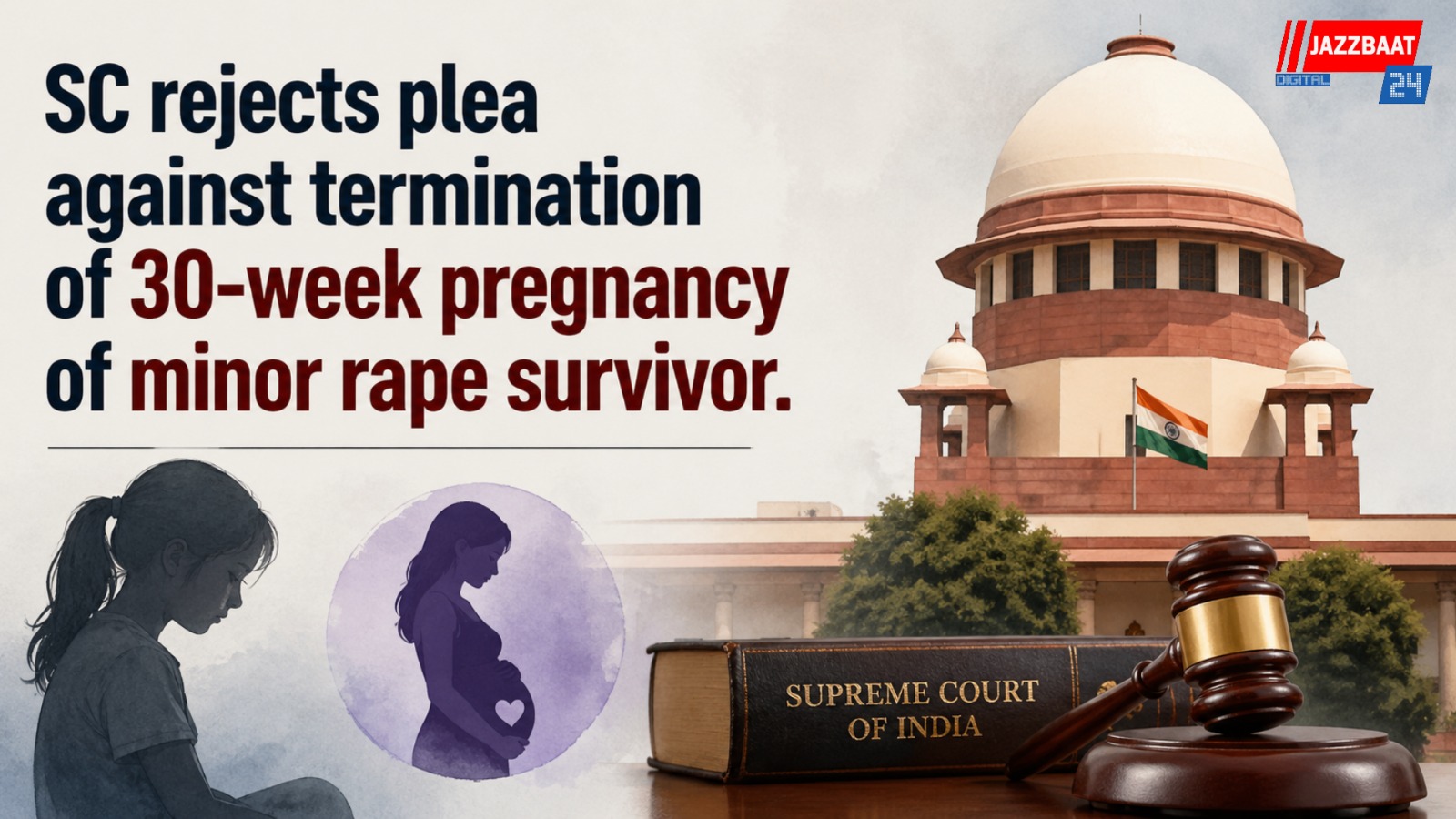
In a significant development, the Supreme Court of India has refused to entertain a plea challenging its earlier order permitting the medical termination of a 30-week pregnancy of a 15-year-old rape survivor. The decision reinforces the court’s strong stance on reproductive rights and the autonomy of minor victims in cases of sexual assault.
The matter came up after the All India Institute of Medical Sciences filed a plea seeking to set aside the court’s previous direction that allowed the termination despite the advanced stage of pregnancy. The hospital had raised concerns over medical risks and ethical issues, arguing that termination at such a late stage could lead to complications, including the possibility of premature delivery and health risks for both the minor and the foetus.
However, the apex court declined to interfere with its earlier order and made it clear that a minor rape survivor cannot be forced to carry an unwanted pregnancy to term. The bench emphasized that the ultimate decision rests with the survivor and her guardians, and not with medical institutions.
During the hearing, the court also made strong observations on the existing legal framework governing abortions in India. Under the current Medical Termination of Pregnancy (MTP) Act, termination is generally permitted up to 20 weeks, and in certain cases, up to 24 weeks. But the court noted that such rigid timelines often fail to account for the realities faced by rape survivors, particularly minors who may not immediately realise or report the pregnancy.
The bench urged the Centre to consider amending the law to remove time limits in cases of pregnancies arising out of rape. It observed that imposing strict deadlines could effectively deny justice to victims, especially when delays occur due to trauma, social stigma, or lack of awareness.
Highlighting the psychological and physical trauma involved, the court reiterated that reproductive autonomy is a fundamental right. It stressed that forcing a minor to continue with such a pregnancy would violate her dignity and right to life.
The case has sparked a broader debate on medical ethics, legal limits, and the need for a more compassionate approach towards survivors of sexual violence. Meanwhile, further legal proceedings, including curative petitions and related challenges, are expected as the issue continues to evolve.