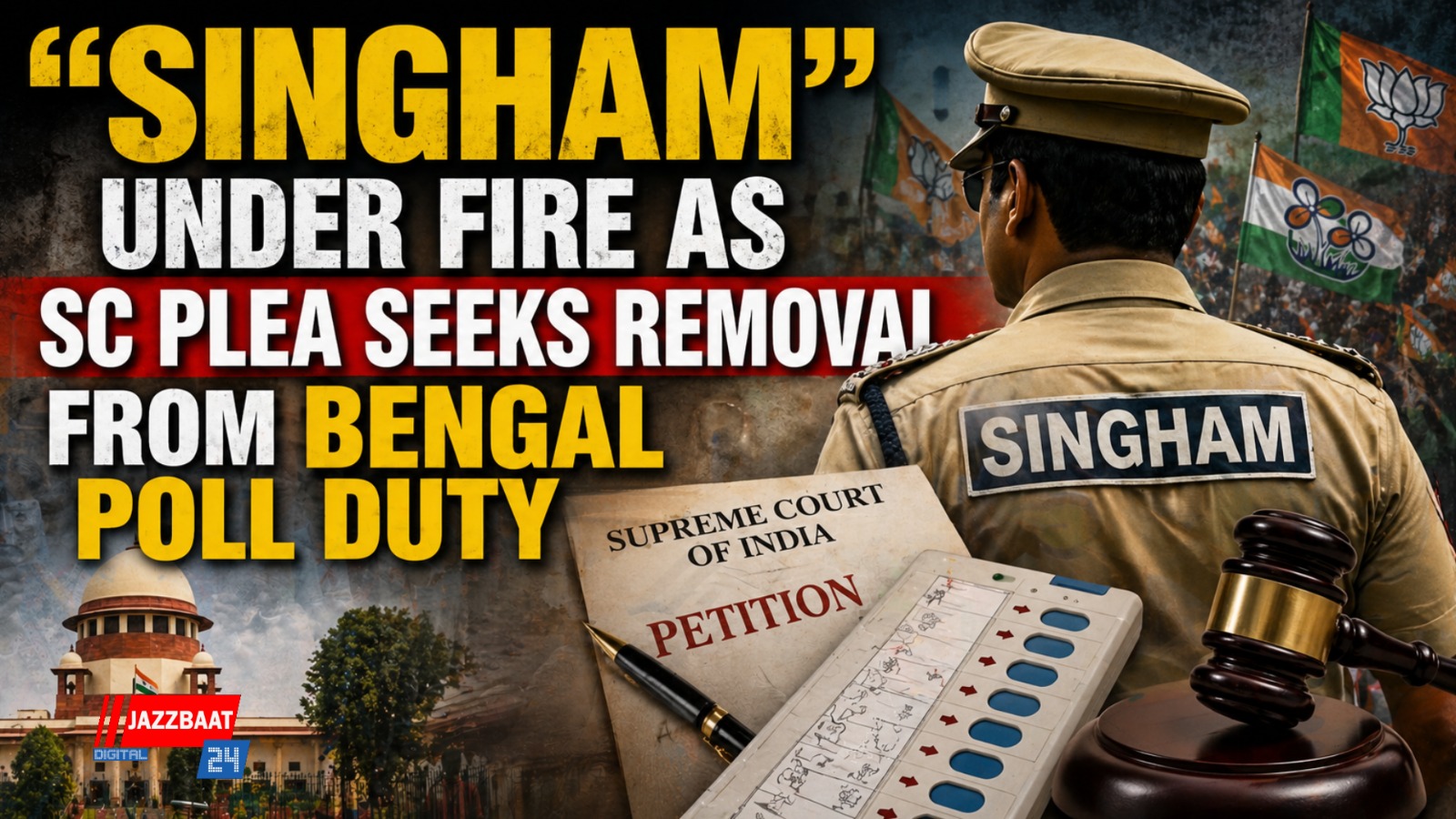
Amid the high-voltage second phase of the 2026 West Bengal Assembly elections, controversy has erupted over the deployment of senior IPS officer Ajay Pal Sharma, popularly known as the “Singham of UP.” A Public Interest Litigation (PIL) has been filed in the Supreme Court of India seeking his immediate removal from election duty, raising serious questions about neutrality and electoral fairness.
Sharma, a Uttar Pradesh cadre officer currently serving as a police observer in South 24 Parganas, has been at the centre of political debate following his active role in monitoring alleged voter intimidation in sensitive constituencies. His tough policing style and past reputation as an “encounter specialist” earned him the “Singham” tag, but critics argue that the same assertiveness may compromise the impartial role expected of an Election Commission observer.
The petition, filed under Article 32 of the Constitution, claims that Sharma has “abandoned neutrality” and engaged in “acts of intimidation” and “undue influence” against political candidates. According to the petitioner, such conduct undermines the integrity of the electoral process and erodes public confidence in free and fair elections. The plea urges the apex court to intervene immediately to safeguard democratic norms.
The issue has gained momentum following earlier legal developments. The Calcutta High Court had recently declined to pass urgent orders against poll officials, including Sharma, stating it would refrain from interfering during the crucial election period. With no immediate relief at the state level, the matter has now escalated to the Supreme Court.
The controversy also stems from a viral video in which Sharma was seen issuing a stern warning to a political leader over alleged voter intimidation, triggering sharp political reactions. While some have praised his strict stance against electoral malpractice, others—including opposition parties—have questioned whether his actions reflect bias or overreach.
Meanwhile, the Election Commission has deployed Sharma as part of a broader effort to curb violence and ensure smooth polling in sensitive areas. His presence, particularly in South 24 Parganas, has coincided with intensified security measures and crackdowns on alleged troublemakers.
As voting continues across 142 constituencies in the decisive second phase, the outcome of this legal challenge could have wider implications for election monitoring and the role of observers. The Supreme Court’s response is now keenly awaited, as it may set an important precedent on maintaining neutrality and accountability in India’s electoral machinery.