
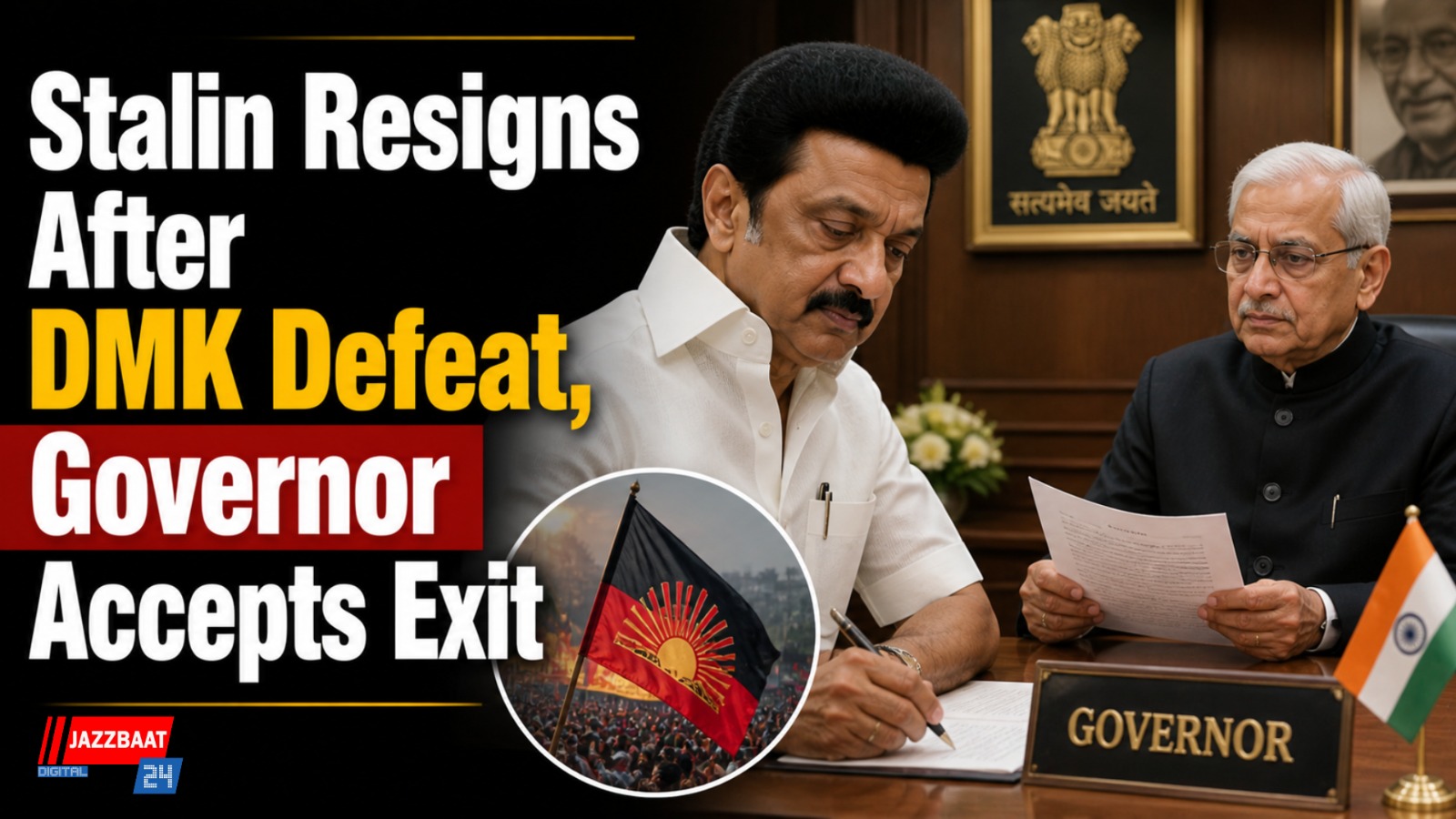
In a major political development following the 2026 Tamil Nadu Assembly election results, Chief Minister M. K. Stalin has resigned from his post after his party, the Dravida Munnetra Kazhagam, suffered a significant electoral setback. The resignation was formally accepted by Tamil Nadu Governor Rajendra Vishwanath Arlekar on Tuesday, marking the end of Stalin’s tenure as Chief Minister.
According to official sources, Stalin submitted his resignation soon after it became clear that the DMK had lost its majority in the 234-member Assembly. The party managed to secure only around 59 seats, a sharp decline from its previous position, and will now sit in the opposition benches.
The Governor accepted the resignation of Stalin and his entire council of ministers and has asked him to continue in a caretaker capacity until alternative arrangements are made. This is a standard constitutional procedure to ensure continuity of governance until a new government is formed.
The 2026 election results have dramatically reshaped Tamil Nadu’s political landscape. A major factor behind DMK’s defeat has been the rise of the Tamilaga Vettri Kazhagam, led by actor-turned-politician Vijay. His party made a strong debut, crossing the majority mark and emerging as the leading force in the state, pushing both DMK and AIADMK behind in the race.
Adding to the setback, Stalin also lost his traditional stronghold, Kolathur constituency, in a closely contested battle—an outcome seen as symbolic of the wider political shift in the state.
In his first reaction after the results, Stalin acknowledged the people’s mandate and emphasized that the DMK would play the role of a “responsible opposition.” He reiterated that the party’s commitment to public service would continue regardless of whether it is in power or not.
The resignation marks a turning point in Tamil Nadu politics, ending DMK’s recent stint in power and opening the door for a new government, likely led by Vijay’s TVK. Political observers describe this election as one of the most significant shifts in the state’s recent history, signaling changing voter preferences and the emergence of new leadership.