

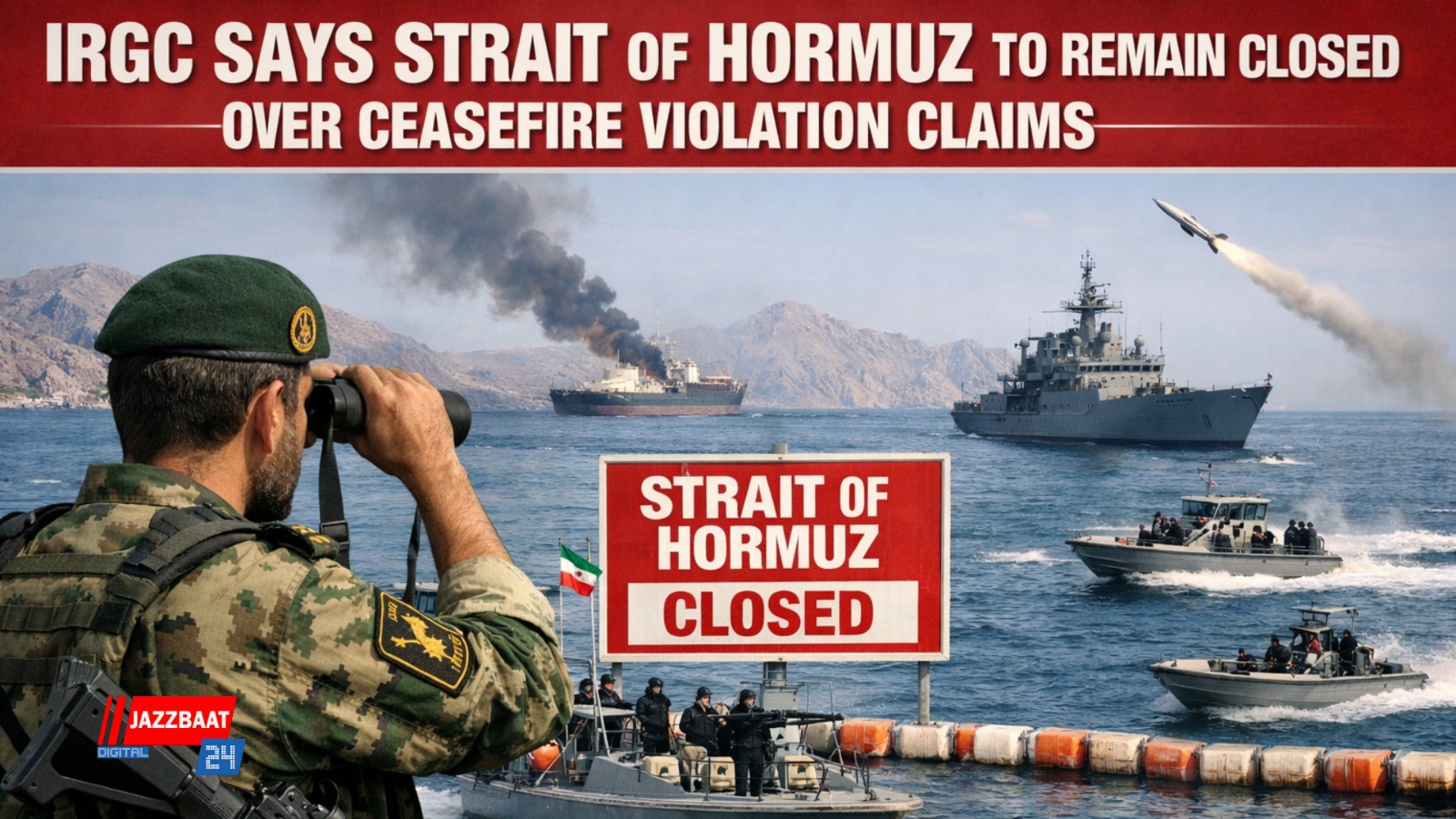
Tehran: Iran’s Islamic Revolutionary Guard Corps (IRGC) has announced that the Strait of Hormuz will remain closed, citing what it described as continued violations of ceasefire conditions and the failure of the United States to lift its maritime restrictions on Iranian vessels.
According to statements reported by Iranian state-linked outlets, the IRGC Navy said the decision was taken after reviewing recent developments in the region, including the movement of ships through the strategic waterway and what it called “non-compliance” by the United States with agreed ceasefire terms.
The IRGC claimed that although limited civilian vessels were previously allowed to pass through the strait under controlled conditions, the situation changed after what it described as the continuation of a U.S.-led naval blockade on Iranian ports and shipping routes. It alleged that this amounted to a violation of ceasefire commitments.
“In response to the breach of ceasefire conditions, the Strait of Hormuz will remain closed until the blockade is lifted,” the IRGC Navy reportedly said in its statement. It also warned that any vessel attempting to move toward the strait from nearby anchorage areas in the Persian Gulf or the Sea of Oman could be considered hostile and potentially targeted.
The IRGC further stated that the strait remains under “strict control and management” of Iranian forces, and insisted that commercial shipping could only resume under conditions set by Tehran. It dismissed external statements opposing its decision, saying operational control lies with Iranian naval authorities.
The development marks a further escalation in tensions surrounding one of the world’s most critical energy shipping routes. The Strait of Hormuz is a key transit point for global oil and gas shipments, and any disruption in the area is closely watched by international markets.
There has been no immediate independent confirmation from U.S. authorities regarding the latest IRGC claims, but Washington has previously accused Tehran of destabilising maritime security in the region.
As the situation continues to evolve, global concern remains high over potential impacts on energy supply chains, shipping costs, and regional stability.