

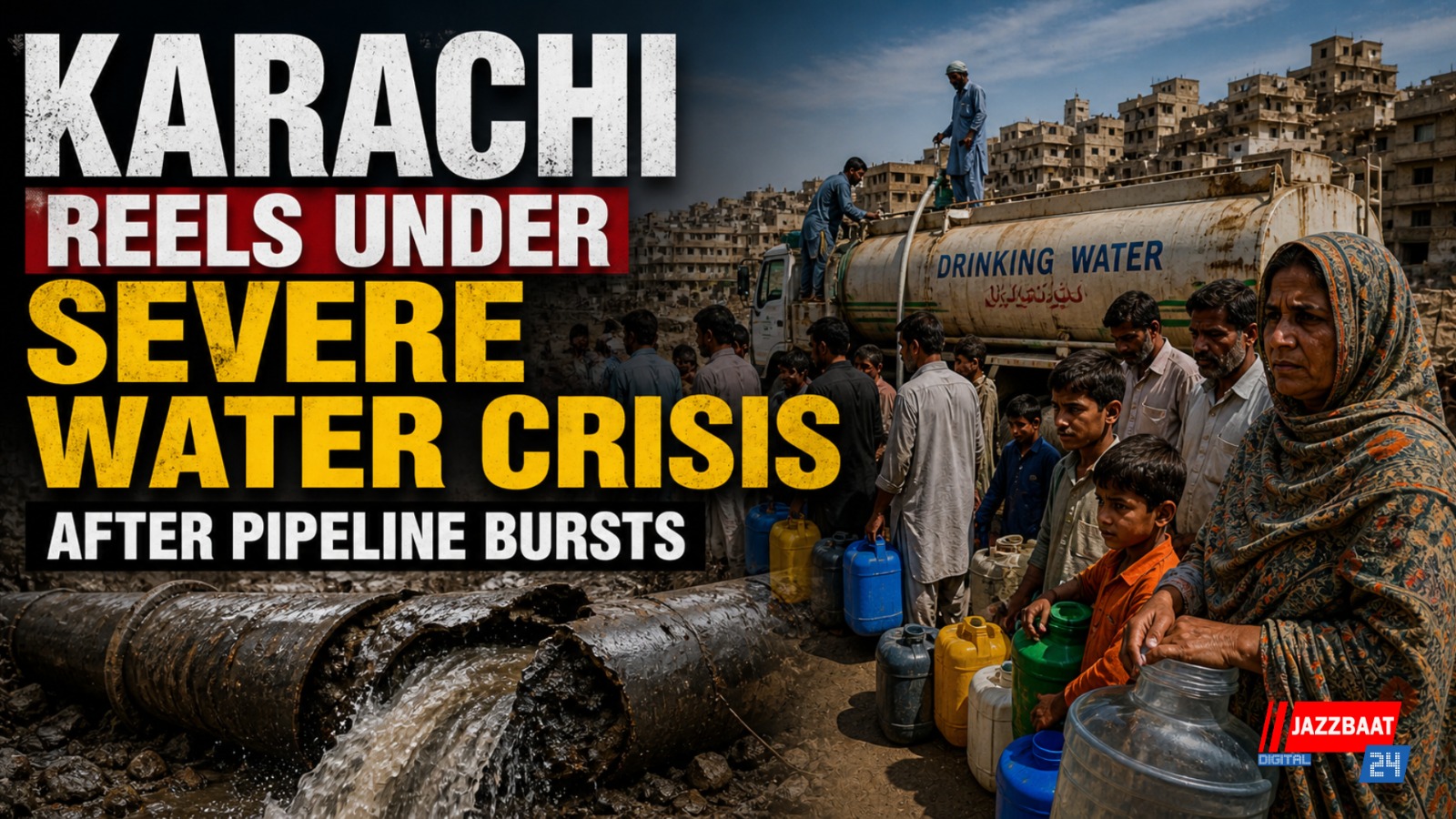
Islamabad: Pakistan’s largest city Karachi is facing a worsening water crisis after major supply lines burst following a power failure, leaving millions of residents struggling with acute shortages.
According to recent reports, the disruption has now stretched into its second week, severely affecting daily life across several parts of the city. The crisis began in late April when authorities temporarily shut down a key conduit to connect a newly installed pipeline near the Dhabeji pumping station. This led to a sharp shortfall in supply, which worsened after a major power breakdown damaged critical infrastructure.
Officials said that at least three major pipelines, each with a diameter of 72 inches, burst due to the power failure, disrupting water flow to large residential and commercial areas. The breakdown affected key localities including Korangi, Malir, Landhi, Shah Faisal Colony, Saddar and Clifton, triggering widespread distress among residents.
The scale of the shortage is significant. Karachi, which already faces chronic water scarcity, receives around 650 million gallons per day (MGD) against a demand exceeding 1,200 MGD. The latest disruptions have created an additional shortfall of up to 250 MGD at one stage, with further losses reported after the pipeline damage.
Authorities attempted partial restoration, managing to resume some supply within a day. However, repeated technical failures and the extent of the damage have slowed recovery efforts. Repair work is ongoing, but officials have warned that full restoration could take more time.
Residents across affected areas have reported severe hardship, with many forced to rely on expensive private water tankers. Long queues for water and rising prices have added to public frustration, highlighting long-standing infrastructure issues in the city.
Experts note that Karachi has struggled with water management challenges for years, including aging infrastructure, leakage, and supply-demand imbalance. In some estimates, demand in the city is nearly double the available supply, pointing to systemic issues beyond the current crisis.
The latest incident has once again raised questions over maintenance of critical infrastructure and the city’s preparedness to handle such emergencies. Authorities have assured that repair work is being prioritised, but residents remain concerned about recurring disruptions.
As repair efforts continue, the crisis underscores the vulnerability of essential services in one of South Asia’s largest urban centres, where millions depend daily on an already strained water supply system.