
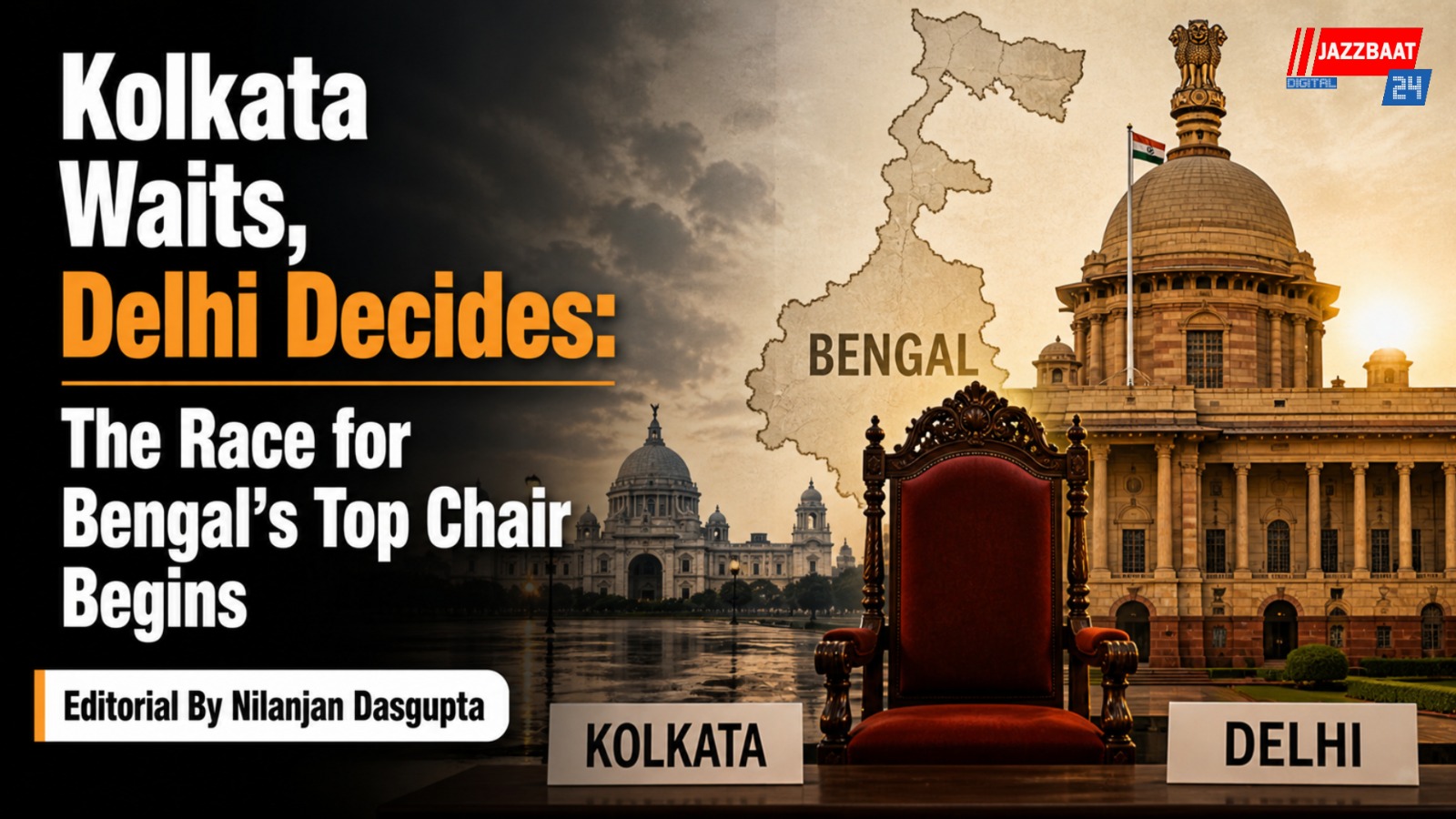
The political mood in West Bengal is one of anticipation, uncertainty, and quiet tension. After a historic electoral shift that unseated the long-dominant All India Trinamool Congress (TMC), the focus has now turned to the next big question: who will lead the state as Chief Minister? While the mandate has been delivered by the people of Bengal, the decision-making process appears to be unfolding far from Kolkata in the corridors of power in New Delhi.
The rise of the Bharatiya Janata Party (BJP) in Bengal marks a defining moment in the state’s political history. For decades, Bengal’s politics has been deeply rooted in regional leadership—first under the Left Front and later under Mamata Banerjee. This time, however, the narrative is different. The BJP’s victory is not just a state-level triumph; it is also a reflection of a centrally driven campaign, guided by national leaders and strategies.
This is where the central dilemma lies. Bengal has voted for change, but the nature of that change is still being negotiated. Names are being discussed, factions are being weighed, and loyalties are being assessed. The appointment of senior leaders like Amit Shah and J. P. Nadda as observers signals the importance the party’s central leadership places on this decision. It also underlines a broader reality: the choice of Bengal’s next Chief Minister is unlikely to be a purely local affair.
There are advantages and risks to such an approach. On one hand, central oversight can ensure stability, discipline, and alignment with national priorities. It can help avoid internal conflicts and present a unified leadership at a time when the party is transitioning from opposition to governance in a politically complex state. On the other hand, it raises important questions about federalism and regional autonomy. Bengal has a strong political identity, shaped by its culture, history, and intellectual tradition. Any perception that leadership is being “imposed” from Delhi could create friction, both within the party and among the electorate.
The BJP faces a unique challenge in Bengal. Unlike states where it has a long-standing organizational base, its growth here has been rapid and, in many ways, uneven. The party must now transform its electoral momentum into effective governance. This requires not just a popular leader, but one who understands the nuances of Bengal’s socio-political fabric—its linguistic pride, its economic concerns, and its deeply entrenched local dynamics.
Moreover, the expectations are enormous. After years of political polarization, allegations of violence, and governance debates, the people of Bengal are looking for stability, development, and inclusive governance. The next Chief Minister will have to bridge divides, rebuild trust in institutions, and deliver on promises that fueled this electoral shift.
For the outgoing TMC, this moment is one of introspection. The defeat of several key leaders has exposed cracks in what once seemed like an unassailable political structure. Yet, Bengal’s politics has always been cyclical, and the TMC’s future will depend on how it repositions itself as an opposition force.
At a broader level, this transition also reflects the changing nature of Indian politics. The balance between regional aspirations and national strategies is becoming increasingly complex. States like West Bengal, with strong local identities, are now at the center of this evolving dynamic.
As Kolkata waits, the decision in Delhi will carry far-reaching implications. It will not only determine the face of Bengal’s new government but also set the tone for how power is exercised in the state. The challenge for the BJP is clear: to ensure that the leader it chooses is not just acceptable to the party high command, but also resonates with the people of Bengal.
In the end, governance is not just about winning elections it is about sustaining trust. The real test begins now.