

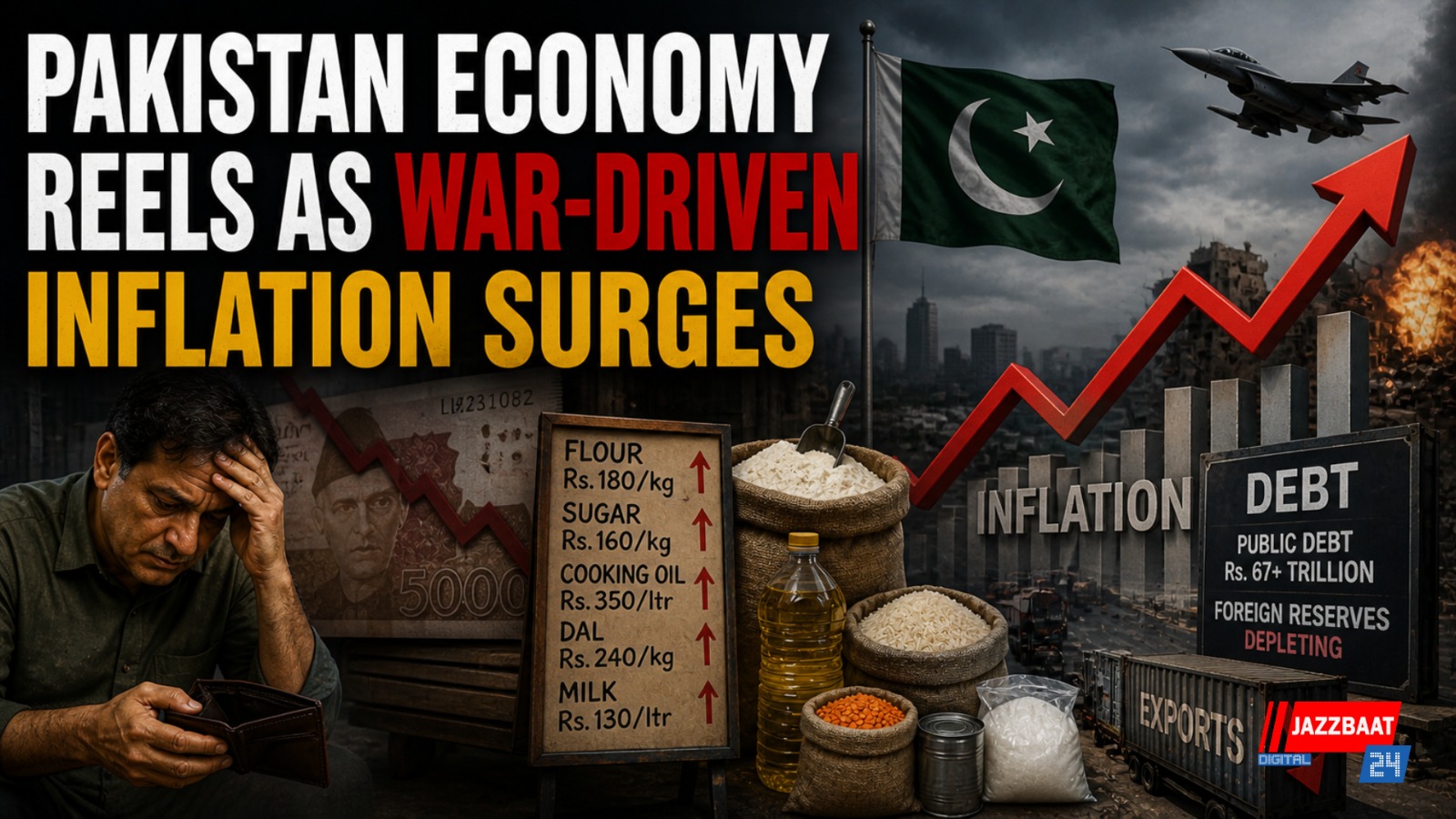
Islamabad: Pakistan’s already fragile economy is under severe strain as the ongoing Middle East conflict triggers a sharp rise in global oil prices, pushing the country toward prolonged double-digit inflation and slowing growth.
According to recent reports, inflation in Pakistan is expected to remain in double digits if the geopolitical crisis continues to disrupt energy supplies. Analysts warn that soaring fuel costs, combined with supply chain disruptions, are placing immense pressure on the country’s external finances and widening economic vulnerabilities.
The primary driver behind the surge is the steep rise in global crude oil prices, a direct fallout of tensions in the Middle East. Pakistan, which relies heavily on imported energy, nearly 90% of its oil comes from the Gulf, has been hit particularly hard. Higher fuel costs are feeding into transportation, manufacturing, and food prices, creating a ripple effect across the economy.
Financial analysts estimate that inflation could average around 9–10% in the coming months, with the possibility of exceeding 11% if oil prices continue to climb. In more severe scenarios, inflation could rise even further, forcing the central bank to consider tighter monetary policies, including interest rate hikes.
The economic outlook remains bleak. Reports suggest that rising import bills, especially for fuel, could significantly widen Pakistan’s current account deficit while depleting foreign exchange reserves. At the same time, a weakening currency and declining investor confidence are adding to the pressure on financial markets.
The crisis has also impacted economic growth projections. Analysts have revised growth forecasts downward, warning that continued instability could push GDP expansion to as low as 2.5–3% in the coming fiscal year.
Government officials have acknowledged the severity of the situation. The surge in oil import costs is reportedly placing a massive burden on national finances, complicating efforts to stabilise the economy and manage debt.
Beyond macroeconomic indicators, the impact is being felt by ordinary citizens. Rising fuel and food prices are increasing the cost of living, while economic uncertainty threatens jobs and livelihoods. Experts caution that without a resolution to the Middle East conflict, Pakistan’s economic recovery could be significantly delayed.
With global energy markets remaining volatile, Pakistan’s economic stability now hinges largely on external factors, particularly oil prices and geopolitical developments, highlighting the country’s vulnerability to international shocks.