
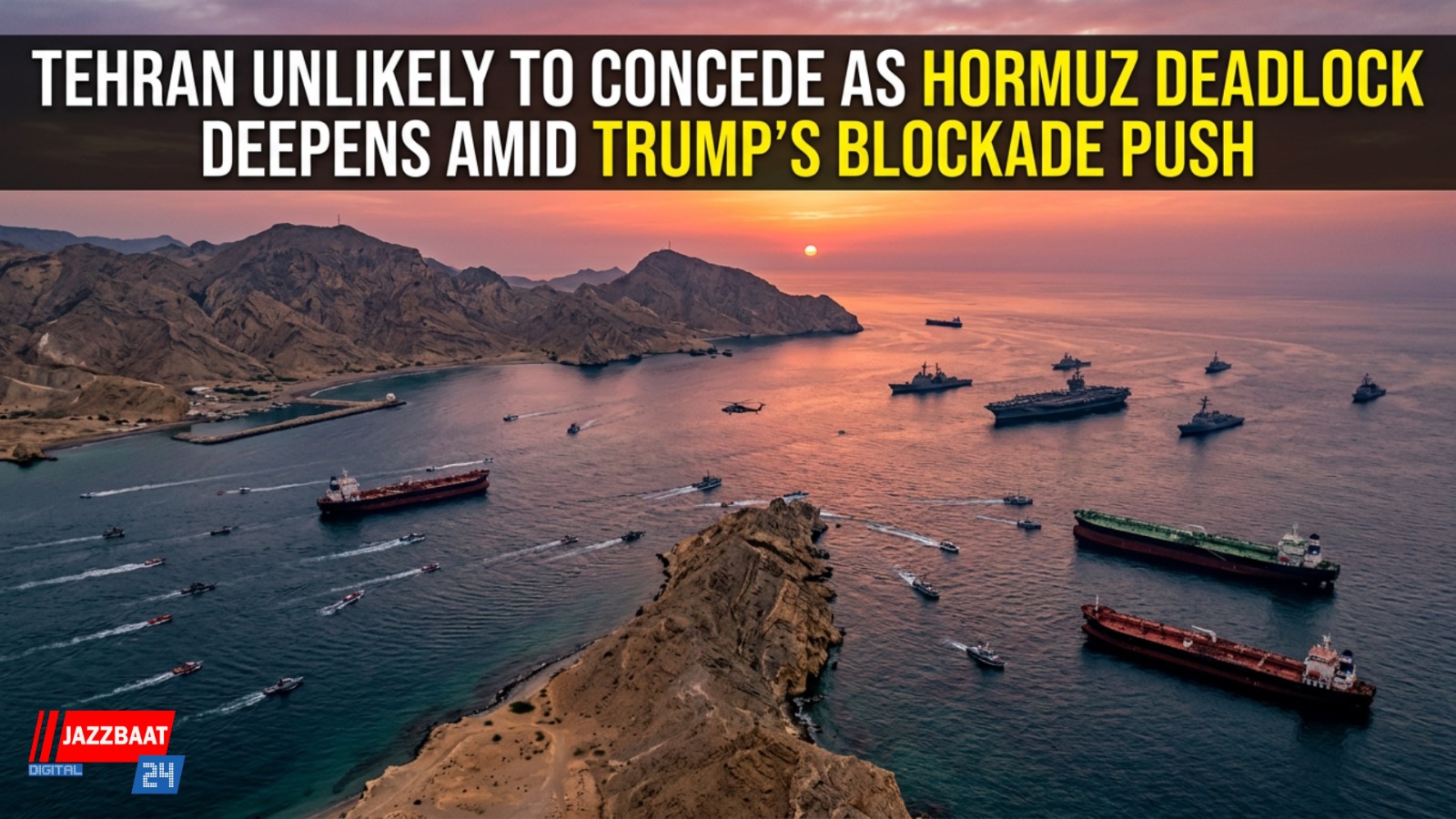
Iran is showing little sign of backing down in the ongoing standoff over the strategically vital Strait of Hormuz, even as US President Donald Trump signals that Washington’s naval blockade will continue until Tehran makes major concessions on its nuclear programme.
Recent developments indicate a deepening impasse between the two sides. The United States has maintained a sweeping naval blockade targeting Iranian ports and oil exports since mid-April, a move aimed at forcing Tehran to negotiate. Trump has repeatedly described the strategy as highly effective and has refused to lift restrictions unless Iran agrees to a comprehensive nuclear deal.
Iran, however, appears unwilling to concede ground on key demands. Tehran recently floated proposals that would reopen the Strait of Hormuz and ease maritime tensions, but crucially sought to delay or sidestep immediate negotiations on its nuclear programme. Washington rejected the offer, reinforcing the stalemate.
The Strait itself through which roughly a fifth of global oil supply typically passes has become the central flashpoint. Shipping traffic has dropped dramatically, with only a handful of vessels passing through daily compared to over a hundred before the conflict, underscoring the scale of disruption.
Despite economic pressure, Iranian officials have signaled resistance rather than retreat. Leaders in Tehran have mocked the US pressure campaign and warned of “practical” responses if the blockade continues, suggesting that the country is prepared for a prolonged confrontation. Meanwhile, Iran has leveraged its control over regional waterways and its ability to disrupt shipping as a bargaining tool in negotiations.
The United States, on the other hand, is doubling down. Trump has made it clear that the blockade seen by his administration as more effective than direct military strikes will remain in place until Iran agrees to curb its nuclear ambitions. Behind the scenes, US officials are also considering further military options if talks fail to progress.
The result is a high-stakes geopolitical deadlock with global implications. Oil markets remain volatile, and fears are growing over prolonged disruption to energy supplies and international trade routes.
With neither side willing to compromise on core issues particularly Iran’s nuclear programme and control over the Strait the crisis shows little sign of easing. The coming days will be crucial in determining whether diplomacy can break the stalemate or if tensions escalate further in one of the world’s most critical maritime corridors.