

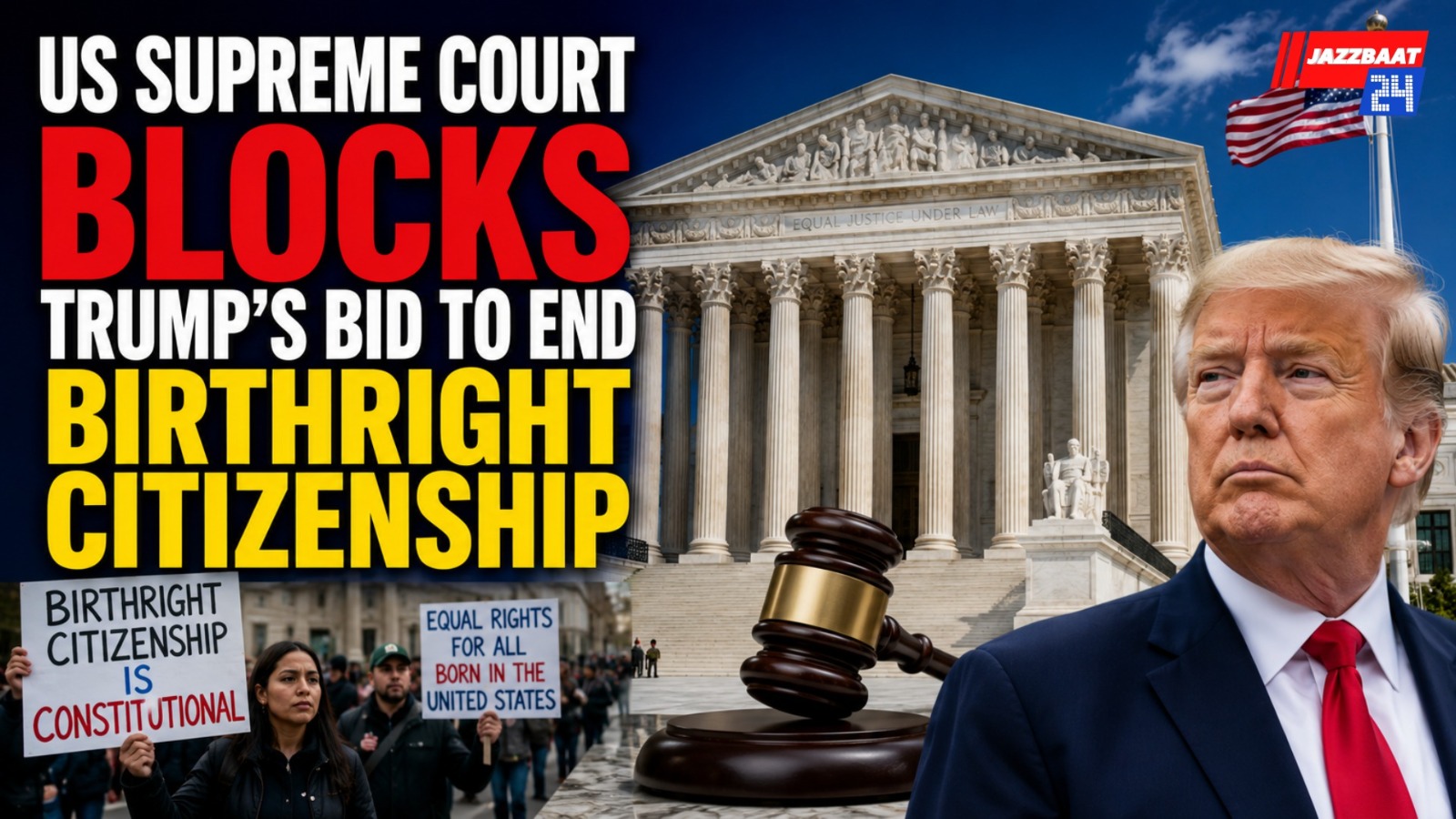
In a major setback for President Donald Trump's immigration agenda, the U.S. Supreme Court has struck down his executive order seeking to restrict birthright citizenship, reaffirming that nearly all children born on American soil are automatically entitled to U.S. citizenship under the Constitution's 14th Amendment. The ruling came in a 6-3 decision and is being seen as one of the most significant judgments of Trump's second term.
Trump's executive order, signed on his first day back in office in January 2025, aimed to deny citizenship to children born in the United States if neither parent was an American citizen or a lawful permanent resident. The administration argued that the 14th Amendment's Citizenship Clause should not apply to children of undocumented immigrants or temporary visa holders.
Writing for the majority, Chief Justice John Roberts said the order violated the Constitution's long-established interpretation of birthright citizenship. Roberts was joined by fellow conservative justices Amy Coney Barrett and Brett Kavanaugh, as well as the court's three liberal justices. Justices Clarence Thomas, Samuel Alito and Neil Gorsuch dissented.
The court's decision also reaffirmed the precedent set by the landmark 1898 case United States v. Wong Kim Ark, which established that children born in the United States are citizens regardless of their parents' immigration status. Legal experts say changing that principle would require a constitutional amendment or a dramatic reversal of long-standing precedent, both of which face enormous political and legal hurdles.
Civil rights groups and immigrant advocacy organisations welcomed the ruling, calling it a victory for constitutional protections and equal rights. Republicans and Trump allies, however, expressed disappointment and indicated they would continue pursuing changes through legislative means. Trump himself vowed to keep fighting for stricter immigration measures despite the court's decision.
The judgment preserves a cornerstone of American constitutional law and affects the legal status of hundreds of thousands of children born in the United States each year, ensuring that the principle of birthright citizenship remains intact.