

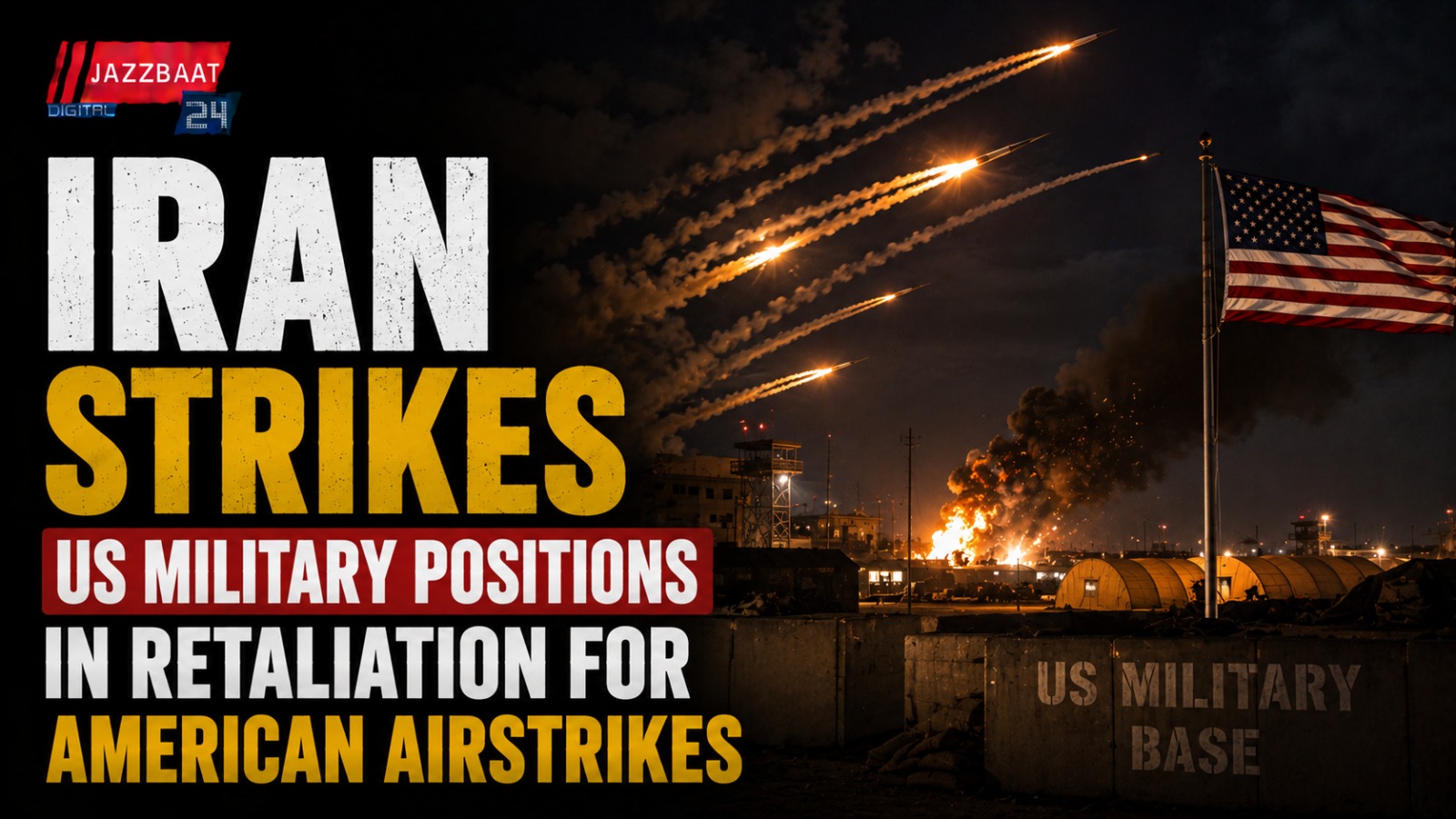
Iran has claimed responsibility for attacks on American military positions in the Middle East in retaliation for recent U.S. airstrikes on Iranian targets near the Strait of Hormuz, marking a fresh escalation in tensions between the two countries.
According to Iran's Islamic Revolutionary Guard Corps (IRGC), missile and drone strikes were launched against U.S. military facilities in the region after American forces targeted Iranian missile and drone storage sites and coastal radar installations. Tehran described the attacks as a legitimate response to what it called a violation of the recently agreed ceasefire arrangement.
The U.S. strikes were carried out after Iran allegedly launched a drone attack on the Singapore-flagged cargo vessel M/V Ever Lovely in the Strait of Hormuz. Washington said the military action was a "powerful response" intended to protect commercial shipping and maintain freedom of navigation through one of the world's most critical energy routes.
Iranian officials warned that any further American attacks would trigger an even broader response. Ebrahim Azizi, a member of Iran's parliament, accused the United States of acting during ongoing negotiations and said Washington had shown no commitment to diplomacy or the ceasefire. Iranian military spokespersons also indicated that future retaliation could be "unprecedented" if the conflict continues to escalate.
Neither Washington nor Tehran has immediately released details on casualties or the extent of damage caused by the latest exchanges. However, the incident has heightened concerns about regional security and the possibility of a wider conflict involving U.S. allies in the Gulf.
The renewed hostilities have also raised fears over the stability of global energy markets, as the Strait of Hormuz handles a significant share of the world's oil shipments. Despite the military confrontation, oil prices fell after some shipping activity resumed through the waterway, offering temporary relief to global markets.
Diplomatic efforts to prevent a broader war are continuing, but the latest exchange of strikes underscores the fragile nature of the ceasefire and the growing risk of further military escalation in the Middle East.