

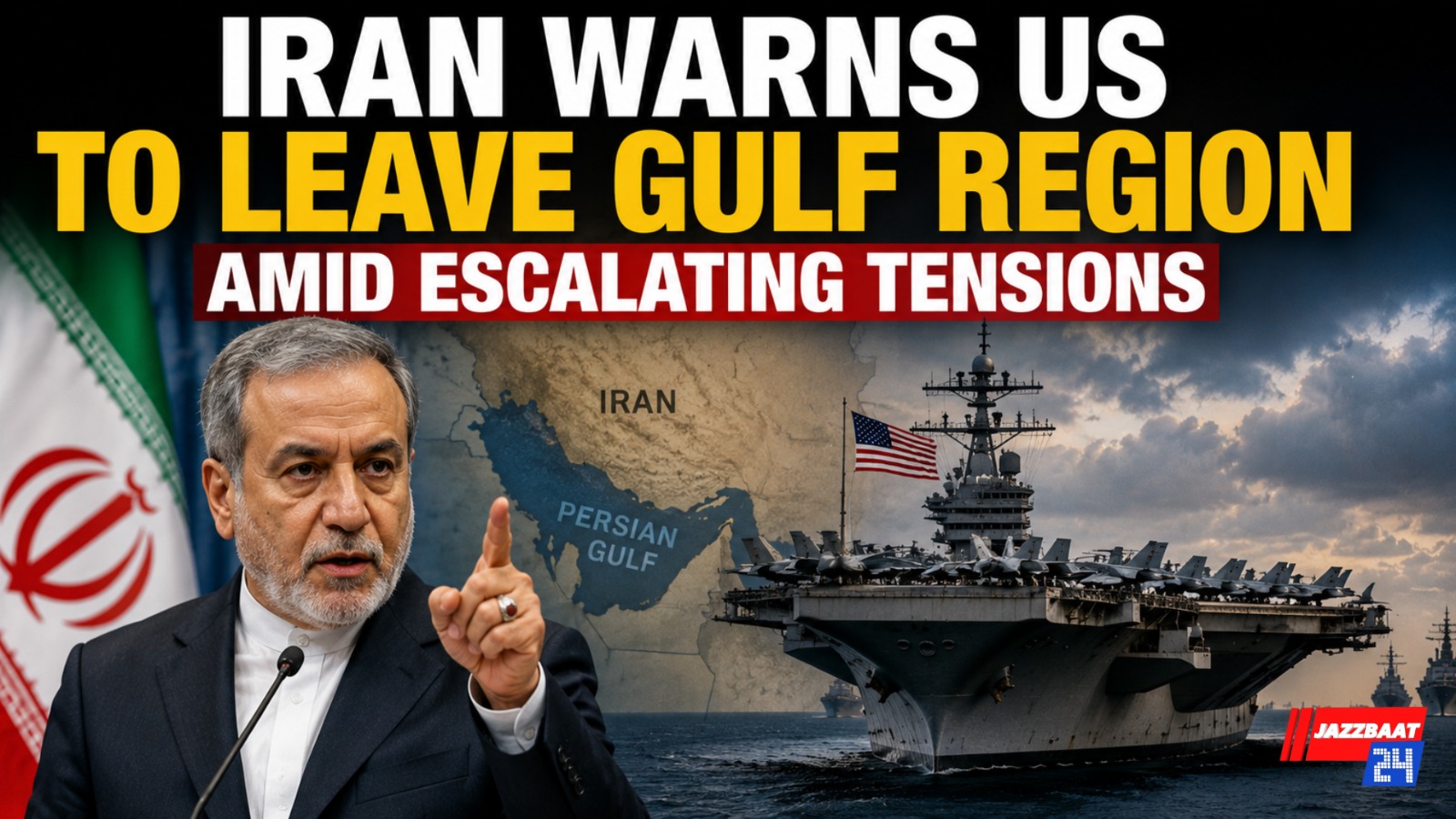
Tensions between the United States and Iran have risen sharply after Tehran issued a stern warning to Washington, telling American forces to leave the Persian Gulf region if they want to remain safe. The warning came from Iranian Foreign Minister Abbas Araghchi amid a rapidly deteriorating security situation following new US military strikes against Iranian targets.
In a message posted on social media, Araghchi said Iran's armed forces would not leave any attack or threat unanswered. He accused the United States of testing Iran's resolve despite what he described as previous setbacks and warned that foreign military forces operating in the region should withdraw if they wish to avoid further confrontation.
The latest crisis was triggered after a US Army Apache helicopter went down near the Strait of Hormuz. American officials said the aircraft was brought down following an encounter involving an Iranian drone. In response, US Central Command launched what it described as "proportional" self-defence strikes targeting Iranian radar installations, air-defence systems and military infrastructure. President Donald Trump defended the operation, saying the United States could not allow attacks on its military personnel to go unanswered.
Iran reacted strongly to the strikes. According to multiple reports, Iranian forces launched retaliatory attacks against US-linked military assets in the Gulf region, including targets in Bahrain, Jordan and Kuwait. Air-defence systems were activated in several countries as missiles and drones were reportedly intercepted. The exchanges have raised fears that the fragile ceasefire efforts seen in recent months could collapse entirely.
The confrontation has also heightened concerns about the security of the Strait of Hormuz, one of the world's most important energy corridors through which a significant portion of global oil shipments passes. Continued instability in the region has already contributed to uncertainty in financial and energy markets, with analysts warning that a prolonged conflict could disrupt global supply chains and push energy prices higher.
Despite the military escalation, diplomatic efforts have not completely stopped. President Trump has continued to express hope that a broader agreement with Iran remains possible, while Tehran insists that any future negotiations must respect its sovereignty and security interests. However, with both sides exchanging threats and military strikes, prospects for a quick de-escalation appear increasingly uncertain.
The situation remains highly volatile, with regional governments and international organizations closely monitoring developments amid fears that the confrontation could widen into a broader Middle East conflict.