

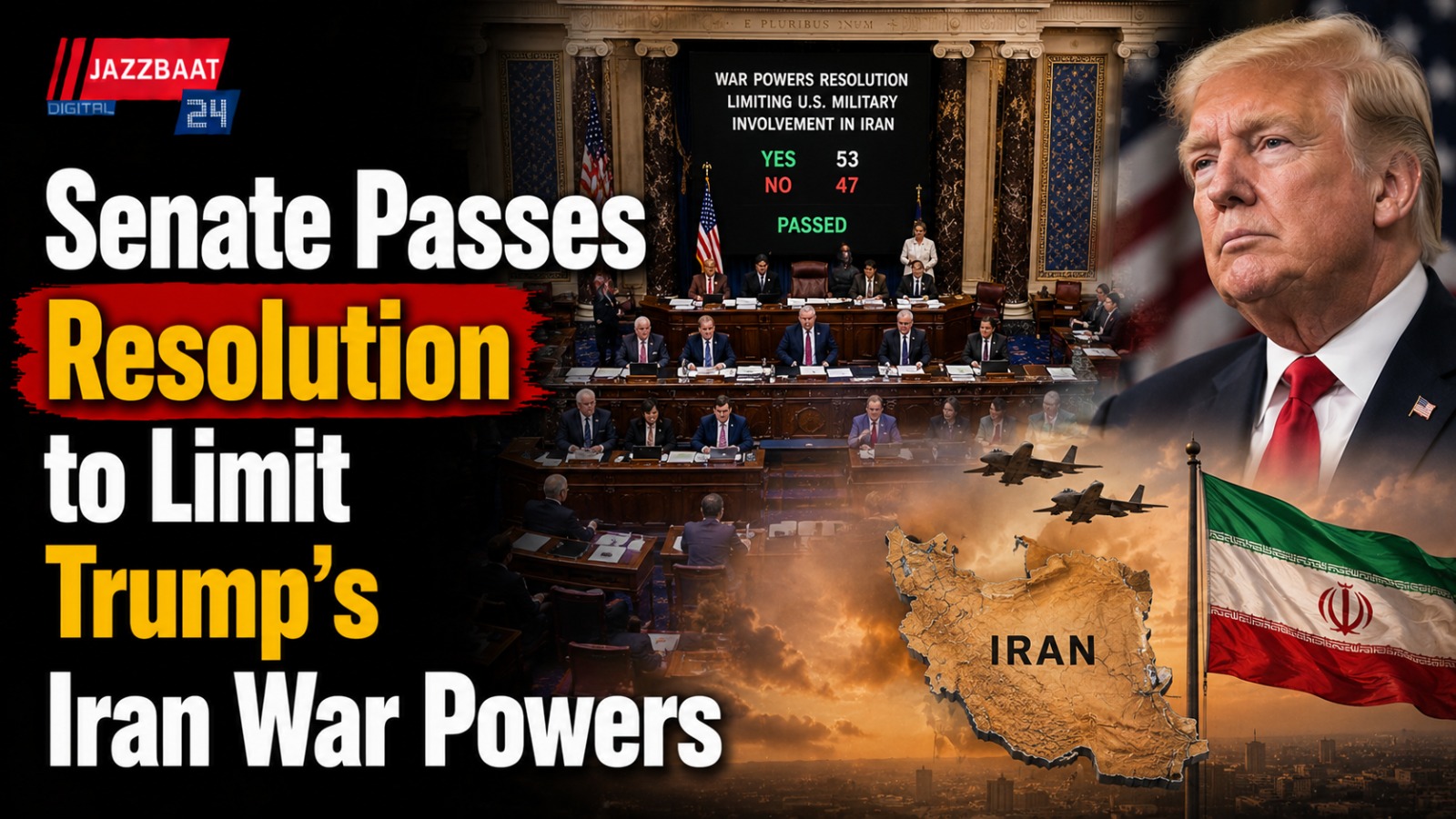
The United States Senate has passed a resolution aimed at limiting President Donald Trump’s authority to continue military action against Iran without approval from Congress, marking a significant bipartisan challenge to presidential war powers. The measure was approved by a narrow 50-48 vote on June 23, with four Republican senators joining most Democrats in support of the resolution.
The resolution, led by Democratic Senator Tim Kaine, invokes the War Powers Act and seeks to require congressional authorization before any further military operations against Iran can proceed, except in cases of imminent threats to the United States. Supporters argue that the U.S. Constitution grants Congress the authority to declare war and that lawmakers must have a direct role in decisions that could lead to prolonged military conflicts.
The vote comes after months of conflict involving the United States, Israel, and Iran. Although the Trump administration has been pursuing diplomatic efforts to secure a lasting settlement with Tehran, many lawmakers remain concerned about the possibility of renewed hostilities and the lack of congressional oversight over military decisions.
Four Republican senators Susan Collins, Lisa Murkowski, Bill Cassidy, and Rand Paul broke with their party to support the measure. Meanwhile, Democratic Senator John Fetterman voted against it, making him the only Democrat to oppose the resolution. The bipartisan nature of the vote reflects growing concern in Washington over the balance of power between Congress and the White House on matters of war and national security.
While the resolution carries major political significance, its practical impact remains uncertain. Legal experts note that war powers resolutions do not require presidential approval and their constitutional standing has often been disputed by administrations from both parties. As a result, the measure is widely viewed as a symbolic rebuke of the president rather than an immediate restriction on executive authority.
The White House has downplayed the importance of the vote, arguing that active hostilities have already ended and that ongoing negotiations with Iran are progressing. President Trump has also criticized the resolution, suggesting it could weaken the administration’s position in talks with Tehran.
Despite those objections, the Senate vote represents one of the strongest congressional assertions of war-making authority in recent years and signals continued scrutiny of U.S. policy toward Iran as diplomatic negotiations move forward.