

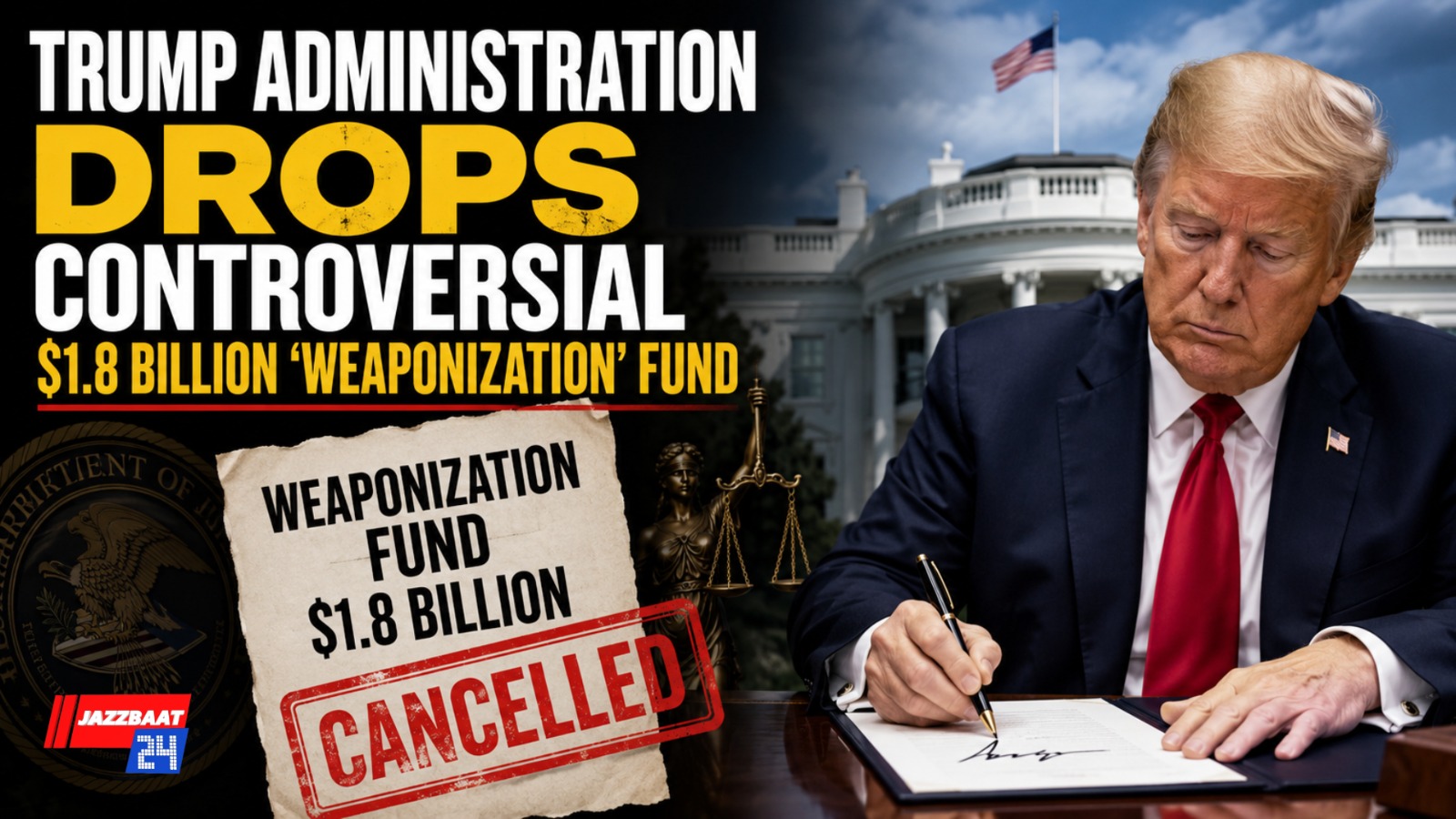
The Trump administration has abandoned plans to move forward with a controversial $1.8 billion “Anti-Weaponization Fund” after facing strong opposition from Republican lawmakers, legal challenges and growing public scrutiny. The decision was confirmed on Tuesday by Acting Attorney General Todd Blanche during testimony before Congress.
The fund was originally created by the Justice Department as part of a settlement related to President Donald Trump’s lawsuit against the Internal Revenue Service (IRS). Under the proposal, nearly $1.8 billion in federal funds would have been used to compensate individuals who claimed they had been victims of government “weaponization” or politically motivated actions by federal agencies.
However, the initiative quickly became one of the most controversial proposals of Trump’s second term. Critics from both parties questioned the legality of the fund and expressed concerns that it could be used to compensate Trump allies, including individuals involved in the January 6, 2021, Capitol riot. Several Republican senators also voiced concerns that the proposal could derail broader legislative priorities and create political complications ahead of the midterm elections.
Legal challenges further complicated the administration’s plans. Federal judges in Virginia and Florida issued orders temporarily blocking the fund while courts examined whether the program was lawful. Opponents argued that the administration lacked the authority to establish such a large compensation program without congressional approval and questioned whether taxpayer money could legally be distributed through the fund.
During a House hearing, Blanche told lawmakers that the administration would no longer proceed with the fund. He said that while the government remains committed to addressing legitimate claims of abuse by federal agencies, the specific compensation program would be scrapped. The announcement marked a significant reversal for the administration after weeks of defending the initiative.
Despite the decision, one key part of the broader settlement remains in place. Blanche confirmed that an agreement preventing future IRS audits of Trump, his family and certain associated entities regarding past tax matters will continue to stand. That provision has also drawn criticism from Democrats, who argue it creates potential conflicts of interest and raises questions about accountability.
The cancellation of the fund represents a rare instance in which opposition from within the Republican Party contributed to the rollback of a major Trump administration initiative. While the fund itself is no longer moving forward, legal and political debates surrounding the settlement are expected to continue in the coming weeks.