

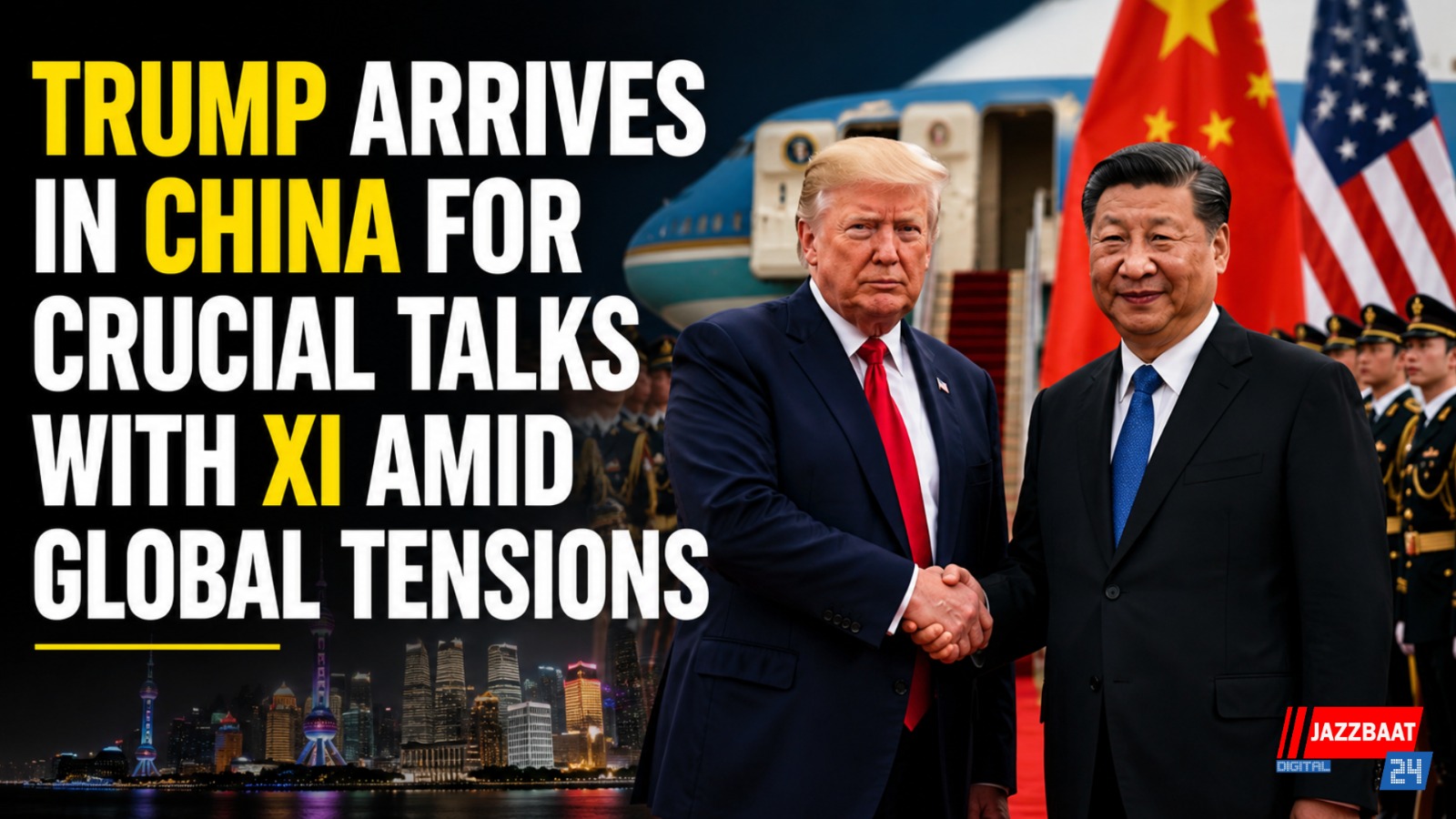
U.S. President Donald Trump arrived in China on Wednesday for a high-stakes summit with Chinese President Xi Jinping, as both countries seek to manage rising tensions over trade, Taiwan, Iran and global supply chains. The visit marks Trump’s first trip to China since returning to office and comes at a sensitive moment in international politics.
The three-day visit to Beijing is expected to focus heavily on trade negotiations between the world’s two largest economies. Officials from both sides are reportedly looking to stabilise economic relations after months of tariff disputes and restrictions on strategic exports, including semiconductors and rare earth materials.
Apart from trade, the ongoing conflict involving Iran is likely to dominate discussions between the two leaders. Trump recently stated that he plans to discuss the Iran situation directly with Xi but insisted that the United States does not require China’s support to pursue its objectives in the region. China, meanwhile, remains an important buyer of Iranian oil and has called for diplomatic solutions to the crisis.
Taiwan is also expected to be a major point of discussion during the summit. Beijing continues to oppose American military and political support for Taiwan, while Washington has maintained its strategic backing for the island. Analysts believe the issue could become one of the most sensitive topics during the talks.
Security has been tightened across Beijing ahead of the meeting, with Chinese authorities preparing for multiple rounds of bilateral discussions and diplomatic events. Reports suggest that top business leaders and senior American officials are accompanying Trump during the visit in an effort to strengthen economic cooperation and secure major trade agreements.
Political observers around the world are closely watching the summit, as its outcome could influence global markets, regional security and future U.S.-China relations. While expectations of a major breakthrough remain limited, both sides appear eager to avoid further escalation in economic and geopolitical tensions.