

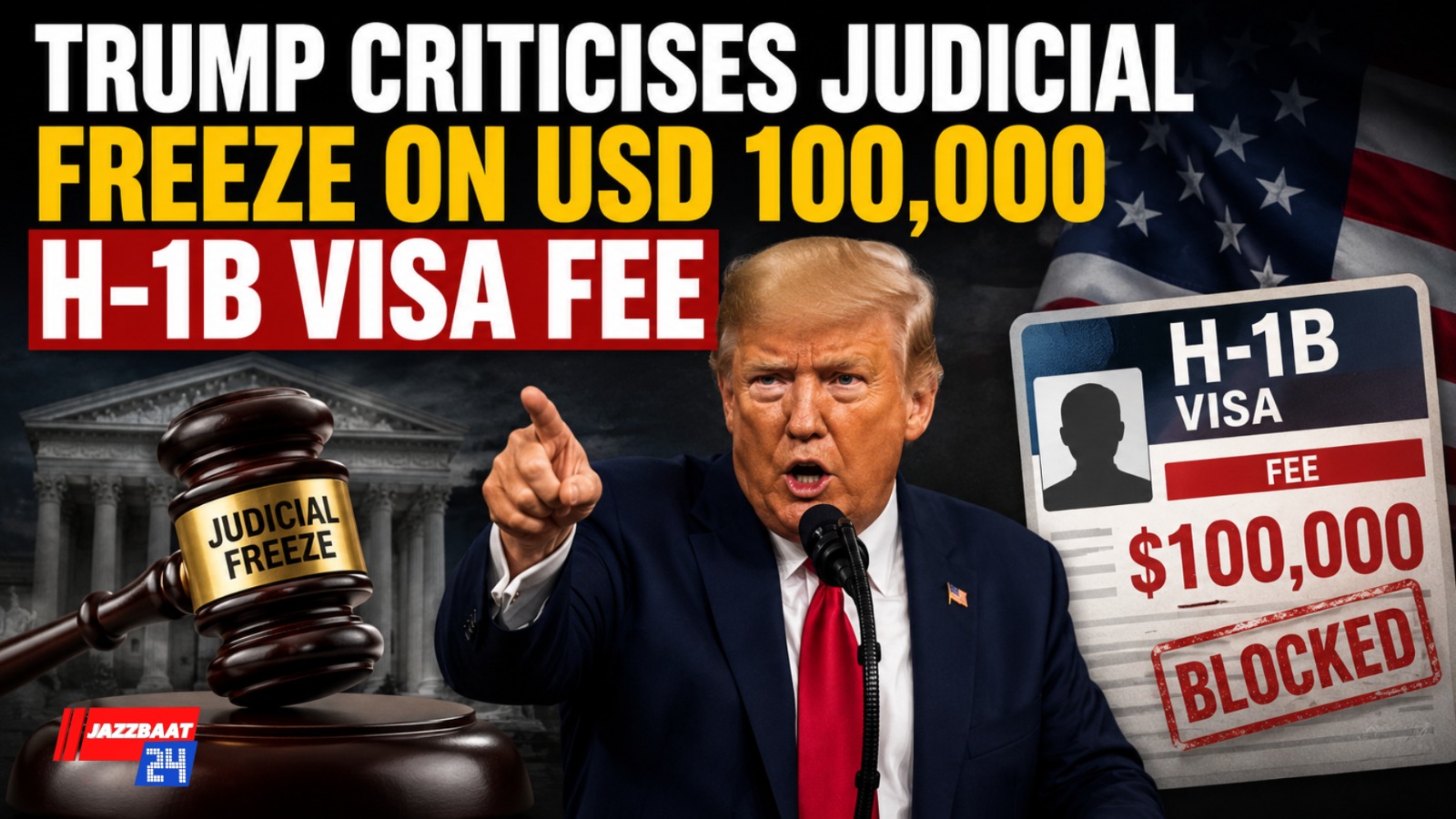
US President Donald Trump has sharply criticised a federal court's decision to temporarily block the implementation of a proposed USD 100,000 fee on certain H-1B visa applications, calling the ruling "crazy" and arguing that it harms America's interests.
Speaking to reporters, Trump said the proposed fee was designed to protect American workers and ensure that companies prioritize hiring domestic talent before turning to foreign labour. He argued that the court's intervention undermines efforts to reform the immigration system and address concerns about job competition in the technology and professional services sectors.
The controversial fee proposal, announced earlier this year, would have dramatically increased costs for employers seeking to hire foreign professionals through the H-1B visa programme. Supporters of the measure claimed it would discourage misuse of the visa system and encourage companies to invest more in the American workforce.
However, business groups, technology companies, universities, and immigration advocates strongly opposed the plan, warning that such a steep fee would make it significantly harder for US employers to attract highly skilled global talent. Several organizations challenged the measure in court, arguing that the administration exceeded its legal authority and failed to follow proper regulatory procedures.
A federal judge subsequently issued an order freezing the implementation of the fee while legal challenges proceed. The court indicated that plaintiffs had raised substantial questions regarding the legality of the measure and that immediate enforcement could cause significant disruption to businesses and workers.
Reacting to the ruling, Trump said the decision was damaging to the country and accused the judiciary of obstructing policies aimed at strengthening the US labour market. He maintained that immigration reforms should prioritise American workers and reduce incentives for companies to rely on foreign labour.
The H-1B visa programme remains a major point of debate in the United States. The visa allows American employers to hire foreign professionals in specialised fields such as technology, engineering, healthcare, finance, and research. While supporters argue that the programme helps address skill shortages and drives innovation, critics contend that it can be used to undercut wages and displace domestic workers.
The legal battle over the proposed fee is expected to continue in the coming months. Until a final court decision is reached, the judicial freeze means employers and foreign professionals will continue operating under the existing H-1B fee structure. The outcome of the case could have significant implications for US immigration policy, the technology industry, and thousands of skilled workers seeking employment opportunities in the country.