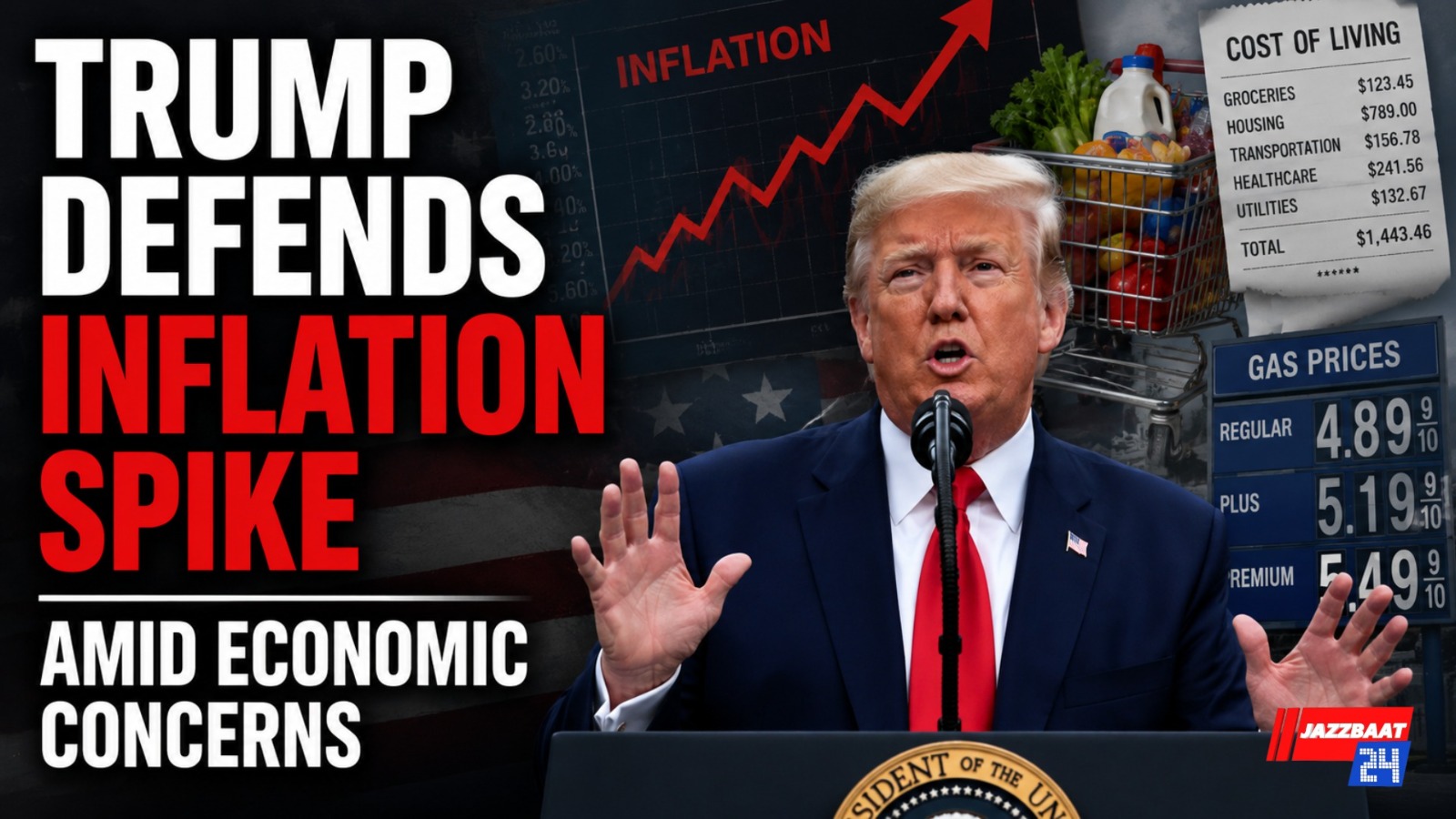
U.S. President Donald Trump has sparked fresh controversy after saying “I love the inflation” while responding to new economic data showing that consumer prices in the United States rose at their fastest pace in three years. The remarks came shortly after government figures revealed that annual inflation climbed to 4.2% in May, marking a significant increase from previous months and raising concerns about the rising cost of living for American households.
Speaking to reporters at the White House, Trump dismissed fears over the inflation surge and argued that the increase was largely tied to the ongoing conflict involving Iran and disruptions in global energy markets. According to the president, higher prices are a temporary consequence of geopolitical tensions and will ease once the situation in the Middle East stabilizes. He expressed confidence that oil prices would “come down like a rock” when the conflict ends, helping to reduce inflationary pressure across the economy.
The latest inflation report showed that energy costs were a major driver behind the increase. Rising fuel prices, transportation costs, and broader supply-chain disruptions linked to instability around the Strait of Hormuz have pushed up expenses for businesses and consumers alike. Economists note that higher energy prices often ripple through the economy, affecting everything from food and airline tickets to manufacturing and household goods.
Trump’s comments immediately drew criticism from political opponents and some economic analysts, who argued that celebrating inflation could alienate voters already struggling with higher living costs. Inflation was one of the key issues during the 2024 presidential election, when Trump promised to bring prices down and improve affordability for ordinary Americans. Critics now say the latest figures could become a major political challenge for Republicans ahead of the upcoming midterm elections.
The White House later sought to clarify the president’s remarks, saying Trump was referring to economic indicators that were better than some forecasts and emphasizing that prices in certain categories, including prescription drugs and some consumer goods, have declined. Administration officials also maintained that inflationary pressures would ease if energy markets stabilize.
Meanwhile, financial markets and policymakers are closely watching the situation. The inflation spike is expected to influence upcoming decisions by the U.S. Federal Reserve, with many analysts predicting that interest rates could remain elevated for longer than previously expected. As the economy navigates rising prices and geopolitical uncertainty, inflation is once again emerging as one of the most important issues facing American voters.