

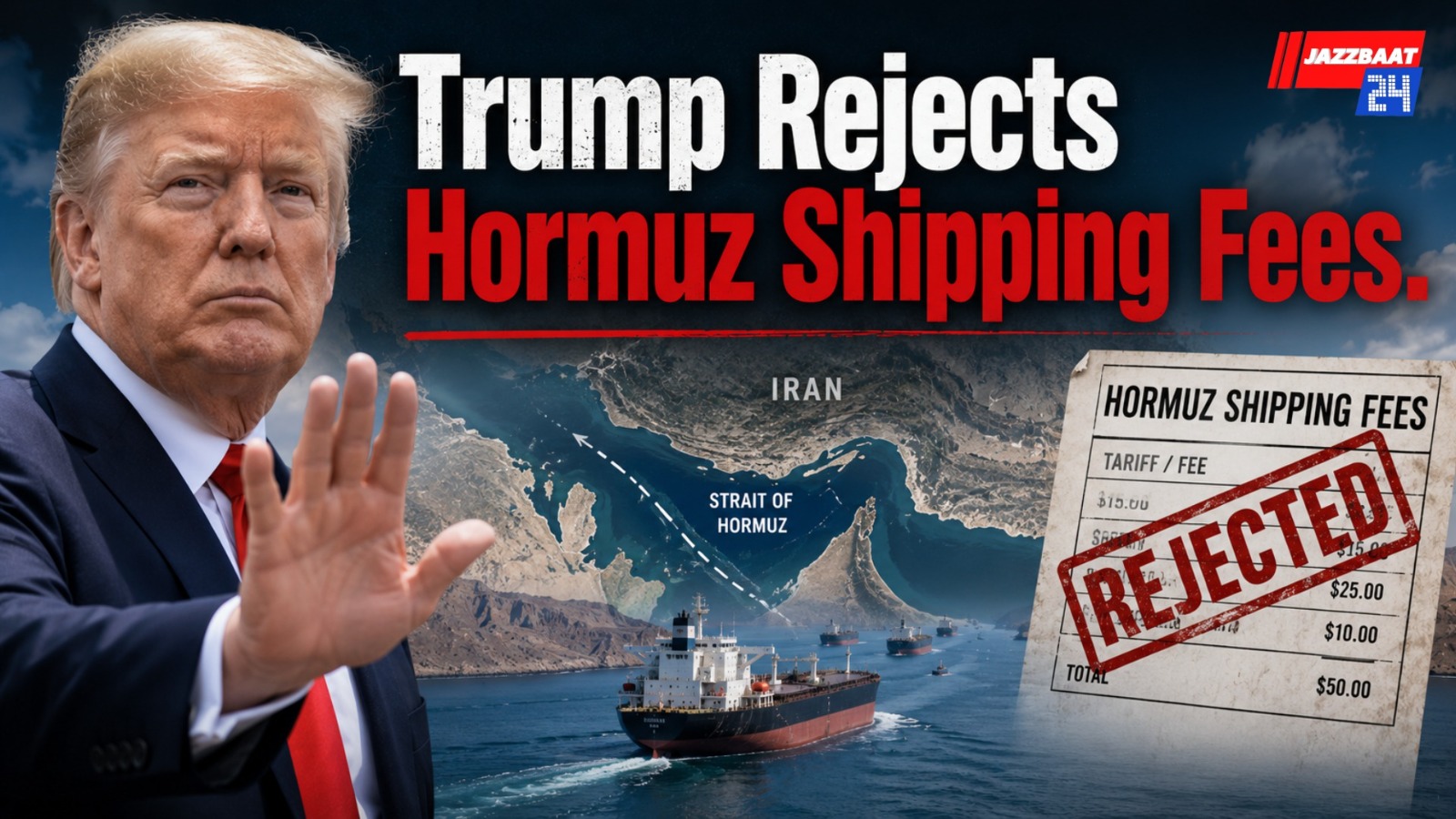
US President Donald Trump has said that any agreement allowing Iran to impose fees or tolls on ships using the Strait of Hormuz would be "unacceptable," drawing a firm red line in the ongoing negotiations between Washington and Tehran. His remarks came amid reports that maritime charges were being discussed as part of a broader peace framework following months of regional conflict.
Speaking to reporters at the White House, Trump said freedom of navigation through the Strait of Hormuz must remain unrestricted and warned that the United States would walk away from negotiations if Iran attempted to charge vessels for passing through the strategic waterway. He stressed that such a move would be unacceptable for global trade and energy security.
Trump also revealed that Iran had assured the United States it was not seeking to impose tolls, insurance fees or any other charges on commercial ships transiting the Strait of Hormuz. He said the Iranian position directly contradicted media reports suggesting that shipping fees were under consideration. Trump added that if Iran failed to honour this assurance, negotiations would end immediately.
The Strait of Hormuz is one of the world's most strategically important maritime chokepoints, with roughly one-fifth of global oil shipments passing through the narrow waterway connecting the Persian Gulf to the Gulf of Oman. Any disruption or additional costs for vessels using the route could have a significant impact on global energy prices, shipping costs and international trade.
The latest comments come as the United States and Iran continue talks aimed at converting a fragile ceasefire into a broader peace agreement after months of conflict. While negotiations have made progress on several issues, both sides continue to offer differing accounts of the discussions, particularly over maritime security and the future administration of the Strait of Hormuz.
Global markets have closely followed developments surrounding the Strait, with oil prices easing after Trump's remarks and Iran's reported assurance that no tolls would be imposed. Analysts say keeping the vital shipping lane open without additional charges will be crucial for maintaining stability in international energy markets and ensuring uninterrupted global commerce.