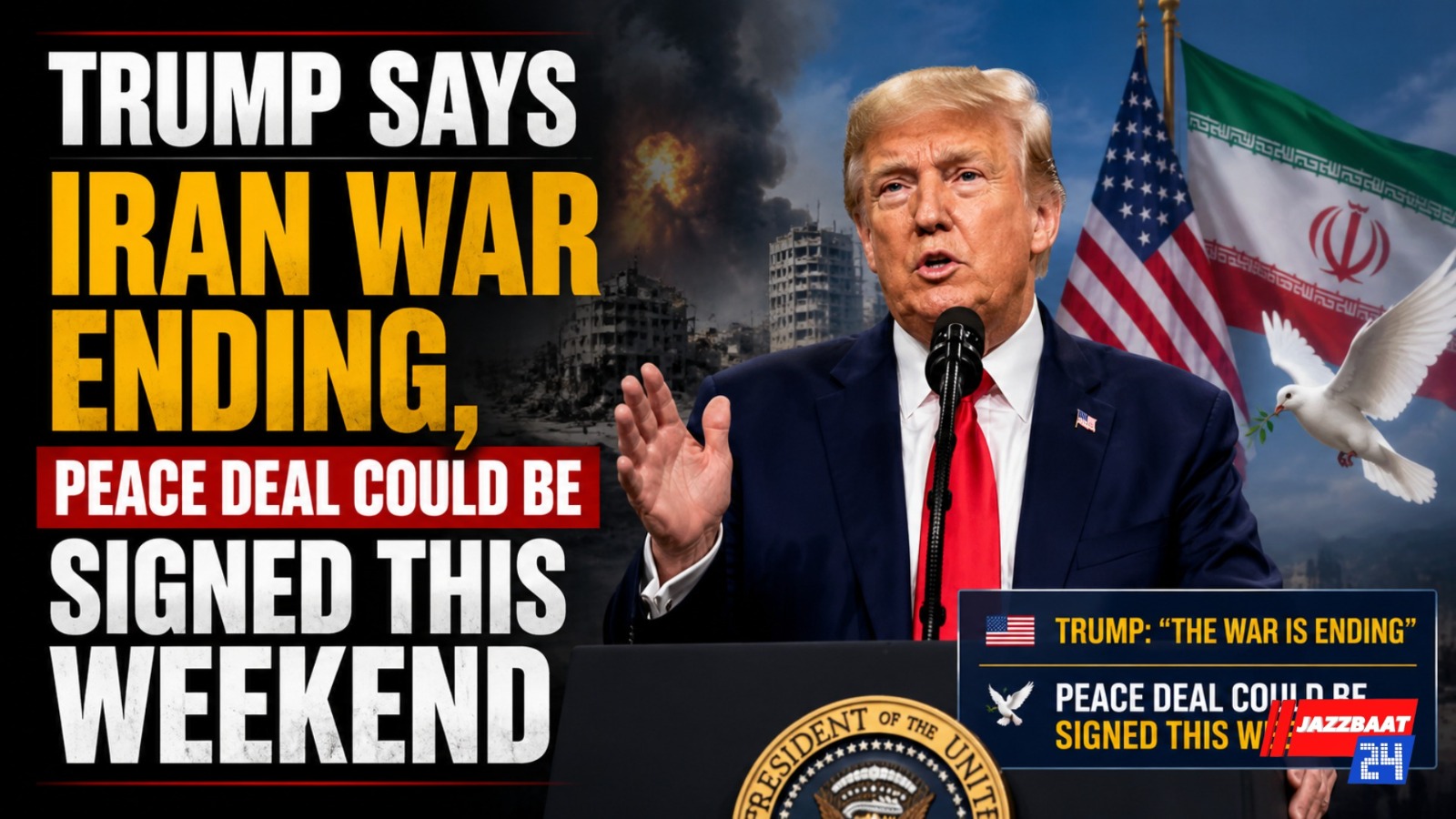
U.S. President Donald Trump has claimed that the war between the United States and Iran is nearing an end, expressing confidence that a peace agreement could be signed as early as this weekend. Speaking at the White House, Trump said negotiators were close to reaching what he described as a “great settlement” that would help bring an end to months of conflict and reopen key trade routes in the Middle East.
According to Trump, the proposed agreement would include commitments aimed at preventing Iran from obtaining nuclear weapons, which he described as a central objective of the negotiations. He indicated that a memorandum of understanding could be finalized within days, possibly during talks in Europe involving senior U.S. officials.
The announcement comes after weeks of intensified diplomatic efforts and military tensions in and around the Strait of Hormuz, a critical global oil shipping route. Trump said a successful deal would pave the way for the reopening of the strait and help stabilize global energy markets, which have been affected by the conflict. Following his remarks, oil prices fell and financial markets reacted positively to expectations of reduced geopolitical risk.
However, Iranian officials have struck a more cautious tone. Tehran has stated that no final decision has been made and that several key issues remain unresolved. Iranian leaders continue to seek sanctions relief, access to frozen assets, and recognition of certain national interests before signing any agreement. Officials in Tehran emphasized that negotiations are still under review and that Iran will not compromise on what it considers its core principles.
Despite the optimism expressed by Washington, clashes and security incidents have continued in parts of the region. Recent military exchanges and disputes over ceasefire violations have highlighted the fragility of the diplomatic process. Nevertheless, Trump has reportedly canceled plans for additional strikes against Iran, citing progress in negotiations and a desire to give diplomacy a chance.
Regional powers, including several Gulf nations, are reported to support efforts to end the conflict, while Israel has clarified that it is not formally a party to the proposed agreement. Analysts say a successful deal would represent one of the most significant diplomatic developments in the Middle East this year and could ease pressure on global energy supplies and international trade.
For now, attention remains focused on whether negotiators can bridge the remaining gaps and transform the current framework into a formal peace agreement before the weekend deadline suggested by Trump.