
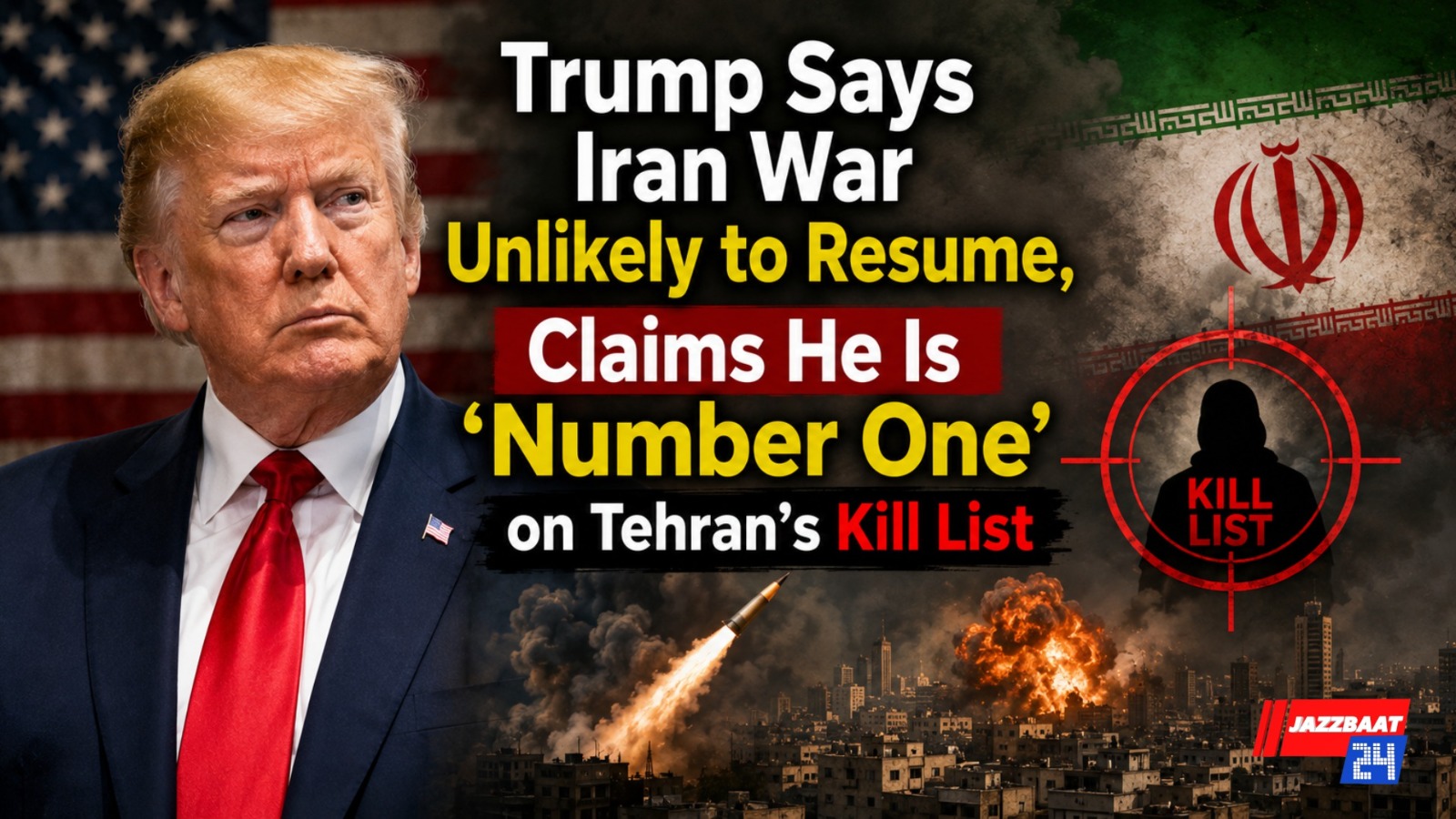
US President Donald Trump has said he does not believe the conflict with Iran will erupt into another full-scale war, despite recent military exchanges that have heightened tensions between Washington and Tehran. Speaking to reporters after the NATO summit in Ankara, Trump expressed confidence that the latest escalation would be short-lived and ruled out the likelihood of a prolonged conflict.
“I don’t think it’s going to start again,” Trump said when asked about the possibility of renewed war with Iran. Referring to the recent exchange of attacks, he added that Iran had struck “a couple of ships,” prompting a much stronger US response. “When they hit, we hit 10 times harder,” Trump remarked, while suggesting that any further confrontation would end quickly.
The US President also claimed that he remains the primary target of Iranian threats, saying, “I’m number one on the kill list for Iran.” Trump made the remark while responding to questions about security arrangements during his return from the NATO summit. He acknowledged that the presidency is a dangerous job but insisted he was not intimidated by the threats.
Trump’s comments come at a time when the fragile ceasefire between the United States and Iran appears increasingly uncertain. Although he said he does not expect the conflict to resume on a large scale, he stopped short of ruling out additional military action, warning that any future US strikes would be swift if Iran carried out further attacks.
The latest developments follow renewed exchanges of fire between the two countries after both sides accused each other of violating the terms of an interim agreement aimed at reducing hostilities. The deteriorating situation has raised concerns among international observers, with several countries urging Washington and Tehran to return to diplomacy and avoid further escalation in the Middle East.
While Trump projected confidence that the crisis would soon ease, his remarks underscored the continuing volatility in US-Iran relations. With diplomatic efforts under strain and both sides maintaining a tough public stance, the situation remains closely watched by governments and global markets concerned about regional stability and energy security.